 Angela Stefani
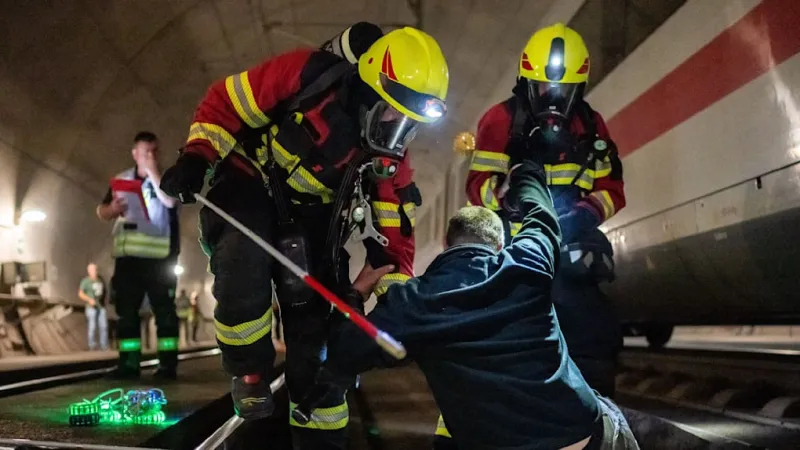
Thuringia, Germany – A comprehensive rescue exercise designed to simulate an ICE train fire within a critical tunnel infrastructure recently concluded in what observers described as a catastrophic failure, exposing significant delays in the arrival of emergency services. The drill, intended to test the preparedness and coordination of first responders, involved 30 simulated train passengers requiring rescue from the mock disaster scenario.
The exercise aimed to assess the response capabilities to a high-stakes incident: an inferno aboard a high-speed intercity train trapped deep within a tunnel. Such scenarios present unique challenges, including limited access, ventilation issues, and the complexities of evacuating large numbers of people from confined, smoke-filled spaces.
However, the reality of the simulation diverged sharply from its objectives. Emergency personnel, including firefighters, paramedics, and police, reportedly arrived at the scene long after the crucial initial minutes, extending the theoretical window for safe rescue beyond acceptable limits. This delay prompted immediate and profound concern among evaluators.
One observer was quoted saying, "If this were real, everyone would be dead by now," a stark commentary on the critical shortcomings witnessed during the operation. This blunt assessment underscores the gravity of the situation and the potential real-world consequences of such response times.
The simulated incident involved an ICE train, a cornerstone of Germany's rail network, highlighting the potential widespread impact of an actual event. Germany's railway infrastructure relies heavily on the efficiency and safety of its high-speed lines, making effective emergency protocols paramount.
Experts emphasize that in a tunnel fire, every second is critical. Smoke inhalation, heat exposure, and panic can quickly incapacitate victims, dramatically reducing survival chances if rescue efforts are not swift and well-coordinated. The failure to meet timely response benchmarks in this drill suggests a fundamental flaw in current emergency planning or execution.
Authorities involved in organizing the simulation are now facing intense scrutiny. The specific reasons behind the delayed arrival of rescue teams remain under urgent investigation. Potential factors could range from communication breakdowns and logistical hurdles to insufficient staffing or equipment deployment strategies.
The implications extend beyond this single exercise. It prompts a broader re-evaluation of emergency preparedness across Germany's vital transportation networks. Public trust in the safety of infrastructure, particularly high-speed rail and its associated tunnels, hinges on the assurance that robust safety measures and rapid response capabilities are in place.
This incident also reignites discussions about the technological advancements available for tunnel safety. Modern tunnels are often equipped with advanced ventilation systems, emergency exits, and communication tools designed to aid rapid response. The effectiveness of these systems is only as good as the human and logistical framework supporting them.
A thorough review is expected to follow, examining all facets of the rescue chain. This includes initial alert systems, mobilization protocols, travel routes, and on-site command and control structures. Recommendations for immediate remedial actions are anticipated to address the identified deficiencies.
The outcome of the Thuringian rescue exercise serves as a powerful reminder of the continuous need for rigorous training, realistic simulations, and an unwavering commitment to refining emergency response strategies. Public safety depends on the ability to learn from such critical evaluations and implement necessary improvements without delay.