 Angela Stefani
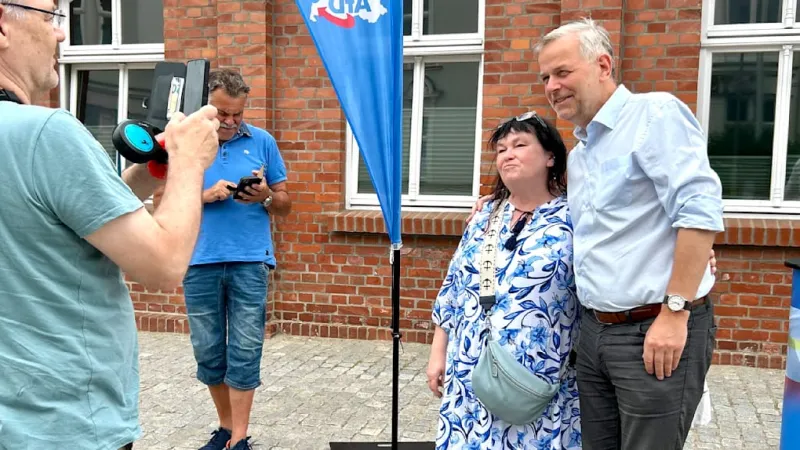
SCHWERIN – The Alternative for Germany (AfD) party is actively pursuing a groundbreaking shift in German politics as its lead candidate for Mecklenburg-Vorpommern, Nikolaus Holm, publicly declares his ambition to become the state's second AfD Minister-President. This assertive declaration follows a significant electoral triumph by party colleague Harald Siegmund in Saxony-Anhalt, igniting hopes within the AfD for a broader electoral surge across Germany's federal states.
Holm's campaign is squarely focused on securing an absolute majority for the AfD in Mecklenburg-Vorpommern, a move that would solidify the party's growing influence beyond its traditional strongholds. The success of Siegmund, who defied many political commentators to secure the top executive office in Saxony-Anhalt, serves as a powerful precedent and a blueprint for Holm's strategy.
The AfD leader has not shied away from controversy, leveraging the election campaign to issue a pointed request to his base. He urged supporters to actively engage with German public broadcasting channels ARD and ZDF, indicating the party's ongoing critique of media representation and its perceived biases. This tactic aligns with the AfD's consistent narrative questioning the neutrality and balance of public service media.
Observers widely interpret Holm's appeal as an attempt to mobilize his electorate in a direct engagement with institutions often criticized by the party. The AfD has long maintained that mainstream media outlets, particularly public broadcasters, fail to adequately represent their viewpoints or are overtly critical of their agenda. This electoral strategy seeks to turn that perceived antagonism into a rallying point for voters.
The political landscape in Mecklenburg-Vorpommern reflects a broader national trend where the AfD has seen increasing support. Recent polling data suggests a significant shift in voter sentiment, placing the party in a competitive position ahead of the upcoming state elections. The prospect of an AfD state government is now a tangible reality, prompting considerable discussion across the German political spectrum.
Holm's ambition to replicate Siegmund's success underscores the AfD's strategic focus on gaining executive power at the state level. Each state premiership achieved by the party offers not only regional governance but also a powerful symbolic victory that can influence national discourse and future federal elections. This incremental approach aims to normalize the party's presence in mainstream German governance.
The broader context of German politics reveals a period of significant flux. Established parties, including those within the current federal coalition, grapple with declining trust and voter fragmentation. Debates surrounding economic reforms and social policies continue to dominate national headlines, as exemplified by discussions surrounding the German Coalition Defends Sweeping Reforms Amidst Economic Uncertainty, highlighting the challenges faced by traditional political forces.
An AfD majority in Mecklenburg-Vorpommern would precipitate profound changes in the state's policy direction, particularly concerning immigration, energy, and cultural issues. The party's platform consistently advocates for stricter border controls, a reevaluation of Germany's green energy transition, and a stronger emphasis on national identity, all of which would be high on the agenda of an AfD-led government.
The request regarding ARD and ZDF is more than a mere campaign slogan; it reflects a core tenet of the AfD's communication strategy. By encouraging supporters to monitor and potentially challenge public media content, Holm aims to amplify the party's voice and exert pressure on institutions it views as critical to shaping public opinion. This direct engagement bypasses traditional media gatekeepers.
Analysts suggest that the outcome in Mecklenburg-Vorpommern will be a crucial barometer for the AfD's national trajectory. A second AfD Minister-President would send a potent signal about the party's electoral viability and its capacity to translate populist sentiment into tangible political power, further reshaping Germany's complex multiparty system.
The election campaign is therefore viewed with intense scrutiny, not just within Mecklenburg-Vorpommern but across Germany and indeed Europe. The potential for the AfD to cement another state premiership marks a pivotal moment, challenging established political norms and forcing a reevaluation of strategies by all major parties navigating the nation's evolving political landscape.
The implications extend beyond domestic policy, potentially influencing Germany's stance on European Union affairs and international relations, given the AfD's often eurosceptic and nationalist positions. A stronger AfD presence in state governments could empower the party to exert greater pressure on federal policies.
As the election draws closer, the debate surrounding Holm's aspirations and the AfD's media critique intensifies. The party's ability to mobilize its base through appeals to perceived grievances against the media and the political establishment remains a key factor in its continued electoral advances. The outcome in Mecklenburg-Vorpommern will undoubtedly be a defining moment for German democracy in the current era.