 Stefani Rindus
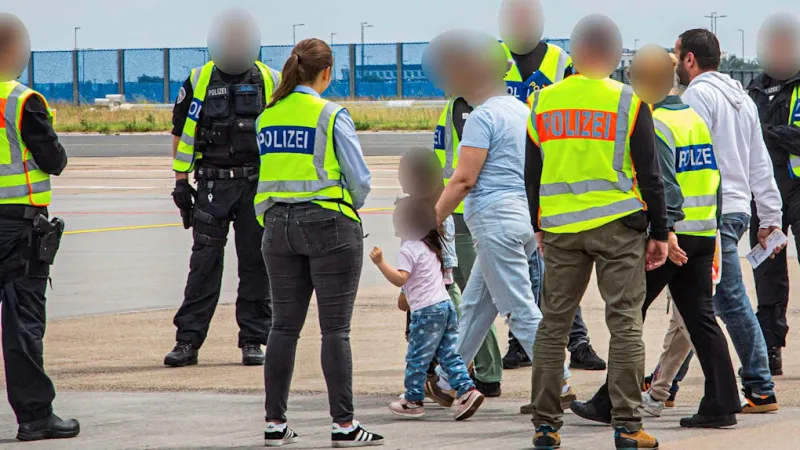
Berlin-Brandenburg Airport, Germany – Thousands of individuals are compelled to leave Germany annually, a stark reality underscored by a recent exclusive report accompanying the Federal Police during a return measure operation at the nation's principal international gateway. Within the airport's secure deportation terminal, an unexpected feature — a dedicated play area — offers a glimpse into the profound and often overlooked emotional toll on children during these involuntary departures.
The presence of toys and colorful distractions within a facility designed for forced repatriation highlights the inherent complexities and humanitarian challenges embedded in Germany's stringent immigration policies. For families, and particularly for the youngest, the moments leading up to a deportation can be fraught with anxiety and distress, making such a space a poignant, if temporary, refuge.
Germany's federal authorities oversee thousands of these return measures each year, a process that frequently involves families with children who have either exhausted their asylum claims or violated visa regulations. The logistics are meticulous, requiring careful coordination between various government agencies and law enforcement.
Reporters from WELT were granted exclusive access to observe the Bundespolizei (Federal Police) as they executed one such return measure. The report details the highly organized, yet inherently sensitive, operations involved in escorting individuals from detention to their departing flights.
The designated play area inside the terminal serves as a stark acknowledgment of the difficult reality children endure. Officials recognize that, regardless of the legal basis for deportation, the experience itself is inherently challenging for minors, potentially traumatizing them during a critical developmental period.
Humanitarian organizations frequently advocate for child-sensitive procedures during all immigration enforcement actions, emphasizing the need to mitigate psychological harm. The play area, while a small gesture, reflects an attempt to address these concerns within the confines of established legal frameworks.
Critics of current immigration policies often point to the ethical dilemmas posed by child deportations, arguing for more comprehensive approaches that prioritize the welfare and best interests of the child, even amidst legal obligations to enforce national borders.
The process of a return measure, or Abschiebung, is complex. It involves identification, notification, and often, a period of detention before the actual departure. For many families, these steps culminate in a final journey back to countries they may barely remember or have never known.
While Germany maintains its sovereign right to regulate immigration and enforce departures, the existence of facilities like the play area at the Berlin-Brandenburg Airport terminal speaks to an underlying recognition of the human cost involved. It subtly conveys the sentiment that for children, the experience of being deported is invariably difficult.
The ongoing public discourse in Germany frequently grapples with the balance between humanitarian considerations and the enforcement of immigration laws. Each deportation, particularly those involving families, reignites debates about social integration, legal responsibility, and the moral obligations of a welcoming society. The play corner stands as a silent testament to this ongoing tension, a small space of childhood innocence amidst the profound weight of state power and personal upheaval.
For the Bundespolizei officers involved, these operations are often emotionally taxing, requiring a blend of professional detachment and empathetic understanding as they navigate delicate situations with vulnerable families. The terminal, therefore, functions not only as a logistical hub but also as a microcosm of Germany's broader migration challenges and its attempts to humanize an inherently arduous process.