 Debby Wijaya

BERLIN – Prominent historian Michael Wolffsohn has delivered a scathing assessment of Germany's current security posture, likening the nation to a "security policy developing country." His critique underscores a profound disconnect between geopolitical realities and Germany's strategic preparedness, urging a rapid pivot from internal blame to an urgent focus on tangible external threats.
Wolffsohn's remarks highlight a growing apprehension among defense experts and policymakers regarding Germany's capacity to navigate an increasingly volatile international landscape. The historian contends that for too long, the nation has operated under a dangerous illusion of perpetual peace and stability.
"We lived in recent years in a dream world that no longer exists," Wolffsohn stated, lamenting a period where the fundamental assumptions underpinning German defense strategy failed to keep pace with global shifts. This "dream world" mentality, he argues, has fostered a reactive rather than proactive approach to national security.
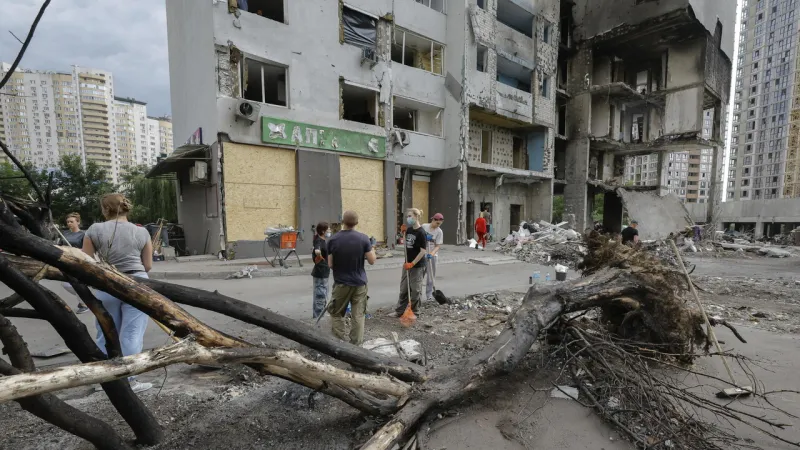
The criticism comes at a time when Europe faces significant security challenges, including persistent aggression in Eastern Europe, rising geopolitical tensions, and an evolving array of hybrid threats. The urgency of Wolffsohn's message resonates with concerns sparked by events such as the Russian bombardment of Ukrainian cities and the continued expansion of global instability.
Wolffsohn emphasized the imperative for Germany to shift its focus away from internal finger-pointing and toward a rigorous analysis of concrete dangers. He argued that indulging in blame games only diverts critical attention and resources from the immediate and long-term requirements of national defense.
This call for pragmatism challenges a deeply ingrained post-Cold War mindset within Germany, which often prioritized economic prosperity and diplomatic solutions over robust military investment. Decades of underfunding and a perceived lack of urgency have left the Bundeswehr, Germany's armed forces, facing significant modernization hurdles.
Recent incidents further underscore the vulnerabilities Wolffsohn points to. Reports of unidentified drones breaching German Bundeswehr base airspace illustrate the tangible and immediate threats to national infrastructure and defense capabilities, demanding a more sophisticated and agile response.
Beyond conventional military concerns, Germany's security landscape also encompasses energy independence and resilience. The reliance on external energy sources, particularly in the context of Europe's complex relationship with Russian gas imports, presents a critical strategic vulnerability that impacts national autonomy and stability.
The historian's critique also implicitly touches upon the domestic political climate, where debates about national security often become entangled with partisan considerations. Discussions surrounding the future of German politics, including dynamics observed in actions like the CDU's nationalization of a ban on AfD coalitions, reveal a complex interplay between internal stability and external readiness.
Wolffsohn insists that Germany must undertake a comprehensive re-evaluation of its defense strategy, moving beyond abstract discussions to concrete investments in personnel, equipment, and intelligence capabilities. This entails a candid assessment of threats ranging from cyber warfare to conventional military aggression.
The message from Wolffsohn is clear: Germany can no longer afford the luxury of ideological debates when its national security is at stake. A realistic understanding of global power dynamics and a decisive commitment to robust defense measures are no longer optional but existential necessities.
His pronouncements serve as a stark reminder that while diplomatic engagement and international cooperation remain vital, a nation's foundational security rests on its ability to defend itself effectively against present and emerging threats.
Ultimately, Wolffsohn's intervention aims to shake Germany out of what he perceives as a strategic complacency. He advocates for a proactive engagement with the realities of global insecurity, transforming the nation from a "security policy developing country" into a resilient and self-assured actor on the world stage.