 Dorry Archiles
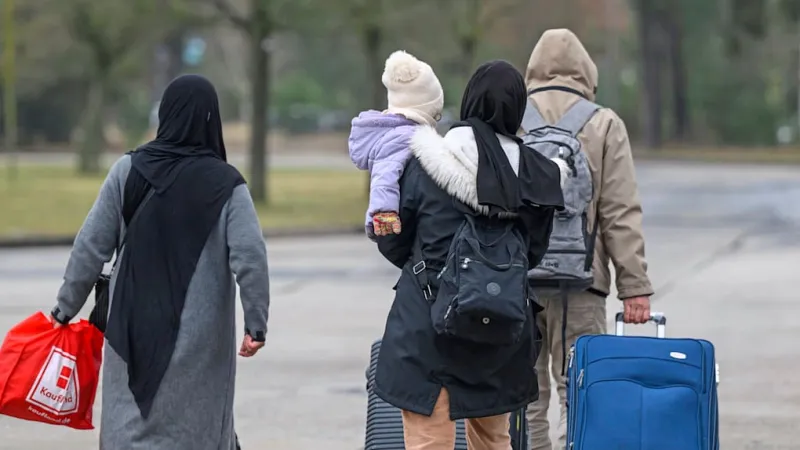
Berlin The Social Democratic Party (SPD) in Germany has vehemently criticized the nation's stringent regulations regarding the suspension of family reunification, asserting that the existing hardship clause is unduly restrictive and permits only a limited number of eligible cases to enter the country. The criticism, voiced recently by party officials, highlights ongoing tension within the governing coalition over immigration policies and their humanitarian implications, particularly concerning refugees and asylum seekers.
The SPD, a key component of Germany's Ampelkoalition, or traffic light coalition, has long advocated for more humane approaches to immigration and integration. Its latest critique centers on the practical application of a policy designed to manage the influx of migrants by limiting family reunification, which was introduced to address concerns about overall immigration numbers.
The current rules, enacted following previous large-scale refugee arrivals, aim to prevent what some perceive as an uncontrolled expansion of migrant populations through family ties. However, the SPD argues that the pendulum has swung too far, creating significant obstacles for individuals with genuine hardship circumstances who seek to reunite with relatives already in Germany.
The policy in question places strict limitations on which family members of certain protection beneficiaries can join them in Germany. While exceptions exist for extreme hardship, SPD representatives contend these criteria are so narrowly defined that they negate the intended purpose of offering a safety net.
A party spokesperson, speaking on the condition of anonymity to discuss internal debates, stated, "It is not about enabling entire clans to enter the country, but rather ensuring that genuine cases of hardship are appropriately addressed and families are not needlessly separated." This statement underscores the party's attempt to balance humanitarian concerns with public anxieties about integration and the capacity of social services.
The controversy surrounding the family reunification policy has far-reaching consequences, affecting thousands of individuals who have sought refuge in Germany and now hope to bring their spouses, minor children, or in specific cases, parents, to safety. Critics outside the SPD also point to psychological tolls on separated families and potential integration challenges if individuals remain isolated.
This stance by the SPD sets it apart from more conservative elements within the German political landscape and potentially creates friction within the ruling coalition, which also includes the Green Party and the Free Democratic Party (FDP). The FDP, in particular, tends to favor stricter immigration controls, while the Greens align more closely with the SPD's humanitarian perspective.
Germany has grappled with complex immigration issues for decades, particularly since the 2015-2016 refugee crisis. Policies surrounding family reunification have consistently been a flashpoint, reflecting the broader societal debate on immigration levels, integration capacities, and human rights obligations.
The SPD's renewed push for a more lenient hardship clause signals an intent to revisit and potentially reform the current regulations. Whether this will lead to concrete legislative changes remains to be seen, as any significant alteration would require consensus across the coalition government.
The outcome will depend on intense negotiations and the ability of the SPD to rally support for its position, potentially drawing on international human rights frameworks that emphasize the right to family life.
Germany's debate over family reunification mirrors similar discussions across other European Union member states struggling to balance national security, economic capacities, and humanitarian commitments in their migration policies. The collective approach to asylum and immigration remains a contentious issue at the EU level.
The core of the SPD's argument rests on the principle that the current approach to family reunification, especially its hardship exceptions, undermines Germany's commitment to basic human rights and the well-being of refugees. They contend that the state has a moral obligation to facilitate family unity for those who have found protection.
Public opinion on immigration and family reunification is highly polarized in Germany. While some segments of the population support more open policies, others express concern about the strain on public services and potential for social unrest. The SPD navigates this complex terrain by emphasizing humanitarian values within a controlled framework.
The party aims to ensure that the process for granting family reunion permits is transparent, efficient, and genuinely accessible to those who qualify under humanitarian grounds, rather than being bogged down by overly bureaucratic hurdles.
The renewed pressure from the SPD indicates that the debate over the future of Germany's family reunification policy is far from settled, with significant political maneuvering expected as parties seek to redefine the nation's stance on migration and its responsibilities to those seeking asylum.