 Demian Sahputra
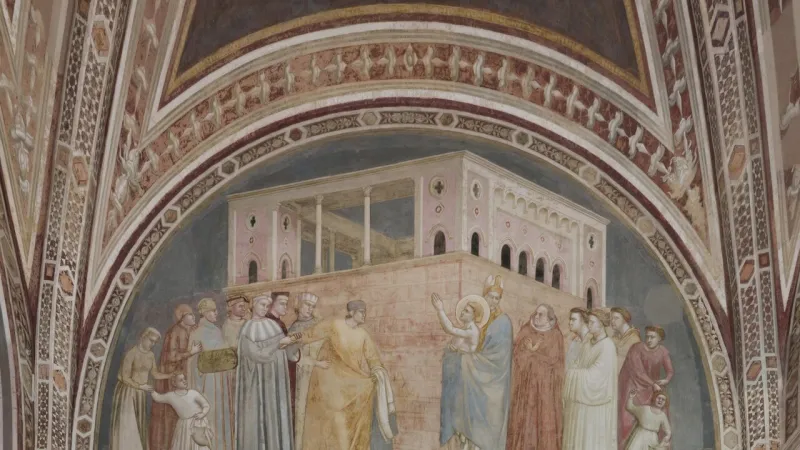
FLORENCE, ITALY – Giotto di Bondone's iconic San Francesco fresco, a cornerstone of early Renaissance art, has been triumphantly unveiled in the Basilica of Santa Croce after a four-year meticulous restoration effort. The painstaking project has reinvigorated the artwork, revealing the profound expressive intensity and innovative spatial conception that solidified Giotto's legacy.
The multi-year conservation initiative focused on carefully removing centuries of grime, previous interventions, and environmental damage that had obscured the fresco's original vibrancy and detail. Experts employed advanced techniques to stabilize the pigments and consolidate the plaster layers.
Located within the Bardi Chapel of the magnificent Franciscan basilica, the San Francesco cycle depicts scenes from the life of Saint Francis of Assisi. These frescoes are celebrated for their revolutionary naturalism and emotional depth, marking a significant departure from Byzantine conventions.
Art historians and conservationists alike hail this restoration as a monumental achievement, allowing a new generation to experience Giotto's genius with unprecedented clarity. The artwork now presents a more accurate representation of its original glory.
Speaking at the unveiling ceremony, Dr. Elena Rossi, chief conservator for the project, emphasized the delicate balance between preservation and revelation. “Our goal was not to repaint but to recover Giotto's hand, to let his original vision speak,” Rossi stated, underscoring the team's commitment to authenticity.
The restoration process involved a multidisciplinary team of art historians, chemists, and structural engineers. Each phase, from diagnostic imaging to micro-consolidation, was executed with precision, ensuring the fresco's long-term stability.
Funding for the extensive project came from various private foundations and public cultural bodies, highlighting a global commitment to preserving Italys unparalleled artistic heritage. Such collaborations are critical for maintaining treasures of this magnitude.
The Basilica of Santa Croce itself is a monumental structure, often referred to as the Temple of Italian Glories due to its role as the burial place for some of Italys most illustrious figures, including Michelangelo, Galileo, and Machiavelli. Giotto's frescoes are among its most prized artistic possessions.
This specific cycle in the Bardi Chapel stands as a testament to Giotto's pivotal role in transitioning Western art from the medieval period to the Renaissance. His ability to imbue figures with realistic emotion and create three-dimensional space was groundbreaking.
Visitors to Santa Croce will now observe the intricate details of Giotto's narratives, from the expressive faces of the figures to the architectural elements that create a sense of depth and perspective. The colors, once muted, now radiate with newfound brilliance.
Cultural officials expressed hope that the renewed brilliance of the San Francesco fresco will attract even more visitors to Florence, further cementing its status as a global epicenter of art and history. Tourism remains vital to the region's economy.
The success of this Giotto restoration serves as a model for future art conservation projects across Italy and beyond, demonstrating the profound impact that dedicated scientific and artistic endeavors can have on cultural patrimony.
Efforts to maintain the pristine condition of the fresco will continue indefinitely, including environmental monitoring and regular, non-invasive checks by conservators. Safeguarding these irreplaceable works is an ongoing responsibility.
Giotto's work, particularly his revolutionary approach to naturalism and human emotion, laid the groundwork for future Renaissance masters. His influence on artists like Masaccio and Michelangelo is widely acknowledged.
This restored masterpiece offers art enthusiasts and scholars a unique opportunity to re-evaluate Giotto's technical prowess and narrative genius, reinforcing his indelible mark on the trajectory of Western art.