Demian Sahputra
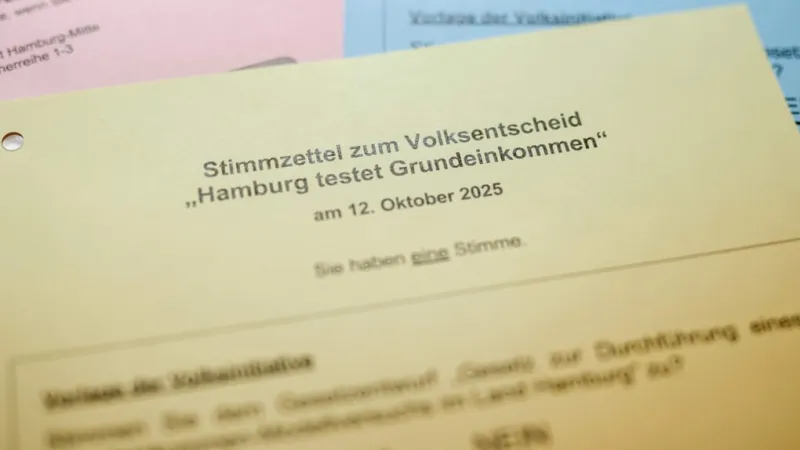
Hamburgs Constitutional Court has upheld the validity of the city-state's basic income referendum, rejecting a complaint that challenged the vote's legitimacy. The court, in its pivotal decision announced today, acknowledged that the campaign leading up to the public ballot contained misleading information regarding potential costs, but ultimately determined these inaccuracies did not sway the electorate's clear rejection of the basic income proposal. This ruling not only solidifies the outcome of the controversial basic income referendum but also provides crucial clarification on the Hamburg Senate's responsibilities concerning future popular votes.
The referendum, a significant exercise in direct democracy, had prompted widespread debate across Hamburg, and indeed Germany, about the feasibility and societal implications of a universal basic income model. Advocates argued for its potential to foster economic security and innovation, while critics raised concerns about its astronomical potential cost and its impact on the labor market.
Leading up to the vote, various organizations and political factions presented data and projections, some of which were later scrutinized for their accuracy. The core of the complaint against the referendum's outcome revolved around these allegedly distorted figures, positing that voters were not fully informed when casting their ballots.
Plaintiffs argued that the public discourse was unfairly skewed by these erroneous cost estimates, potentially influencing voters to reject a proposal they might otherwise have supported. They sought to have the referendum declared invalid, thereby potentially paving the way for a rerun or a reevaluation of the process.
The Constitutional Court's judges, after careful deliberation, indeed found merit in the claim that misleading cost information had been disseminated. This finding underscores the judiciary's commitment to electoral transparency and the integrity of public debate, even in the context of direct democratic processes.
However, the court's decisive factor was its assessment that, despite these inaccuracies, the misleading figures did not critically impact the overall result. The margin by which the basic income proposal was rejected was deemed sufficiently substantial to indicate that voters decision was not unduly influenced by the flawed data. This conclusion emphasizes the judiciary's high bar for overturning a popular vote.
The clear rejection of the basic income referendum by the Hamburg electorate sends a strong signal to proponents of the concept within the city and beyond. It suggests a prevailing public skepticism regarding its practical implementation and financial viability, despite ongoing theoretical discussions in academic and political circles.
A particularly salient aspect of the court's ruling is the clarity it offers regarding the Hamburg Senate's role in future referendums. The decision outlines specific expectations and responsibilities for government bodies to ensure that information provided to the public during campaigns for direct democracy initiatives is factual and unbiased, thereby strengthening the democratic process itself.
This ruling establishes an important precedent for direct democracy in Germany, especially within its federal states. It carefully balances the citizen's right to initiate and participate in referendums with the imperative for fair and accurate information dissemination, holding all parties accountable for the quality of public discourse. The broader German political landscape continues to grapple with various forms of public participation and coalition dynamics, as evidenced by discussions like those regarding Berlin's political formations. Readers interested in other German political developments might find this article on Berlin's political landscape insightful: Berlin's Left Majority Looms As Greens, SPD Eye Die Linke Coalition.
Legal experts suggest that this judgment will likely influence how future referendum campaigns are conducted, both by proponents and opponents of initiatives, as well as by the administrating authorities. The emphasis on factual accuracy, even if misrepresentations do not ultimately invalidate a vote, places a greater onus on all stakeholders.
The verdict provides significant legal certainty regarding the outcome of the basic income referendum, definitively concluding the challenge to its validity. It reinforces the stability of electoral outcomes in Hamburg and sets a benchmark for judicial oversight in direct democracy.
Ultimately, the Hamburg Constitutional Court's decision reaffirms the sanctity of the ballot box while simultaneously urging greater diligence in public information campaigns. The basic income referendum stands as a testament to the citys direct democratic spirit, its outcome now undeniably confirmed by the highest constitutional authority.