 Demian Sahputra
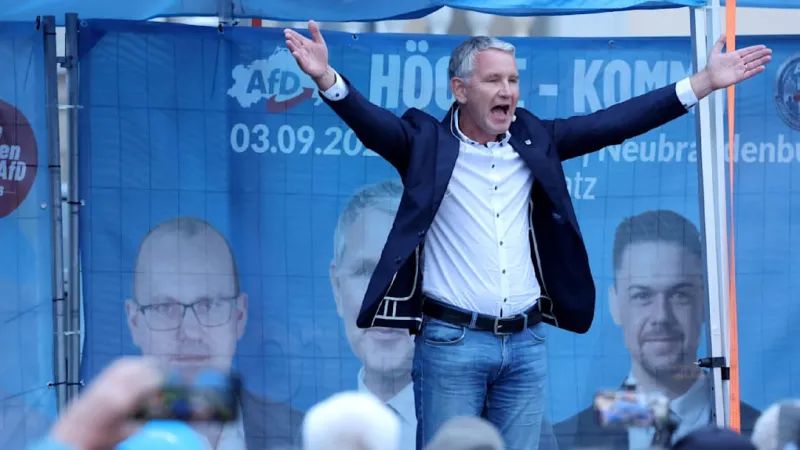
Mecklenburg-Vorpommern, Germany – Björn Höcke, a prominent figure within Germany's Alternative for Germany (AfD) party, recently delivered a fiery campaign speech to hundreds of supporters in Mecklenburg-Vorpommern, alleging the nation was on a trajectory toward a "new type of dictatorship" and criticizing so-called "cartel parties," an event marred by police reports of two apparent neo-Nazi salutes occurring after the gathering.
Höcke, a controversial leader of the AfD's far-right faction, utilized his platform to lambast established political entities, which he collectively labeled as "cartel parties." This rhetoric often implies a conspiratorial collaboration among mainstream groups to exclude alternatives like his own, a common refrain in populist discourse aiming to discredit the political establishment.
The public address unfolded as Germany approaches critical electoral periods, including the upcoming Sachsen-Anhalt Election 2026. Such rallies serve as a crucial component of the AfD's strategy to galvanize its base and attract disillusioned voters, often through strong, anti-establishment messaging.
His assertion that Germany is moving towards a "new type of dictatorship" is a grave accusation, resonating with a segment of the electorate that feels marginalized or unrepresented by current governance. This language suggests a fundamental threat to democratic principles, a claim frequently refuted by mainstream politicians and constitutional bodies.
Despite the fervent support exhibited by the hundreds in attendance, the post-rally actions of a few individuals cast a long shadow. Law enforcement officials confirmed that two distinct instances of the illegal Hitler salute were reported following the conclusion of Höcke's speech.
These acts, considered hate crimes under German law, immediately trigger police investigations and carry severe penalties. The use of symbols associated with the Nazi regime is strictly prohibited, reflecting Germany's deep-seated commitment to confronting its historical atrocities and preventing the resurgence of extremist ideologies.
The incident underscores persistent concerns regarding the normalization of far-right sentiment in Germany and the potential for public events to become platforms for displaying unlawful extremist gestures. It highlights the ongoing vigilance required from authorities and civil society in upholding democratic norms.
The AfD, under scrutiny from Germany's domestic intelligence agency in some regions as a suspected extremist organization, frequently faces criticism for its rhetoric and associations. This latest incident will likely intensify debates surrounding the party's role in German political life and its responsibility in controlling the behavior of its adherents.
Mainstream politicians and commentators have consistently condemned such displays, emphasizing that these actions are an affront to Germany's constitutional order and democratic values. The incident prompts renewed calls for a clear distinction between political protest and unlawful extremism.
The broader context of German politics also sees ongoing debates about freedom of speech versus the protection of democratic institutions. Incidents like these fuel discussions on how to balance vigorous political debate with the imperative to prevent the dissemination of ideologies that threaten the constitutional state.
Such occurrences can also impact the public perception of the AfD, reinforcing the arguments of those who view the party as a threat to democratic stability. The challenge for the party lies in distancing itself from such extremist acts while maintaining its appeal to its base.
While the police investigation is underway, the reporting of these gestures sends a stark reminder of the vigilant watch required against the fringes of political discourse. The protection of democratic values remains paramount, especially as political polarization continues to shape the national dialogue.
This incident further complicates the AfD's efforts to gain wider acceptance across the political spectrum, particularly in light of its already controversial standing. The explicit nature of the salutes draws direct parallels to Germany's darkest historical period, intensifying the public discourse around the party and its leadership.
The events in Mecklenburg-Vorpommern serve as a powerful indicator of the current political climate in Germany, where debates about national identity, democratic integrity, and the boundaries of political expression are more pronounced than ever. Authorities continue to monitor such gatherings closely, ensuring public safety and adherence to legal statutes against hate speech and extremist symbols.