 Demian Sahputra
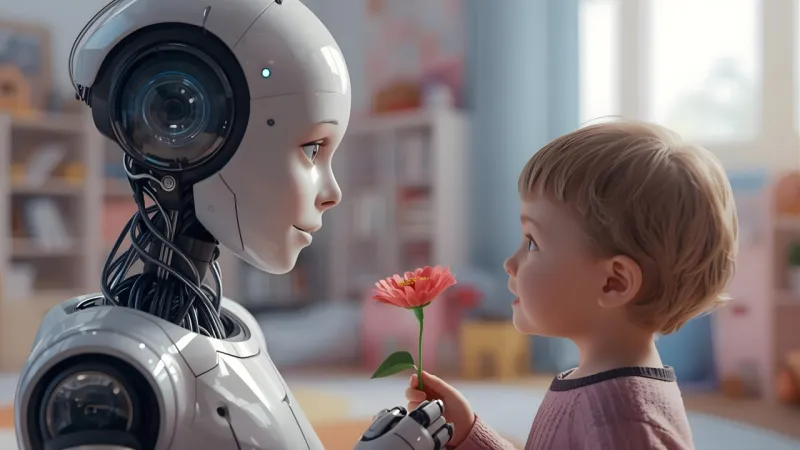
Individuals interacting extensively with artificial intelligence and robotic systems are demonstrating a concerning tendency to adapt their communication styles, potentially transforming into what experts term Robotoid behaviors, a phenomenon observed globally as a subconscious effort to streamline human-machine dialogue. This behavioral shift, driven by the omnipresence of AI in daily life, raises questions about the long-term impact on human social interaction and cognitive patterns.
The concept of a Robotoid describes humans who, through prolonged engagement with AI, begin to mimic machine-like efficiency, directness, and even emotional neutrality in their verbal and non-verbal communication. Researchers suggest this adaptation occurs as individuals unconsciously streamline their input to better align with AI processing capabilities, ultimately facilitating smoother interactions with technology.
The primary driver behind this transformation is the perceived convenience. Modern AI interfaces often reward brevity, logical consistency, and a lack of ambiguity. Users, seeking quicker and more accurate responses from virtual assistants, chatbots, and advanced automated systems, naturally adjust their language and tone. This constant feedback loop reinforces the machine-preferred communication style.
“We are witnessing a subtle but significant co-evolution,” states Dr. Alistair Finch, a cognitive psychologist specializing in human-AI interaction. “Humans are highly adaptive creatures. When our primary mode of communication in certain contexts becomes digital and machine-mediated, our brains begin to optimize for that environment. The risk lies in this optimization spilling over into human-to-human exchanges.”
This behavioral spillover could have profound social implications. If individuals carry these streamlined, often depersonalized, communication habits into their relationships with other people, it might erode the nuances of human empathy, emotional expression, and spontaneous dialogue. The richness of human interaction, predicated on subtle cues and contextual understanding, could diminish.
The pervasive integration of AI is undeniable. From customer service chatbots and voice assistants like Alexa and Google Assistant to advanced AI tools in professional settings, these systems are now central to how many people conduct their daily lives. The more frequently people engage with these tools, the more pronounced the adaptive communication patterns become.
Societies globally face a unique challenge in navigating this evolving landscape. While AI promises unparalleled efficiency and convenience, the unexamined consequences of its influence on human behavior warrant serious scrutiny. The drive towards a Robotoid communication style, if left unaddressed, could fundamentally alter social dynamics and intergenerational communication.
Historically, new technologies have always reshaped human behavior. The telegraph streamlined communication, and social media platforms rewired social connections. However, AI presents a distinct challenge because it actively processes and responds to human language, thus directly influencing our communication output in real-time feedback loops.
Raising public awareness about the potential for becoming more Robotoid might be the first step towards mitigation. Educational initiatives could encourage users to consciously differentiate their communication styles based on whether they are interacting with a machine or another human.
Further scientific inquiry is crucial to understand the long-term cognitive and psychological effects. Researchers must explore strategies that allow humans to leverage AI benefits without compromising the richness and complexity inherent in human communication. This includes designing AI interfaces that are more adaptable to human communication, rather than solely requiring humans to adapt to machines.