 Dodi Irawan
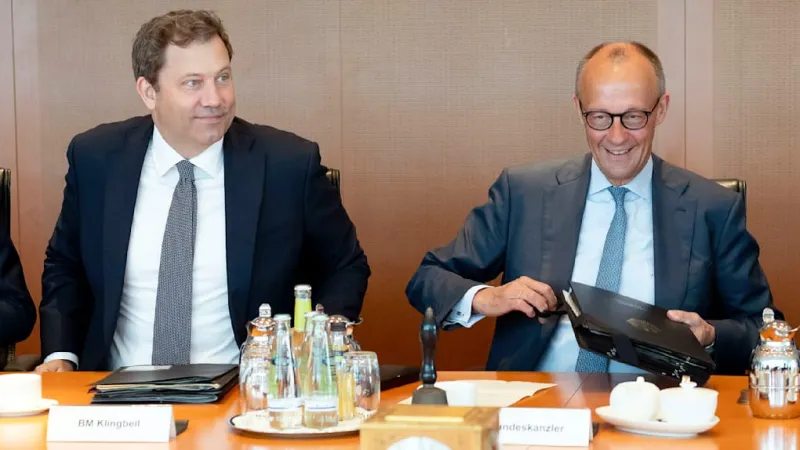
BERLIN – Germany's Christian Democratic Union (CDU) finds itself embroiled in a credibility crisis following revelations that the party internally approved significant tax plan revisions, even while publicly decrying them. Confidential emails, now made public, explicitly indicate the CDU's consent to proposed cuts in tax exemptions for non-profit organizations, directly contradicting their emphatic public opposition to such measures. This disclosure has placed immense pressure on the conservative party, raising pointed questions about its transparency and political integrity.
The controversy centers on planned adjustments to the Vereinsfreibeträge, which are tax-free allowances for clubs and associations essential to German civil society. While the CDU vehemently argued against these impending cuts in public forums and parliamentary debates, internal communications suggest a different narrative behind closed doors. The emails, whose authenticity has not been disputed by the party, detail discussions and ultimate agreements made within the CDU's upper echelons regarding the proposed fiscal changes.
These revelations have ignited a firestorm across the German political landscape, prompting accusations of hypocrisy and strategic duplicity. Critics from across the spectrum are highlighting the stark disconnect between the party's internal consensus and its external rhetoric, suggesting a deliberate attempt to mislead voters and stakeholder groups. The timing of the leak amplifies the damage, coming amidst an already volatile political environment in Germany.
The specific tax plans in question involve amendments to the nation's fiscal code, intended to streamline certain aspects of tax administration but carrying potential financial implications for thousands of voluntary associations. These organizations, ranging from sports clubs to cultural groups, often rely on these exemptions for their operational viability. The CDU's public stance was ostensibly to protect these vital community pillars.
Political analysts suggest this scandal could severely undermine public trust in the CDU, especially given its traditional appeal to segments of society that value stability and straightforward governance. The perception of a party speaking with two voices – one private, one public – risks alienating its core electorate and independent voters alike. Such discrepancies often resonate deeply within a populace increasingly wary of political maneuvering.
The unearthed communications detail specific dates and participants in the internal deliberations where the tax plans reportedly received agreement. While the precise motives for the public-private divergence remain subject to speculation, the immediate political fallout is undeniable. Opposition parties have been quick to seize upon the discrepancy, demanding comprehensive explanations from the CDU leadership.
This incident also shines a spotlight on the broader challenges facing established German parties, including the CDU, as they navigate an evolving political landscape. The rise of populist movements and the increasing fragmentation of the electorate demand greater transparency and consistency from mainstream parties. The recent AfD Surge in Saxony-Anhalt: Will It Reshape German Politics? indicates a shifting political power dynamic that punishes perceived insincerity.
The CDU's official response to the leaked emails has been cautious, with party spokespersons acknowledging the internal discussions but attempting to frame them within a broader context of legislative negotiations and internal strategic considerations. However, these explanations have largely failed to quell the mounting criticism or satisfactorily address the apparent contradiction. The party faces an uphill battle in rebuilding its reputation.
Observers note that this episode could have long-term implications for intra-party dynamics and potential coalition negotiations. The ability of the CDU to present a unified front and negotiate effectively with potential partners may be compromised if questions of internal consistency persist. This internal discord weakens the party's position in complex political bargaining.
The controversy also raises important questions about the role of internal party transparency and the mechanisms through which political decisions are genuinely reached. In an era of heightened scrutiny, the expectation for political organizations to operate with clear, consistent messaging is greater than ever. The public demands accountability not just for outcomes, but for the process itself.
Leading figures within the CDU are now tasked with crafting a strategy to mitigate the damage. This likely involves a delicate balancing act of acknowledging internal processes while simultaneously reaffirming commitment to principles of public service and support for non-profit organizations. The party must articulate a credible explanation for the apparent policy reversal.
The broader implications extend beyond the CDU, touching upon the integrity of political discourse in Germany. When major parties are perceived to operate with a hidden agenda, it erodes the fundamental trust necessary for democratic institutions to function effectively. This incident serves as a stark reminder of the constant demand for authenticity in political leadership.
As the political debate intensifies, the public awaits a more comprehensive and satisfactory explanation from the CDU. The party's handling of this burgeoning crisis will undoubtedly shape its standing in the coming months and influence voter sentiment in future elections. The pressure for clarity and accountability remains immense.
The incident underscores the precarious balance between internal strategy and public messaging that all political parties must maintain. For the CDU, this recent exposure has turned a strategic tightrope walk into a very public stumble, threatening to define its current political narrative. The challenge for the party now is to regain its footing and restore public confidence.