 Demian Sahputra
Jerusalem – The Israeli government, under Prime Minister Benjamin Netanyahu, has officially recognized the Armenian Genocide, a profound diplomatic pivot set to escalate tensions significantly with Turkish President Recep Tayyip Erdogan. This decision, announced in the Israeli capital, is largely driven by strategic anxieties that President Donald Trump might proceed with the sale of advanced F-35 fighter jets to Ankara. The move marks a substantial shift in Israel's long-standing policy, placing a humanitarian issue squarely within a complex geopolitical calculus concerning regional security and alliances.
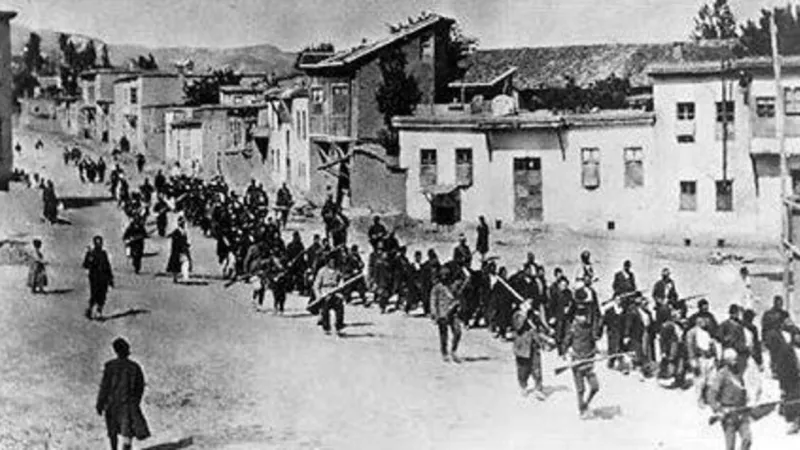
The Armenian Genocide refers to the systematic extermination of 1.5 million Armenians by the Ottoman government between 1915 and 1923. Historians and numerous nations, including the United States, have widely documented these events as genocide. Turkey, however, vehemently rejects the term, acknowledging widespread atrocities but contending they were part of wartime strife affecting all populations and not a targeted extermination campaign. This historical disagreement remains a profound point of contention in international relations.
Israel's recognition carries significant diplomatic weight, immediately challenging the already strained relationship between Jerusalem and Ankara. For decades, Israel had refrained from official recognition, often balancing its moral stance with strategic considerations related to its own ties with Turkey and its Muslim-majority neighbors. This recent governmental action signals a re-prioritization, suggesting that current geopolitical concerns have eclipsed previous diplomatic cautiousness.
At the heart of Israel's calculations is the prospective F-35 sale to Turkey. The F-35 Lightning II, a fifth-generation stealth fighter, represents pinnacle air superiority technology. Israel operates these jets and views maintaining its qualitative military edge in the region as paramount. The prospect of Turkey, a nation whose leadership has grown increasingly antagonistic toward Israel, acquiring such advanced capabilities from a key ally like the United States raises profound security alarms within the Netanyahu administration.
President Donald Trump's administration has a distinctive foreign policy characterized by transactional diplomacy and a willingness to challenge established norms. His approach to arms sales often balances economic incentives with strategic alliances, making the F-35 deal with Turkey a point of significant speculation. Israel's decision to recognize the Armenian Genocide now could be interpreted as a pre-emptive measure to influence Washington's stance or to signal the depth of its concerns.
President Erdogan and the Turkish government have historically reacted with outrage to any official recognition of the Armenian Genocide by foreign states, frequently recalling ambassadors and imposing economic or diplomatic sanctions. The Israeli decision is almost certain to provoke a strong condemnation from Ankara, potentially leading to a further deterioration of bilateral relations which have seen periods of both cooperation and profound hostility.
More than 30 countries have formally recognized the Armenian Genocide, including France, Germany, Russia, and Canada. The United States Congress had previously passed resolutions recognizing the genocide, but executive branches, until President Trump's predecessors, often avoided using the term to preserve relations with Turkey, a NATO ally. This new Israeli move adds another prominent voice to the international chorus demanding historical accountability.
Israel's prior reluctance to recognize the genocide stemmed from complex geopolitical and historical factors, including its own Holocaust history and a desire to maintain pragmatic ties with Turkey. However, the current Netanyahu government appears to have made a calculated decision to prioritize other strategic objectives and moral imperatives, leading to this significant policy change. This shift reflects evolving regional alignments and Israel's assessment of its national interests.
The strategic calculus behind Jerusalems decision involves a delicate balance. While the recognition fulfills a moral obligation to historical truth and aligns Israel with many Western democracies, it also risks alienating a powerful regional player. The fear of Turkey gaining F-35s from the US seems to be the immediate catalyst, suggesting that Israel perceives this as a direct threat to its long-term security.
This development reshapes elements of Middle Eastern and broader Eurasian geopolitics. Relations between Israel and Turkey were already strained, exacerbated by differing views on regional conflicts and the Palestinian issue. The Armenian Genocide recognition, combined with the F-35 contention, pushes these two nations further apart, potentially influencing alliances and rivalries involving Iran, Greece, and Cyprus, among others.
President Erdogan has consistently positioned Turkey as a significant regional power, often asserting its independence from Western dictates. His desire for F-35s has been a consistent demand, central to Turkey's modernization of its air force. The US has, in previous administrations, expressed concerns over Turkey's acquisition of Russian S-400 missile defense systems, which complicated F-35 sales. President Trump's stance on this issue, however, could be more flexible, driven by other geopolitical considerations. This fluid situation keeps Israel on edge.
President Trump's willingness to engage in direct and sometimes unpredictable diplomatic maneuvers has characterized his foreign policy. The potential F-35 sale to Turkey, despite previous complications, underscores a broader strategy where arms deals can be leveraged to secure other objectives or reshape alliances. This context is critical for understanding Israel's proactive stance. Such decisions by the US have had wide-ranging impacts, as seen in other flashpoints. US Strikes Gulf; Iran Reclaims Hormuz Amid Trump Escalation Warning highlighted the volatile nature of some of President Trump's foreign policy actions.
The ramifications of Israel's decision are far-reaching. While the immediate focus remains on the Israeli-Turkish diplomatic fallout and the F-35 deal, the recognition also sends a powerful message to the international community regarding historical justice. Observers will closely monitor both Ankara's retaliation and Washington's next steps concerning the F-35 program and its broader Middle East policy under President Trump.