Gabriella
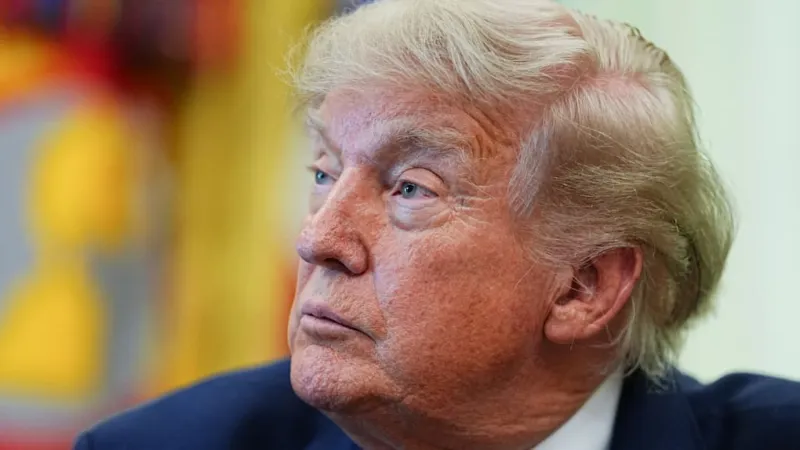
The United States Supreme Court delivered a significant legal and political setback to President Donald Trump this week, overturning a presidential decree that aimed to restrict automatic citizenship for children born within the nation's borders. The decision, a reaffirmation of the 14th Amendment's birthright citizenship clause, notably saw two of President Trump's own judicial appointees join the majority opinion against his administration's stance.
For years, President Trump has vocally advocated for an end to what he terms birthright citizenship, viewing it as an anachronism that encourages illegal immigration. His consistent calls to unilaterally alter or abolish this constitutional provision have been a cornerstone of his populist platform, resonating with a segment of his political base eager for stricter immigration controls.
The decree in question, issued early in President Trump's current term, sought to reinterpret the citizenship clause of the 14th Amendment. It aimed to establish that children born on U.S. soil to parents who are not legal residents or citizens would not automatically qualify for American citizenship, a radical departure from more than a century of established legal precedent.
The concept of birthright citizenship, enshrined in the 14th Amendment adopted in 1868, states, "All persons born or naturalized in the United States, and subject to the jurisdiction thereof, are citizens of the United States and of the State wherein they reside." This clause was primarily intended to grant citizenship to formerly enslaved people but has been consistently interpreted by courts as extending to nearly all individuals born on American soil, irrespective of parental nationality or immigration status.
Following its issuance, President Trump's decree swiftly faced multiple legal challenges from civil rights organizations, immigration advocacy groups, and a coalition of states. Lower federal courts largely sided against the administration, finding the decree to be an overreach of executive power and a direct contradiction of constitutional text and established jurisprudence. The cases were consolidated and fast-tracked to the Supreme Court given their profound constitutional implications.
In its decisive ruling, the high court affirmed the traditional understanding of the 14th Amendment, asserting that the phrase "subject to the jurisdiction thereof" does not create an exception for children born to undocumented parents. The majority opinion emphasized that only those not subject to U.S. law, such as foreign diplomats and invading forces, fall outside the scope of birthright citizenship.
The composition of the majority opinion proved particularly stinging for the administration. Among the justices who voted to uphold birthright citizenship were two individuals appointed by President Trump during his previous terms. This outcome underscores the constitutional principle of judicial independence, where justices often prioritize legal interpretation over the political inclinations of the presidents who appointed them.
This Supreme Court decision marks another significant policy defeat for President Trump, reminiscent of previous struggles. Prior to this ruling, the administration had encountered legislative hurdles and judicial challenges concerning various signature initiatives, including certain tariffs and trade policies that faced considerable pushback both domestically and internationally. The pattern suggests a complex dynamic between the executive and judicial branches.
The ruling unequivocally reinforces the legal standing of birthright citizenship, likely halting any immediate executive attempts to unilaterally alter this aspect of immigration law. However, it is unlikely to quell the broader political debate surrounding immigration reform, which remains a deeply divisive issue across the nation. Advocacy groups on both sides continue to push for legislative solutions that align with their respective ideologies.
For President Trump, this ruling represents a public rebuff on a central tenet of his political brand. While it galvanizes his opponents, it may also energize his base, framing the decision as further evidence of an entrenched establishment working against his agenda. As the nation approaches a crucial election cycle, the issue of immigration and judicial power is expected to feature prominently in political discourse.
The Supreme Court's affirmation of birthright citizenship solidifies a long-standing interpretation of one of the Constitution's most vital amendments. It serves as a powerful testament to the stability of core constitutional principles, even amidst fervent political challenges and executive efforts to reinterpret foundational laws. The decision reaffirms the judiciary's role as the ultimate arbiter of constitutional meaning.
While executive action on birthright citizenship has been curtailed by this ruling, proponents of restricting it may now turn their focus more intensely towards legislative avenues, though such efforts would face steep constitutional challenges and likely require a constitutional amendment, an extraordinarily difficult process. The debate will undoubtedly shift to Congress for any future changes.
President Trump is anticipated to respond forcefully to the Supreme Court's decision, likely criticizing the ruling and reiterating his administration's commitment to securing the nation's borders and reforming what he perceives as flawed immigration policies. His rhetoric is expected to frame the decision as an impediment to national sovereignty and security.
This ruling also establishes a strong precedent for future presidencies, limiting the executive branch's ability to unilaterally redefine constitutional rights. It underscores the balance of power inherent in the American governmental system and reinforces the judiciary's authority to check executive overreach on matters of constitutional interpretation.