 Dorry Archiles
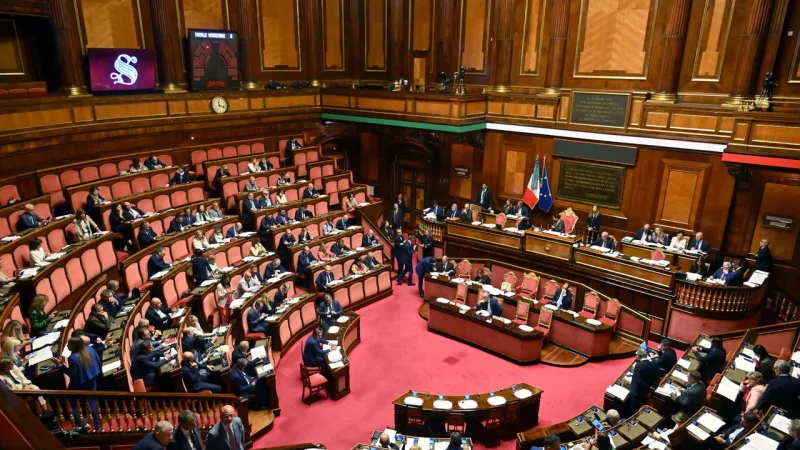
ROME - Italy's political landscape is poised for a significant shift following the recent approval of amendments to its electoral law, which abolishes the threshold for parties to contribute to the majority premium. The new provisions also establish a minimum of 6,000 signatures for emerging political entities to contest elections, signaling a move to democratize ballot access and potentially reshape parliamentary power dynamics.
This legislative overhaul, centered on the nation's complex electoral law, marks a crucial moment for Italian democracy. For years, debates have simmered over the perceived barriers to entry for new political movements and the mechanisms designed to ensure governmental stability, often at the expense of broader representation.
The elimination of the majority premium threshold directly impacts how parliamentary seats are allocated after an election. Previously, smaller parties often struggled to see their votes effectively contribute to the formation of a stable governing majority, even if aligned with larger coalitions.
Experts suggest this change could foster greater inclusiveness, allowing a more diverse array of political voices to directly influence legislative outcomes. It could also lead to more nuanced coalition negotiations in the future, as the contribution of each party becomes more directly quantifiable.
Concurrently, the introduction of a standard 6,000-signature requirement for new parties to qualify for elections is a double-edged sword. While providing a clear, albeit modest, hurdle to prevent frivolous candidacies, it significantly lowers the bar compared to past, more arduous requirements.
Historically, securing ballot access in Italy has presented a formidable challenge for nascent political groups, often favoring established parties with extensive organizational networks. The new signature threshold aims to level the playing field, at least to some extent.
Proponents of the reform argue that it will invigorate Italy's political discourse by enabling fresh perspectives and innovative platforms to reach the electorate. They contend that this move is vital for a vibrant, responsive democracy.
Critics, however, express caution, fearing that a proliferation of smaller parties could fragment the political scene further, potentially leading to increased governmental instability. Italy has a storied history of short-lived coalitions and frequent changes in leadership.
The precise details of how this revised electoral framework will interact with existing parliamentary procedures and the formation of government remain subject to extensive political analysis. Observers are keen to see its practical application in upcoming elections.
The measure represents a legislative attempt to balance the need for stable governance with the imperative for representative democracy. The government hopes this balance will strengthen citizen trust in political institutions.
This reform follows a long tradition of alterations to Italy's electoral system, a testament to the nation's ongoing search for the ideal balance between governability and proportional representation. Each successive change has aimed to address perceived shortcomings of its predecessors.
The impact of this latest modification will likely be observed in the next national elections, providing tangible data on how voter preferences translate into parliamentary composition and the subsequent formation of the executive branch.
Political analysts are already forecasting potential shifts in party strategies, particularly among smaller and regional groups, which might now see a clearer path to influence national policy without being subsumed by larger political blocs.
The move also signals a broader discussion within European democracies about ensuring robust democratic participation amidst evolving political landscapes and increasing calls for direct representation.
Ultimately, the success of this electoral law reform will be measured by its ability to foster a more inclusive and stable political environment, aligning with the principles of democratic fairness while ensuring effective governance for the Italian people.