 Dorry Archiles
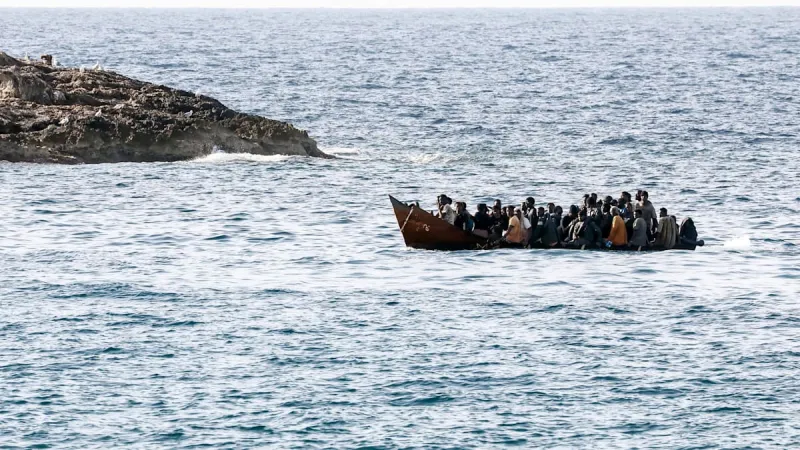
Rome, Italy — Italy has escalated its diplomatic tensions with Germany, formally demanding financial reparations over allegations that German-flagged non-governmental organization (NGO) ships have transported more than 22,500 migrants to Italian shores since autumn 2022. Italian Interior Minister Matteo Piantedosi publicly voiced the accusation, sparking a fresh debate on shared responsibility for Mediterranean migration.
Minister Piantedosi stated that Germany bears significant responsibility for the substantial influx of migrants, directly attributing it to the operations of private rescue organizations registered under the German flag.
The minister explicitly called for compensation, arguing that Italy disproportionately carries the burden of reception and integration costs associated with these arrivals. He emphasized the strain on national resources and infrastructure.
The claim specifically covers the period from autumn 2022 through early 2026, tallying approximately 22,500 individuals who were disembarked at various Italian ports.
These private NGOs operate extensively in the Central Mediterranean, recognized as one of the most perilous migration routes globally. Their missions involve conducting rescues of individuals in distress at sea and subsequently transporting them to the nearest safe port, which, geographically, is most often in Italy.
While Germany has not yet formally responded to this specific demand for reparations, Berlin has historically defended humanitarian sea rescue operations. The German government generally views these missions as a legal and moral obligation under international maritime law, a stance exemplified by its approach to asylum seekers, such as a Somali asylum seeker finding sanctuary in Bavaria.
Italy, serving as a primary entry point for Mediterranean migrants into Europe, has consistently voiced profound frustration over what it perceives as an uneven distribution of responsibility among European Union member states.
This dispute highlights the broader, unresolved issue within the EU regarding comprehensive migration policy and equitable burden-sharing, an ongoing challenge that continues to strain inter-member relations and political cohesion.
The legal interpretation of international maritime law, particularly concerning flags of convenience and the delineation of responsibility between the flag state and the state of disembarkation, remains a contentious point of contention among EU nations.
Managing large-scale migrant arrivals places immense strain on Italy's public services, infrastructure, and budgetary allocations, particularly as the nation grapples with its own economic challenges.
Minister Piantedosi's strong call for reparations also resonates deeply within Italy's domestic political discourse, where immigration remains a highly charged topic, often intrinsically linked to discussions of national sovereignty and border control.
Humanitarian organizations engaged in sea rescues routinely assert that their operations strictly adhere to international law, emphasizing the imperative to save lives regardless of the migrants origin or political affiliation.
This current episode is not the first instance of friction between Italy and other European states, or between Italy and NGOs, concerning search and rescue missions in the volatile Mediterranean Sea.
Implicit in Italy's formal complaint is the suggestion that Germany, by permitting its flag to be used by these vessels, is indirectly supporting operations that inevitably result in a significant number of migrants landing on Italian soil.
The unfolding dispute casts a considerable shadow on bilateral relations between two of the European Union's largest economies and most influential political powers, potentially complicating future cooperation on other critical European agenda items.
This incident further underscores the inherent fragility of ongoing efforts to forge a comprehensive EU Pact on Migration and Asylum, which aims to establish a more equitable and sustainable system for handling asylum seekers across the bloc.
Experts in international law note that while the obligation to save lives at sea is unequivocally non-negotiable, the subsequent responsibility for disembarkation, processing, and long-term integration remains a complex area, often leveraged in political disagreements.
The continuous arrival of migrants into Italy carries broader implications for the Schengen Area, as Italy contends with the challenge of processing and managing these individuals, some of whom may eventually seek to move to other EU countries.
As of early 2026, this demand for reparations represents a significant escalation in the long-running European migration debate, with no immediate resolution appearing on the horizon.
The situation urgently necessitates renewed dialogue between Rome and Berlin, as well as within the wider European Union, to establish clearer guidelines and genuinely shared responsibilities for the management of Mediterranean migrant arrivals.