 Edward DP Situmorang
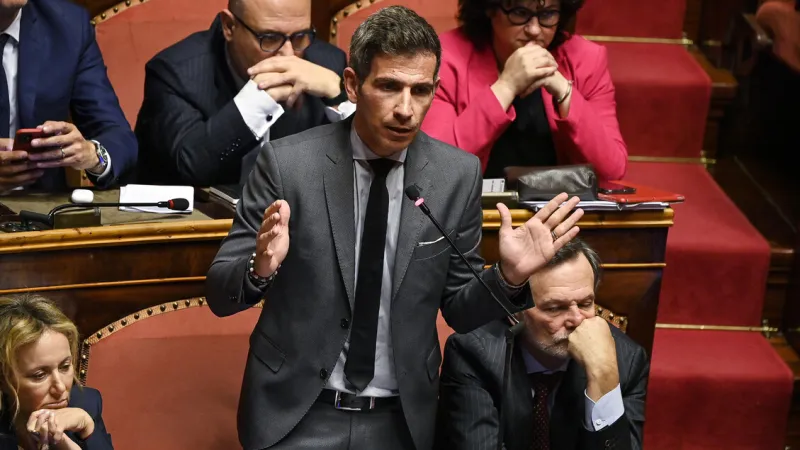
Italy's leading opposition parties—the Democratic Party (Pd), the Five Star Movement (M5s), the Green and Left Alliance (Avs), and Italia Viva (Iv)—today collectively announced their withdrawal from the parliamentary Covid commission. This dramatic action, detailed in a joint note from their group leaders, stems from their accusation that the Brothers of Italy (FdI) party, a dominant force within the ruling coalition, 'crossed the red line' in the commission's operational conduct.
The unified stance from these politically diverse factions underscores a significant escalation in parliamentary tensions. The joint statement highlighted a purported breach of established protocols or ethical boundaries, though specific details of the alleged transgression remained publicly unspecified by the opposition group leaders.
The Covid commission, established to investigate Italy's comprehensive response to the coronavirus pandemic, holds a critical mandate. Its role includes scrutinizing government decisions, public health measures, and the socio-economic ramifications that profoundly impacted the nation. The withdrawal of a substantial segment of its members threatens to significantly impede its investigatory capacity and perceived impartiality.
Opposition leaders collectively asserted that the actions attributed to Fratelli d Italia representatives had rendered the commission's work untenable. This claim suggests a breakdown in the cooperative spirit essential for such a body, transforming a fact-finding mission into a site of partisan conflict.
The 'red line' accusation, while lacking granular public detail, typically implies a fundamental violation of democratic principles, procedural fairness, or an overreach of power that undermines the integrity of the institution. Such a charge, levied against a key party in the governing coalition, signals profound distrust and raises questions about the future functionality of the commission.
The FdI, currently a cornerstone of Italy's ruling government, now faces intensified scrutiny regarding its conduct within parliamentary bodies. This incident could embolden calls for greater transparency in committee operations and accountability from the majority coalition.
This parliamentary impasse reflects broader political volatility within Italy. While the ruling coalition, led by Prime Minister Giorgia Meloni's FdI, maintains a parliamentary majority, the opposition frequently seeks to expose perceived governmental overreaches or inefficiencies. This latest move is a potent demonstration of their collective discontent.
The departure of these parties risks paralyzing the commission's work, potentially delaying or even derailing its final report on Italy's pandemic management. The public's desire for thorough accountability regarding the Covid-19 crisis remains strong, and any perceived obstruction could erode confidence in political institutions.
Historically, Italian politics has been characterized by periods of both fierce partisan competition and strategic alliances. This walkout illustrates a moment where the lines of contention have become sharply defined, pushing cooperation to a critical breaking point. Related concerns about political engagement have surfaced recently, as seen in reports such as Italy's Local Runoffs Marred by Plummeting Voter Turnout, indicating a broader public disquiet.
Observers now anticipate the government's official response to this significant challenge. The FdI will likely need to address the opposition's claims directly to restore any semblance of cross-party dialogue within the commission, or risk further delegitimizing its findings.
This situation also carries implications for future legislative processes and the government's ability to garner broader consensus on critical national issues. The effectiveness of governmental oversight bodies hinges on the participation and trust of all parliamentary forces, a trust that appears severely strained.
The incident highlights the delicate balance of power within the Italian Parliament and the constant negotiation required to maintain even fundamental working relationships between government and opposition. The pursuit of answers surrounding the pandemic's handling now faces a substantial political obstacle.
Ultimately, this walkout by the opposition group leaders represents more than a procedural dispute; it signals a deep-seated philosophical clash over the very principles of parliamentary inquiry and the limits of political power. The resolution of this 'red line' controversy will be pivotal for the credibility of the Covid commission and the broader political climate in Italy.