 Dorry Archiles
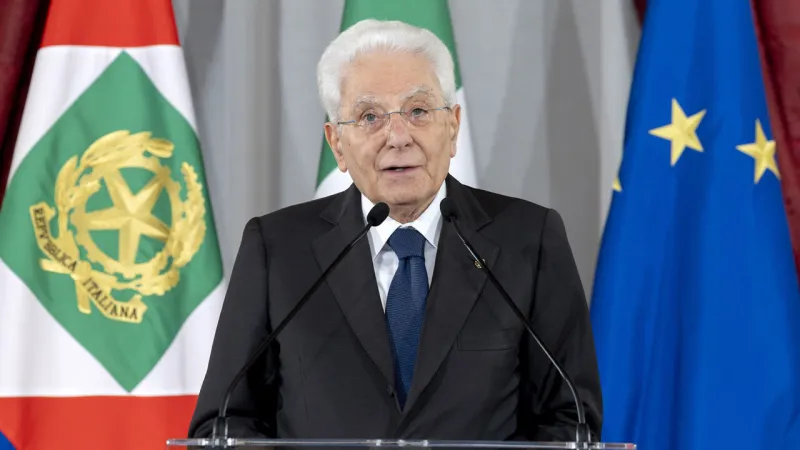
The city of Taranto, Italy, stands at a pivotal juncture as President Sergio Mattarella and Prime Minister Giorgia Meloni recently reinforced a critical national commitment to its future. The leaders signaled a concerted effort to address the profound challenges stemming from the former Ilva steel plant, pledging revitalization and sustainable development for the long-beleaguered city.
President Mattarella, during his address, acknowledged the dire circumstances Taranto had confronted for decades. He stated that the city had been forced to grapple with dramatic problems, a clear reference to the environmental degradation, health crises, and economic instability associated with Europe's largest steelworks. His message underscored a vision where Taranto could finally embrace the future, moving beyond its troubled industrial past.
Prime Minister Meloni echoed the presidential sentiment, announcing a crucial high-level meeting scheduled for September. This round table discussion will specifically focus on the former Ilva facility, now known as Acciaierie d'Italia, and its intricate path forward. The September talks aim to consolidate strategies and commitments from various governmental and industrial stakeholders.
The Ilva plant, a colossal industrial complex, has long been a double-edged sword for Taranto. For decades, it served as the economic backbone of the region, providing thousands of jobs and contributing significantly to Italy's industrial output. However, its operations have also been linked to severe air and water pollution, prompting numerous health studies and legal battles over public health concerns.
These environmental and health issues have created a deeply entrenched socio-economic crisis in Taranto. Residents have expressed anguish over the high rates of respiratory illnesses and cancers, which many attribute directly to the steel plant's emissions. The legacy of industrial contamination has fueled a persistent demand for comprehensive reclamation and a re-evaluation of the city's economic model.
The national commitment articulated by both President Mattarella and Prime Minister Meloni signals a renewed urgency to navigate this complex landscape. Previous attempts to salvage the plant and simultaneously clean up the environment have met with mixed success and considerable political friction. The current government appears determined to forge a more definitive path.
Experts suggest that any sustainable solution for Taranto must encompass a multi-pronged approach. This includes significant investment in environmental remediation, technological upgrades for the steel plant to reduce emissions, and robust initiatives for economic diversification. The goal is to lessen the city's historical dependency on heavy industry.
Local authorities and community groups in Taranto have consistently advocated for stronger governmental intervention and greater accountability from industrial operators. They emphasize the need for transparency and active participation from residents in shaping the city's future trajectory. The upcoming September talks will be a critical forum for these voices.
The challenges are formidable. Balancing economic viability with ecological responsibility remains a central dilemma. Ensuring continued employment for the thousands of workers at Acciaierie d'Italia while safeguarding public health requires meticulous planning and substantial financial resources. The national commitment is seen as a prerequisite for tackling such an expansive undertaking.
Italy's leaders recognize that the fate of Taranto transcends regional concerns, representing a national test case for sustainable industrial policy and environmental justice. The renewed focus on the city underscores a broader governmental strategy to revitalize critical industrial hubs across the nation while adhering to modern ecological standards.
The discussions in September will likely involve ministers, industry representatives, union leaders, and environmental advocates. Their collective task will be to lay the groundwork for practical solutions that promise both economic stability and a healthier living environment for Taranto's citizens. The outcomes of these talks will be closely watched by the entire nation.
Mattarella's call for Taranto to embrace the future is not merely an aspirational statement but a direct challenge to all stakeholders to contribute actively to a transformative vision. The city, having endured generations of industrial impact, now looks towards a future where progress is synonymous with well-being and environmental integrity.
The government's pledge to develop a comprehensive strategy for Taranto, particularly regarding the former Ilva site, offers a glimmer of hope to a community long scarred by its industrial heritage. The September meeting marks a concrete step towards turning the tide for a city poised on the brink of significant change.