Gabriella
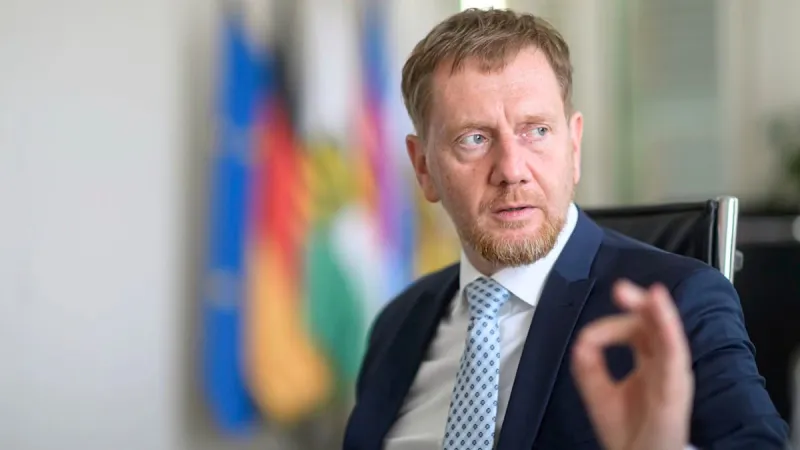
In Dresden, Saxony's Minister President Michael Kretschmer of the Christian Democratic Union (CDU) definitively reiterated his party's unyielding opposition to any form of coalition or collaboration with the far-right Alternative for Germany (AfD) party. This emphatic clarification emerged after Kretschmer faced scrutiny for previous statements concerning the political firewall between mainstream parties and the AfD, solidifying the CDU's strict demarcation policy.
The CDU leader's pronouncement aimed to dispel any ambiguity regarding the party's strategic approach to the AfD, a party that has seen a consistent rise in voter support across Germany, particularly in the eastern states. Kretschmer's reaffirmation comes amidst an ongoing debate within German political circles about how established parties should contend with the AfD's growing electoral strength.
Critiques directed at Kretschmer centered on his earlier remarks perceived by some as softening the CDU's firm stance, thereby potentially legitimizing future interactions with the AfD. The term Brandmauer, or firewall, is critically important in German political discourse, symbolizing the uncrossable barrier that mainstream democratic parties historically erect against extremist or populist movements.
Kretschmer's latest statement serves to reinforce the traditional Brandmauer, asserting that the CDU, under his leadership in Saxony, will not engage in governmental partnerships or formal collaborative agreements with the AfD. This position aligns with the broader national CDU party line, which has consistently advocated for a clear separation from the AfD.
The Alternative for Germany party often generates controversy with its policy proposals, ranging from immigration to social welfare. For instance, the party recently sparked a constitutional crisis by proposing ethno-specific baby aid, a move widely condemned by other political factions.
Maintaining a robust Brandmauer against the AfD is considered essential by many mainstream politicians to safeguard democratic values and prevent the normalization of far-right ideologies in governance. The CDU, as a prominent conservative force, often finds itself navigating complex political landscapes where it needs to appeal to voters who might otherwise be drawn to the AfD's populist rhetoric.
The political dynamics in Saxony are particularly sensitive. The region has witnessed significant electoral gains for the AfD in recent years, placing increased pressure on incumbent parties like the CDU to articulate a clear strategy for engaging with, or isolating, the ascendant far-right party.
Observers note that this renewed emphasis on the Brandmauer may also be a strategic move ahead of upcoming regional elections, where the CDU will seek to present a united front and a definitive policy direction to voters. The clarity offered by Kretschmer aims to prevent voter confusion and reassure traditional CDU supporters.
This firm demarcation also affects discussions around issues such as immigration and public safety, where the AfD often takes a hardline stance. Reports such as the plummeting German deportations have been seized upon by the AfD to criticize government policies, further highlighting the ideological divide between them and the CDU.
Kretschmer's reiteration underscores the persistent challenge faced by Germany's established political parties in defining their relationship with the AfD. His strong commitment to preventing any alliance signals a continued effort to contain the far-right's influence within the mainstream political system.