 Chris Robert
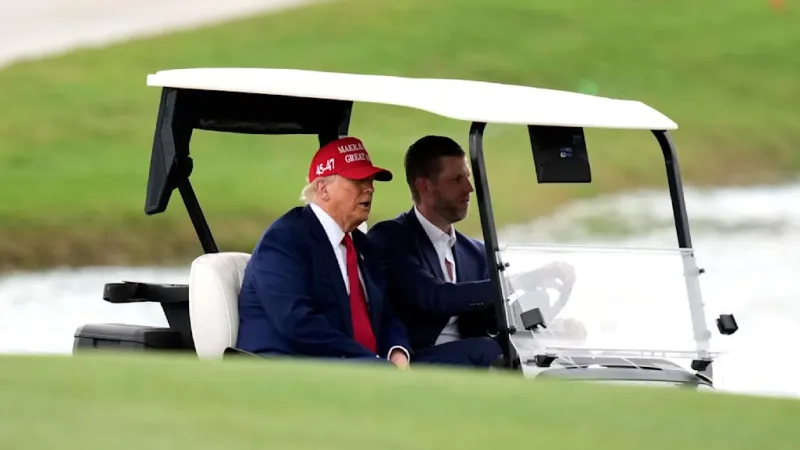
Bedminster, New Jersey – Fighter jets were scrambled over the weekend to intercept and escort two unauthorized aircraft from restricted airspace near President Donald Trump's golf club, where the President was in residence. The swift action underscores the stringent security protocols surrounding the President's movements and properties, ensuring the inviolability of designated zones.
The incident occurred while President Trump was at his private club in Bedminster, a location frequently utilized for working weekends and official engagements. Presidential visits automatically trigger the establishment of temporary flight restrictions, or TFRs, around the immediate vicinity to create a protective air bubble.
These Temporary Flight Restrictions are mandated by the Federal Aviation Administration (FAA) at the request of the Secret Service, specifically for the protection of the President, Vice President, and other high-level officials. They typically prohibit all non-scheduled flight operations within a certain radius and altitude, varying based on the specific threat assessment.
North American Aerospace Defense Command (NORAD) personnel, in conjunction with the Secret Service and the FAA, are responsible for monitoring compliance with these TFRs. Their sophisticated radar systems and communication networks are designed to detect any airspace violation promptly.
Upon detection of the two non-compliant aircraft entering the restricted zone, NORAD immediately initiated a scramble order for fighter jets. These military aircraft are kept on high alert, poised for rapid deployment to address any potential threat or unauthorized entry.
The fighter jets successfully intercepted both civilian aircraft. Following standard procedure, they established communication and escorted the planes out of the restricted airspace without further incident. The identities of the aircraft and their occupants were not immediately released, pending further investigation into the nature of their transgression.
Authorities typically investigate such airspace violations to determine if they were accidental or deliberate. While many TFR incursions are attributed to pilot error or a lack of awareness regarding the dynamic restrictions, any breach of presidential airspace is treated with the utmost seriousness.
The robust response serves as a critical deterrent and a practical demonstration of the nation's commitment to presidential security. It reinforces that unauthorized flights near presidential movements will be met with immediate and decisive action from defense and law enforcement agencies.
The incident underscores the vigilant stance of national security agencies. Globally, concerns over airspace integrity have led to heightened measures, exemplified by recent actions such as Germany doubling its federal police anti-drone units following incidents like the Leipzig drone incident, demonstrating a worldwide focus on securing skies from unauthorized incursions.
Adherence to FAA regulations and TFR advisories is paramount for all pilots. The FAA regularly issues Notices to Airmen (NOTAMs) detailing active TFRs, making it the responsibility of every aviator to stay informed before flight.
This Bedminster airspace violation serves as a stark reminder of the non-negotiable nature of presidential protection zones. Any deviation, regardless of intent, necessitates a rapid and forceful intervention to mitigate potential risks.
The successful interception ensures the continued integrity of the President's immediate environment and the operational readiness of the military and security apparatus tasked with his safeguarding. The investigation into the two aircraft is expected to clarify the circumstances behind their unauthorized flight.