 Edward DP Situmorang

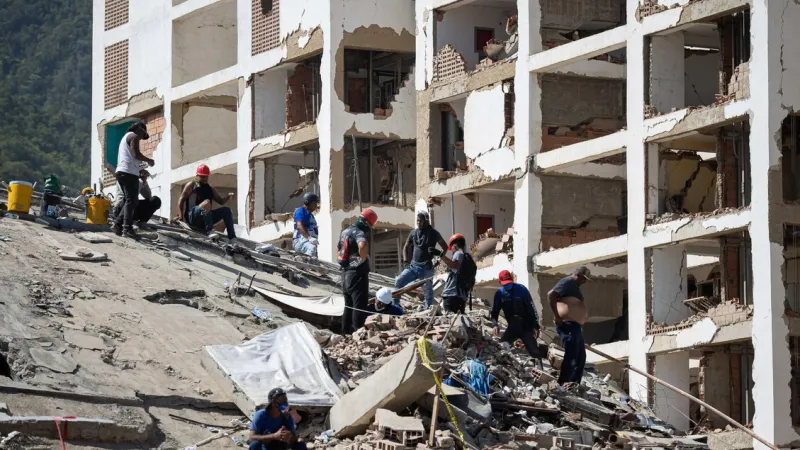
La Guaira, Venezuela – A catastrophic earthquake has transformed this vibrant coastal city into an apocalyptic landscape of shattered homes and submerged streets, leaving an indeterminate number of residents trapped and presumed dead. The devastating tremor, which struck with immense force, triggered widespread landslides and structural collapses across the region, overwhelming local emergency services and initiating a desperate race against time for survivors.
The initial seismic event, recorded at a significant magnitude, sent shockwaves through the Miranda state, particularly impacting communities nestled along the coastline. Eyewitness accounts describe moments of sheer terror as the ground buckled, buildings disintegrated, and the very earth seemed to open, swallowing homes and infrastructure in a torrent of mud and debris. The sheer scale of destruction has rendered large sections of La Guaira unrecognizable.
Emergency responders, including military personnel and volunteer groups, converged on the hardest-hit areas, battling unstable terrain and continuous aftershocks. The primary focus remains locating and extracting individuals buried under tons of rubble, a perilous task made more arduous by the fragile state of remaining structures and the pervasive threat of further collapses.
Efforts have intensified around sites where entire neighborhoods were erased from the map. The desperation of families searching for loved ones is palpable, their cries echoing amid the constant hum of heavy machinery and the urgent shouts of rescue teams. Medical facilities in the broader region are strained, treating a continuous influx of injured survivors, many suffering severe trauma.
One particularly grim area of focus has been the neighboring town of Macuto, which bore the brunt of the seismic impact. Search operations in Macuto saw repeated halts due to the inherent dangers of the unstable ground. Reports from the ground indicate that hope is rapidly diminishing for many missing individuals.
Among the presumed lost in Macuto is an Italian family of five, whose fate remains unknown after rescue efforts concluded without finding them, as detailed in reports like Venezuela Quake: Italian Family of Five Feared Lost As Macuto Search Ends. The cessation of searches in certain sectors underscores the overwhelming challenges faced by humanitarian groups and authorities, compounded by events such as a rescuer-halting aftershock.
The aftermath has plunged thousands into a profound humanitarian crisis. Many residents, their homes destroyed, are now displaced, seeking shelter in makeshift camps or with relatives in less affected areas. Access to clean water, food, and medical supplies has become critically urgent, prompting appeals for international assistance.
International organizations have begun mobilizing resources, assessing the needs on the ground, and preparing to deliver aid to the beleaguered region. However, logistical hurdles, including damaged roads and infrastructure, complicate the delivery of essential supplies to the most isolated communities.
President Nicolas Maduro has declared a state of emergency, vowing full government support for recovery and reconstruction efforts. He urged national and international cooperation to overcome what he described as one of the nation's gravest natural disasters in recent memory. The long road to recovery will undoubtedly span years.
The psychological toll on survivors and first responders is immense. Many have witnessed unspeakable horrors, lost family members, and face an uncertain future. Local psychologists and aid workers are attempting to provide mental health support, recognizing the deep emotional scars left by the catastrophe.
As the immediate rescue phase transitions into a more prolonged recovery effort, the focus will shift towards rebuilding infrastructure, establishing long-term housing solutions, and restoring essential services. The La Guaira earthquake serves as a stark reminder of nature's raw power and the vulnerability of human settlements.
The world watches as Venezuela grapples with this monumental tragedy, highlighting the critical need for resilient infrastructure and robust disaster preparedness mechanisms in earthquake-prone regions. The spirit of the affected communities, though shattered, shows initial signs of solidarity in the face of unimaginable loss.