 Dorry Archiles
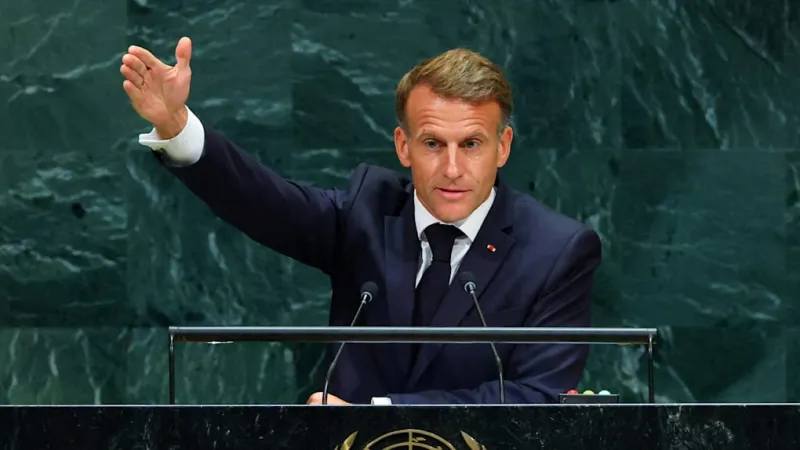
UNITED NATIONS – French President Emmanuel Macron sharply criticized the humanitarian and political situation in the Gaza Strip and West Bank during his address to the United Nations General Assembly, prompting an indignant retort from Israeli Prime Minister Benjamin Netanyahu, who characterized the speech as 'grotesque.' The diplomatic confrontation unfolded at the global forum, underscoring deep divisions regarding the ongoing Middle East crisis.
President Macron used his platform to highlight the escalating plight of civilians and the persistent impediments to a lasting peace in the region. He underscored the urgent need for adherence to international law and the establishment of a viable Palestinian state, echoing long-standing French foreign policy tenets.
Netanyahu's swift and forceful rejection came shortly after Macron's remarks, conveyed through a statement from the Prime Minister's Office. He reportedly denounced the French president's assessment as a profound misrepresentation of facts on the ground, asserting that it ignored the complexities of Israel's security concerns.
The Israeli leader's displeasure centered on what he perceived as a disproportionate focus on Israeli actions without adequate acknowledgment of the threats Israel faces. Such exchanges are not uncommon within the charged atmosphere of the UN General Assembly, where leaders frequently use their addresses to project national interests and challenge opposing viewpoints.
France has consistently advocated for a two-state solution, a position often at odds with current Israeli government policies. Macron's speech reiterated calls for an immediate and unconditional cessation of activities that undermine the prospects for peace, particularly referencing settlement expansion and restrictions on movement in the Palestinian territories.
The global stage of the UN General Assembly often serves as a barometer for international relations. This latest exchange between two prominent world leaders reflects the deep-seated political and humanitarian dilemmas that continue to define the Middle East landscape. Other nations, including the United States, carefully monitor these diplomatic skirmishes.
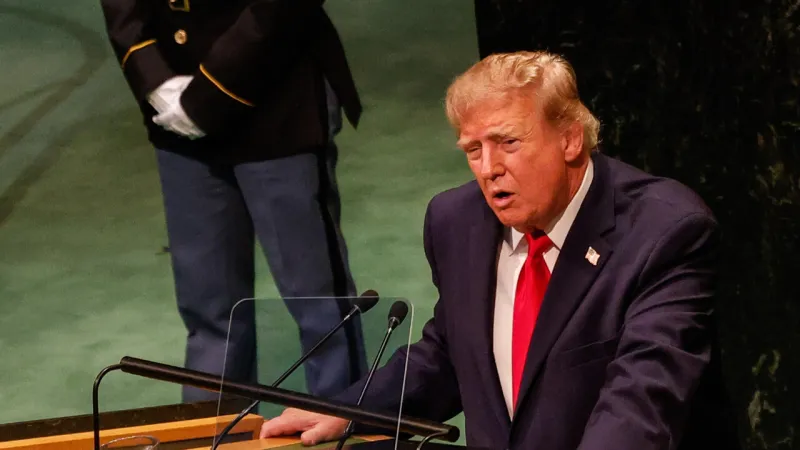
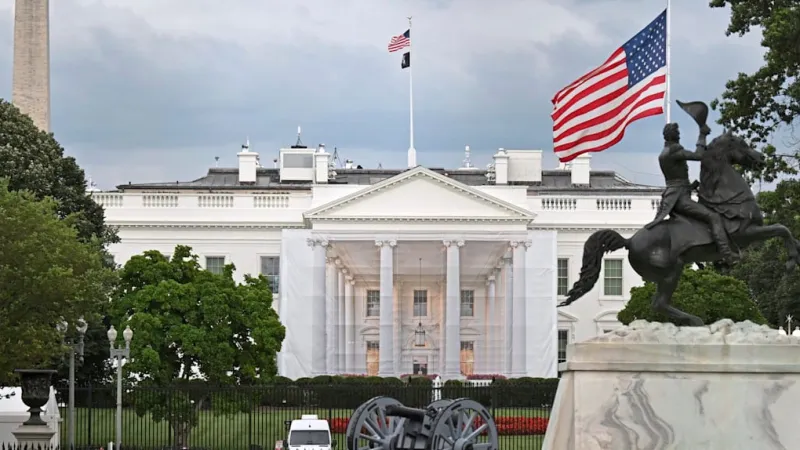
President Donald Trump's administration, while generally supportive of Israel, has also engaged in efforts to broker peace deals in the region. However, these initiatives have faced significant obstacles, often highlighting the entrenched positions of both sides. Discussions at the UNGA frequently touch upon broader regional stability, as seen in related debates where President Trump has addressed other global flashpoints. For instance, President Trump recently demanded action against other global threats during his own UN address. Trump Demands Putin Halt War, Delivers Iran Ultimatum at UN.
The humanitarian situation in the Gaza Strip, particularly, has been a recurring point of international concern, with numerous international bodies and aid organizations detailing severe shortages and restrictions. Macron's invocation of these conditions aimed to galvanize greater international action and accountability.
The rebuke from Netanyahu indicates the sensitivity of these issues for Israel, which views criticisms of its policies as often overlooking its security imperatives in a volatile region. The Israeli government routinely defends its actions as necessary measures against militant groups and existential threats.
Diplomatic efforts to de-escalate tensions and foster dialogue remain paramount. France, along with several other European nations, maintains that a durable peace requires direct negotiations leading to an independent Palestinian state coexisting peacefully with Israel. These views align with broader European Union positions on the Middle East crisis.
The UN General Assembly continues to be a crucial platform for such high-level diplomatic discourse, even as breakthroughs often prove elusive. The stark divergence presented by Macron and Netanyahu underscores the enduring complexity of the Middle East crisis and the formidable challenges facing global peacemaking endeavors. France has also been active in other UN diplomatic efforts, recently advancing resolutions on regional security, further highlighting its role on the global stage. France Advances UN Hormuz Resolution Amid G7 Houthi Attack Warnings.
The international community remains divided on the most effective path forward. While many concur on the necessity of addressing the humanitarian catastrophe, there is less consensus on the political leverage required to compel both parties toward a comprehensive settlement.