 Angela Stefani
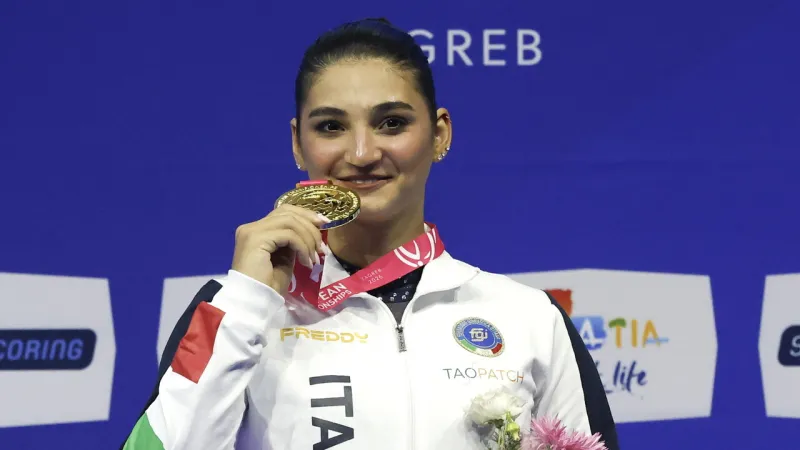
ZAGREB – Italian artistic gymnast Manila Esposito, a celebrated multi-medalist, recently delivered a powerful response to online body shaming by excelling at the Zagreb competition. Despite facing an onslaught of negative comments regarding her physique, Esposito secured multiple podium finishes, asserting that her athletic body is precisely what earns her gold. Her defiant performance served as a poignant rebuke to a pervasive issue within competitive sports.
The controversy erupted when Esposito, a prominent figure in Italian gymnastics, became the target of derogatory remarks online, scrutinizing her physical appearance rather than her formidable athletic prowess. These comments, often originating from anonymous accounts, underscore the intense public scrutiny athletes, particularly women, endure.
Responding directly from the platform, as indicated by the original source, Esposito declared, "My body is gold." This statement resonated widely, encapsulating her determination to let her achievements speak louder than her critics. Her performance in Zagreb was not just about medals; it became a declaration of self-acceptance and defiance.
At the heart of the matter was Esposito's undeniable success in Zagreb. While specific medal types were not detailed in the source, her description as a multi-medalist who responded "from the podium" suggests a dominant showing across various apparatuses. These victories served as tangible proof of her dedication and elite skill.
Body shaming in gymnastics is a long-standing and well-documented problem, often rooted in outdated aesthetic ideals. Athletes are frequently subjected to unrealistic standards, leading to immense psychological pressure and, in some cases, serious health issues. Esposito's stand brings renewed attention to this critical concern within the sport.
The psychological toll of such criticism can be devastating, impacting an athletes mental well-being and performance. Champions like Esposito navigate not only the physical demands of their sport but also the relentless public gaze and the often-unsolicited opinions about their bodies. This added burden can hinder development and enjoyment of the sport.
Sports organizations and governing bodies are increasingly urged to implement stronger policies against online harassment and to foster a more supportive environment for athletes. The focus should remain on athletic capability, health, and skill, rather than arbitrary physical attributes. This aligns with broader initiatives aiming to support Italy's elite athletes as they target major international competitions.
Esposito's experience mirrors that of numerous athletes globally who have spoken out against similar issues, highlighting a systemic challenge. This pervasive culture transcends individual sports, affecting athletes across disciplines and at all levels of competition.
Her resilience in the face of adversity further solidifies Esposito's role as a powerful role model for aspiring gymnasts and young people alike. She demonstrates that true strength lies not just in physical ability but also in mental fortitude and unwavering self-belief.
As Esposito continues her career, her voice will undoubtedly contribute to a larger conversation about athlete welfare and respectful engagement from the public. Her gold-worthy body, as she rightly declares, is a testament to her athletic excellence, not a canvas for public criticism. This incident underscores the ongoing need for a cultural shift in how society views and discusses athletes bodies.