Robert Andrison
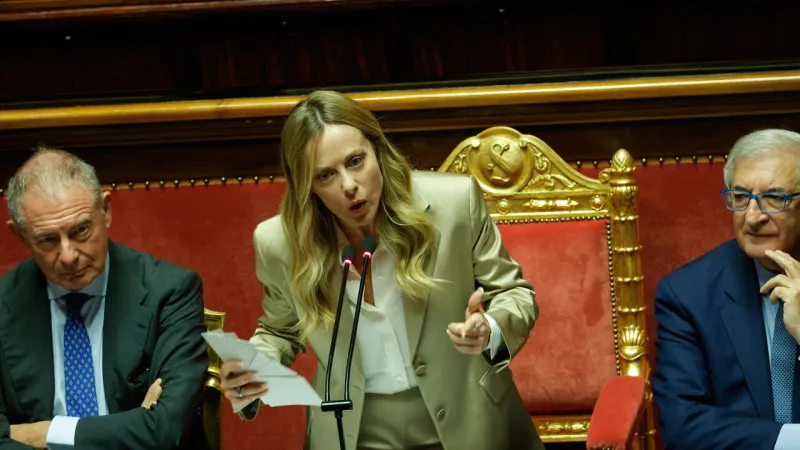
ROME – Prime Minister Giorgia Meloni is slated to present her government's position and outline key objectives for the impending European Council meeting to the Italian Chamber of Deputies on October 15, 2026. This crucial parliamentary session precedes the high-stakes Brussels summit scheduled for October 15-16, where European leaders will confront pressing issues ranging from energy security to the ongoing conflict in Ukraine and broader economic stability within the bloc.
The communication by Prime Minister Meloni is a customary but vital step in Italian foreign policy, ensuring that the government's mandate for international negotiations reflects domestic political consensus and priorities. The European Council, comprising the heads of state or government of EU member states, is the ultimate political decision-making body of the European Union.
Energy policy is expected to dominate a significant portion of the discussion. Europe continues to navigate the complexities of energy supply and pricing, particularly in the wake of geopolitical shifts. Italy, heavily reliant on energy imports, has consistently advocated for robust collective European responses to mitigate consumer and industrial costs. The related article, Meloni Demands Urgent EU Energy Response; Ukraine Stance Firm, highlights the urgency of this position.
The war in Ukraine will also feature prominently on the agenda. The European Union has maintained a united front in supporting Kiev, imposing sanctions on Russia, and providing humanitarian and military aid. Prime Minister Meloni is anticipated to reiterate Italy's unwavering commitment to Ukraine's sovereignty and territorial integrity, while also addressing the socio-economic ramifications of the conflict across Europe.
Discussions regarding the EU's long-term strategy for engagement with Ukraine, including potential pathways for future membership and reconstruction efforts, are likely. The delicate balance between supporting Ukraine and managing the economic strain on member states remains a central challenge for the Council.
Furthermore, the European Council is expected to delve into matters of economic governance and competitiveness. With inflation concerns and fiscal pressures persisting in several member states, leaders will review strategies to bolster the European economy, enhance the single market, and address demographic challenges. Italy's own budget maneuver and regional autonomy debates, as highlighted in Crucial Italian Budget Maneuver Postponed; Regional Autonomy Bill Surges, underscore the complex interplay between national and European economic priorities.
The parliamentary debate offers an opportunity for opposition parties to question the government's strategy and articulate alternative viewpoints. The unity of political forces on critical international matters, such as support for Kiev, has been a recurring theme in Italian politics, with figures like Giuseppe Conte previously hoping for cross-party alignment on such resolutions, as seen in Conte Hopes Opposition Unites on Crucial Kiev Resolution.
Prime Minister Meloni's communication is not merely a formality; it is a critical juncture for Italy to project its influence and concerns onto the European stage. The insights she provides will shape public understanding of the challenges and opportunities facing the European project.
Observers will keenly watch for any shifts in emphasis or new proposals from the Italian government, particularly concerning migration policies and the delicate balance of power within the EU institutions. Italy often plays a pivotal role in these discussions due to its strategic geographical position and economic weight.
The European Council meeting itself promises to be a robust exchange of ideas and demands, with each member state striving to advance its national interests while contributing to the collective good of the Union. Prime Minister Meloni's briefing will set the tone for Italy's active participation in these paramount deliberations.
This parliamentary review ensures democratic oversight of Italy's foreign policy positions, providing transparency and accountability to the electorate regarding decisions that will directly impact the nation's future within the broader European framework.