 Edward DP Situmorang
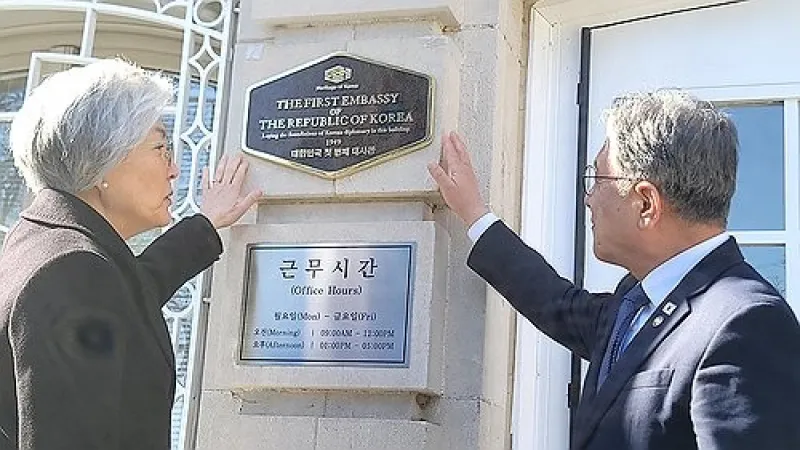
SEOUL, Nov. 16 (Yonhap) -- The South Korean foreign ministry announced Monday it is embarking on an ambitious plan to reconstruct its aging embassy compound in the United States, a critical diplomatic outpost. This significant undertaking, however, faces considerable uncertainty regarding its funding, posing a challenge to Seoul's long-term infrastructure investment in its most vital bilateral relationship. The initiative aims to modernize facilities essential for diplomatic operations and personnel, reflecting the enduring importance of the US-South Korea alliance in 2026.
The current embassy, located in the heart of Washington, D.C., has served as the nerve center of South Korean diplomacy in the U.S. for decades. Built during an earlier era, its infrastructure now struggles to meet the demands of modern diplomatic engagement, security protocols, and operational efficiency. Officials have repeatedly emphasized the need for an overhaul to properly represent South Korea's global stature and facilitate effective communication with the U.S. government under President Donald Trump.
Ministry spokesperson Lee Dong-hun stated, "The reconstruction of our embassy in Washington is not merely a renovation project; it is an investment in the future of the South Korea-U.S. alliance. Our diplomatic missions must reflect our nation's commitment and capability." He underscored the strategic necessity of providing a state-of-the-art facility for the hundreds of diplomats and staff working tirelessly to advance national interests.
The primary hurdle lies in securing the necessary budgetary allocations. The reconstruction project is expected to carry a substantial price tag, with preliminary estimates suggesting costs running into hundreds of millions of dollars. These figures necessitate robust parliamentary approval and consistent funding commitments over several fiscal years, a process that can be protracted and subject to shifting political and economic priorities.
South Korea's economy, while robust, has recently faced various challenges, with some observers noting a South Korea Industry Crisis that could tighten public spending. This broader economic context could complicate efforts to secure immediate and comprehensive funding for a large-scale overseas construction project.
Moreover, the legislative calendar and domestic political landscape often dictate the pace of major budgetary decisions. Securing consensus across political factions for such a significant foreign expenditure remains a key test for the administration. Previous large-scale infrastructure projects, both domestically and internationally, have encountered similar financial scrutiny.
The diplomatic relationship between South Korea and the United States remains a cornerstone of Seoul's foreign policy and national security. A modern, secure, and technologically advanced embassy is deemed indispensable for fostering deeper engagement, especially as both nations navigate complex geopolitical challenges and seek to strengthen economic ties. The embassy plays a pivotal role in dialogues ranging from defense cooperation to trade agreements and technological partnerships.
This initiative also aligns with a global trend among nations to upgrade their diplomatic infrastructure to meet contemporary security threats and technological advancements. Many countries are investing heavily in new embassy buildings that integrate smart technologies, enhanced security features, and sustainable design principles, acknowledging these facilities as vital tools of soft power and national representation.
While the foreign ministry has expressed confidence in eventually securing the funds, the timing and sequencing of the project remain subject to financial realities. Delays in reconstruction could potentially impact the operational efficiency of the embassy, forcing temporary relocations or making it harder to host high-level diplomatic events that require modern facilities.
The commitment to rebuilding the embassy underscores South Korea's unwavering dedication to its alliance with the United States. Despite the fiscal uncertainties, the long-term vision prioritizes maintaining a strong, visible, and effective diplomatic presence in Washington, D.C., as a testament to the enduring partnership. South Korea's strategic focus on international diplomacy is also evident in efforts like President Lee's high-stakes ASEAN and APEC engagements, highlighting a comprehensive approach to global affairs.
The foreign ministry anticipates continued negotiations with relevant parliamentary committees to ensure the project moves forward. They aim to present a detailed financial plan and a phased construction schedule, demonstrating fiscal prudence while emphasizing the strategic importance of the investment. This diplomatic infrastructure project stands as a tangible representation of the bilateral relationship's future trajectory.