 Chandra Wijayanto
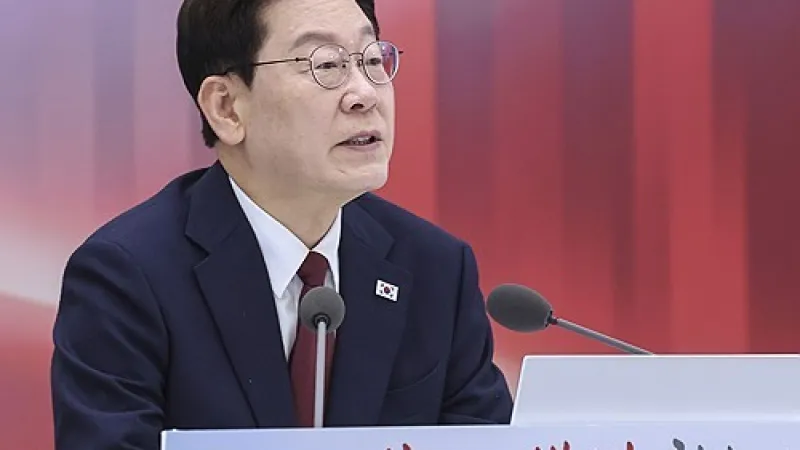
SEOUL, November 16, 2026 – South Korean President Lee Jae Myung today embarks on a pivotal diplomatic journey, heading to Manila for the Association of Southeast Asian Nations (ASEAN) summit and subsequently to Shenzhen for the Asia-Pacific Economic Cooperation (APEC) leaders' meeting. This two-leg mission aims to reinforce Seoul's engagement with key regional partners, address pressing economic challenges, and advance strategic alliances across the dynamic Asia-Pacific landscape.
The presidential itinerary begins in Manila, where President Lee will participate in discussions centered on bolstering regional security, fostering economic integration, and ensuring the resilience of critical supply chains. ASEAN, a crucial bloc of ten nations, represents a significant market and a vital partner for South Korea in navigating complex geopolitical currents and promoting stability within the Indo-Pacific.
Following the ASEAN engagements, President Lee will travel to Shenzhen, China, for the APEC summit. This forum brings together 21 Pacific Rim economies, accounting for approximately 60 percent of global GDP. Here, leaders are expected to tackle issues of trade liberalization, investment facilitation, the burgeoning digital economy, and inclusive growth strategies amidst a shifting global economic order.
South Koreas specific agenda for these high-profile gatherings includes accelerating export diversification, attracting foreign direct investment, and fortifying technology partnerships, particularly in advanced manufacturing and digital innovation. The administration views these summits as indispensable platforms to secure new growth engines for the national economy.
These diplomatic efforts unfold against a backdrop of persistent global economic uncertainties, marked by inflationary pressures and supply chain vulnerabilities. The need for robust multilateral diplomacy to foster stability and predictable trade environments has rarely been more pronounced. President Lee's presence underscores South Koreas commitment to a rules-based international order and collaborative problem-solving.
On the sidelines of both summits, President Lee is anticipated to hold a series of bilateral meetings with several heads of state and government. These one-on-one engagements are critical for deepening strategic partnerships, resolving specific trade issues, and coordinating responses to regional security concerns, including nuclear disarmament and maritime disputes.
Domestically, the success of this diplomatic mission holds significant implications for South Koreas economic outlook. Amid ongoing challenges facing various industrial sectors, the administration recognizes that strong international ties are paramount. As noted in a recent analysis, "South Korea Industry Crisis: Handshakes Alone Cannot Steady Economic Ship," while direct economic relief is crucial, diplomatic groundwork lays the foundation for long-term recovery and growth.
South Korea, often referred to as a middle power, plays a vital role in bridging divides and advocating for open, transparent economic policies within the Asia-Pacific. President Lee's delegation seeks to leverage this position to advocate for policies that benefit both advanced and developing economies, promoting shared prosperity across the region.
Discussions at APEC are also expected to touch upon the future of digital trade and cross-border data flows, areas where South Korea possesses significant expertise and innovative capacity. Advancing frameworks that balance innovation with data privacy and security will be a key objective for the South Korean delegation.
The geopolitical landscape further elevates the importance of these summits. With global power dynamics constantly evolving, President Lee's proactive engagement in both ASEAN and APEC demonstrates South Koreas strategic intent to shape regional narratives rather than merely react to them. This assertive approach aims to safeguard national interests and promote peace.
Expected outcomes include concrete agreements on trade facilitation, commitments to sustainable development, and enhanced regional dialogue mechanisms. While immediate breakthroughs are often rare at such broad summits, the cumulative effect of sustained engagement is crucial for long-term diplomatic success and economic resilience.
President Lee Jae Myung's itinerary for Manila and Shenzhen represents a critical test of South Koreas diplomatic prowess and its capacity to exert influence on the international stage. The coming days will provide a clear indication of the nations ability to forge stronger alliances and secure its economic future in a complex world.