 Dodi Irawan
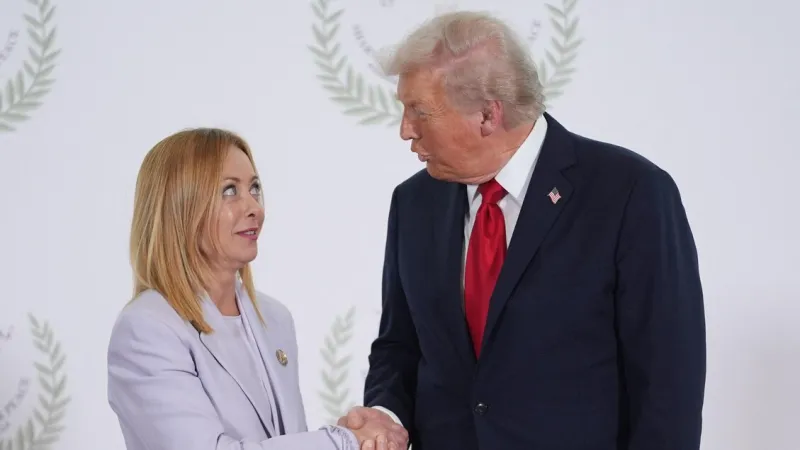
ROME – Italian Prime Minister Giorgia Meloni convened her Council of Ministers today to address recent friction involving President Donald Trump, emphasizing the critical need to prevent any disruption to the robust US-Italy relations. The extraordinary session underscored Rome's commitment to preserving its longstanding strategic partnership with Washington, a cornerstone of its foreign policy.
The directive from Palazzo Chigi follows a period of heightened diplomatic sensitivity between the two nations, though the specific nature of the disagreement with President Trump was not publicly detailed. Meloni reportedly used the cabinet meeting to reinforce the imperative of maintaining steady and amicable bilateral ties despite any transient differences.
Sources within the government, speaking anonymously due to the delicate nature of the discussions, indicated that the Prime Minister stressed the importance of pragmatic diplomacy. The message was clear: Italy would continue to prioritize its alliance with the United States above all, irrespective of political fluctuations.
In a tangible display of this commitment, Prime Minister Meloni extended an invitation to all ministers to attend the upcoming US Embassy reception celebrating American Independence Day. This gesture serves as a powerful symbol of Italy's dedication to its trans-Atlantic partnership and a reaffirmation of cordial diplomatic engagement.
The US-Italy relations encompass a wide array of shared interests, from economic cooperation and trade to security collaboration within NATO. Italy hosts significant American military presence, and both nations frequently coordinate on global challenges, including regional stability in the Mediterranean and broader European security.
Maintaining strong ties with the United States is considered a bedrock principle for successive Italian governments. This continuity in foreign policy transcends internal political shifts, reflecting a deep-seated belief in the mutual benefits derived from the alliance.
Observers suggest Meloni's proactive stance aims to preempt any potential escalation of perceived tensions, particularly in an era where global alliances face renewed scrutiny. Her government seeks to project an image of steadfastness and reliability on the international stage.
The Council of Ministers session reportedly included discussions on potential diplomatic avenues to smooth over any misunderstandings. Ministers were advised to exercise prudence in public statements regarding bilateral matters, ensuring a unified government message that upholds the integrity of the US-Italy partnership.
Beyond the immediate concerns, the strategic dialogue between Washington and Rome also extends to collaborative efforts on pressing issues such as energy security, climate change initiatives, and combating international terrorism. These areas require sustained cooperation that could be hampered by diplomatic rifts.
The Independence Day reception, traditionally a high-profile diplomatic event, will now take on added significance. It offers a crucial opportunity for high-level engagement and a visible demonstration of the enduring friendship between the two nations, despite recent political undercurrents.
For Rome, securing the stability of its relationship with the United States remains paramount, particularly as geopolitical landscapes continue to evolve. Meloni's administration clearly signals its intent to navigate any complexities with a firm hand, safeguarding crucial international bonds.
The focus on pragmatic diplomacy and the invitation to the embassy reception together highlight Italy's strategic approach to its foreign policy. The objective is to ensure that temporary political disagreements do not compromise long-term strategic alignments.