 Angel Doris
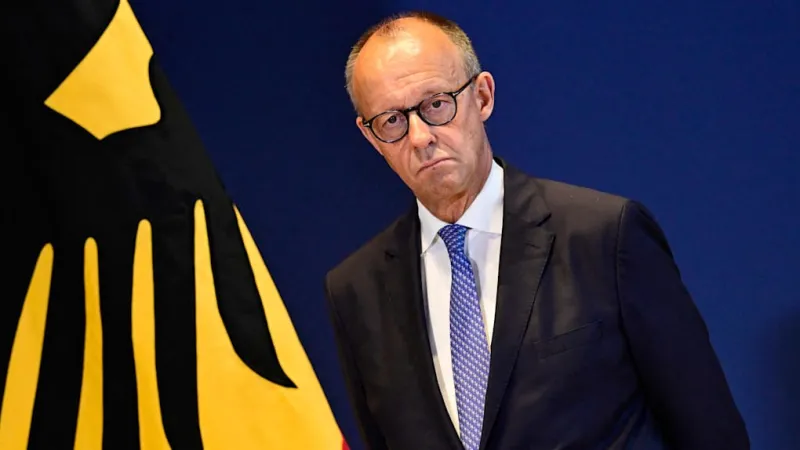
BERLIN – Deep unease and open speculation are now swirling through the ranks of Germany's leading conservative bloc, the Christian Democratic Union (CDU) and its Bavarian sister party, the Christian Social Union (CSU). Prominent party figures are privately expressing doubts about Chairman Friedrich Merzs ability to lead, suggesting his era may be nearing an unanticipated conclusion.
This sentiment is fueled by a growing divergence between Merz and key allies regarding pivotal reform plans. Multiple high-ranking members have reportedly distanced themselves from the chairman's central policy initiatives, signaling a significant rift within the party leadership.
The political fate of Merz, a seasoned conservative with ambitions for the Chancellery, increasingly hinges on a specific upcoming date, widely perceived as a critical juncture for his leadership. While the exact event remains a subject of internal discussion, its outcome is expected to profoundly shape the party's direction.
Sources close to the party's executive committee indicate that the disaffection is not isolated but reflects broader anxieties about the Union's strategic positioning and electoral prospects. These concerns are particularly acute given upcoming regional elections and the next federal election cycle.
Merzs proponents argue that his strong, traditional conservative stance is essential to galvanize the party base and offer a clear alternative to the current governing coalition. They point to his unwavering commitment to fiscal discipline and national security as vital for Germany's stability.
However, a faction within the Union, increasingly vocal, suggests that Merzs approach may be too polarizing or insufficiently adaptable to contemporary political challenges. They advocate for a more inclusive and modern agenda to attract a wider electorate.
The pushback on reform plans signals a lack of consensus on the party's future policy direction. These reforms, initially championed by Merz, were intended to rejuvenate the Union's platform and address pressing national issues, yet they now face internal resistance.
Friedrich Merz assumed the chairmanship with the mandate to revitalize the CDU after a period of electoral setbacks. His leadership has been characterized by efforts to reclaim the party's conservative identity and streamline its policy framework.
Observers note that the intensity of internal criticism has noticeably escalated, moving beyond mere policy disagreements to fundamental questions about Merzs capability to unite the party and lead it to future electoral victories.
The perceived political fragility comes at a sensitive time for the Union, as it seeks to consolidate its position as the primary opposition force and prepare for the challenges of an evolving political landscape. The integrity of Merzs leadership will be paramount in navigating these complexities.
Historically, the CDU has faced similar internal power struggles, often preceding significant shifts in party leadership or strategic direction. This current climate of speculation echoes past periods of intense internal debate and realignment.
As the critical date approaches, all eyes within German politics will remain fixed on Merz and the Union. His ability to quell dissent, reaffirm his authority, and forge a unified path forward will be the ultimate test of his political acumen.