 Dorry Archiles
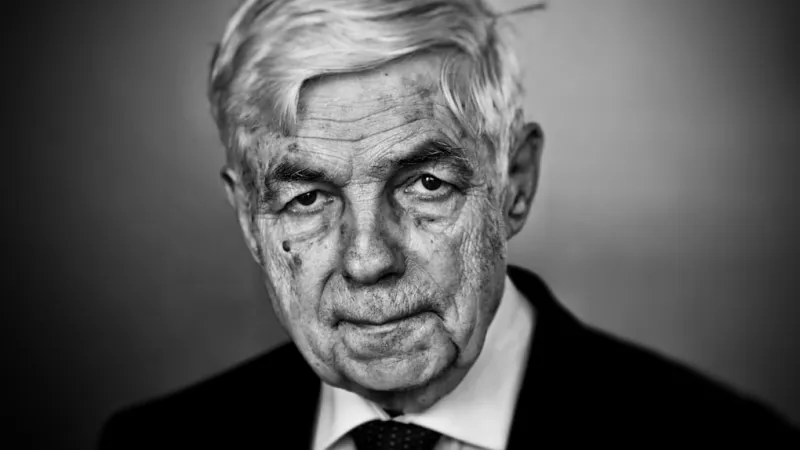
The German intellectual and political landscape mourns the passing of Michael Stürmer, a towering figure recognized for his astute historical analysis, his influential counsel to chancellors, and his engaging journalism. Stürmer, a captivating and charming contemporary, died recently, leaving behind a profound legacy that spanned academia, statecraft, and public discourse.
Stürmer was widely acclaimed as the “Chronicler of a World Without a Center,” a phrase reflecting his perceptive insights into the complex, often disorienting shifts in global power dynamics and international relations throughout the late 20th and early 21st centuries. His work consistently sought to decipher the underlying currents shaping geopolitical realities.
His career as a historian was marked by a deep understanding of German and European history, particularly the Cold War era and the challenges of reunification. He illuminated the intricate web of decisions and ideologies that defined an epoch, making history accessible and relevant to contemporary policy debates.
Beyond the ivory tower, Stürmer served as a strategic advisor to several German chancellors, offering his profound historical perspective to guide national policy. His counsel was particularly valued during moments of significant international flux, providing a historical anchor in turbulent political waters.
In this capacity, Stürmer played a crucial, albeit often discreet, role in shaping Germany's foreign policy orientation, bridging the gap between academic theory and practical statecraft. His ability to articulate complex historical parallels for contemporary challenges made him indispensable in the corridors of power.
As a prominent correspondent for WELT, one of Germany's leading national media outlets, Stürmer translated his academic rigor into compelling journalistic narratives. His articles were renowned for their clarity, analytical depth, and elegant prose, reaching a broad audience beyond specialized academic circles.
His writings for WELT offered readers a window into the intricacies of international politics and historical forces, often challenging conventional wisdom and providing fresh perspectives on critical global events. He maintained a reputation for incisive commentary and independent thought.
Stürmer possessed a remarkable ability to synthesize vast amounts of information, distilling complex historical and political phenomena into understandable frameworks. This skill made him a sought-after speaker and commentator, enriching public debates on Germany's role in the world.
His work frequently touched upon the delicate and often contentious relationship between Eastern and Western Europe, particularly in the aftermath of the Cold War. His insights into the enduring impact of past conflicts, including the legacy explored in articles like Stalins Shadow: Unearthing Lost Russian-German History in Eastern Europe, provided essential context for understanding contemporary challenges.
Michael Stürmer will be remembered not only as an exceptional scholar and advisor but also as a charismatic public intellectual who significantly enriched Germany's political and cultural discourse. His analytical legacy and the grace with which he navigated diverse professional realms will continue to inspire.