 Debby Wijaya
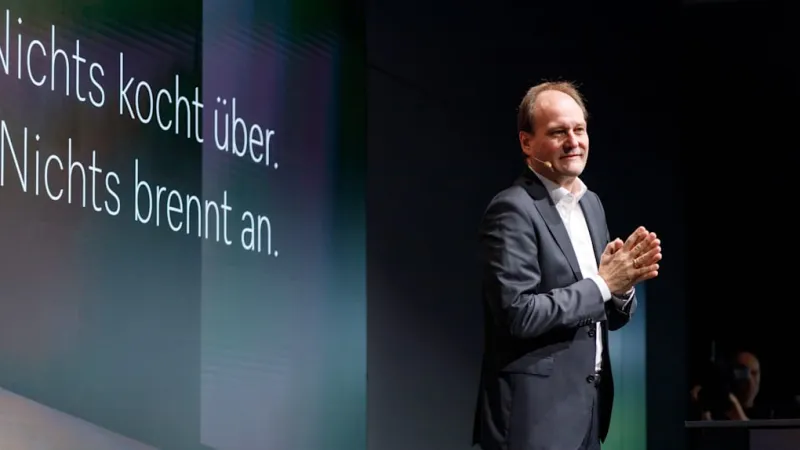
Gütersloh, Germany – Markus Miele, the influential chief executive of the eponymous German appliance manufacturer, has issued a stark warning regarding the deteriorating business conditions in Germany, hinting that the company's next production facility could be established in the United States. Miele's critique centers on what he describes as debilitating bureaucracy and inadequate infrastructure, asserting that the current situation is unsustainable for long-term industrial viability.
Speaking publicly about the challenges, Miele underscored the critical need for an accelerated pace of reform and tangible improvements in the country's economic framework. His comments resonate deeply within Germany's industrial sector, where concerns about national competitiveness have been steadily mounting.
The core of Miele's grievance lies in the slow progress of bureaucratic reduction and the chronic underinvestment in essential infrastructure. He highlighted how cumbersome administrative processes and outdated logistical networks hinder efficiency, inflate costs, and ultimately stifle innovation for German businesses.
Such systemic impediments, according to the Miele CEO, make other nations, particularly the United States, increasingly attractive for new investments and expansion. The potential shift of a significant manufacturing operation to the US reflects a growing apprehension among German industrialists about the nation's appeal as an industrial location.
The prospect of Miele, a beacon of German engineering and a symbol of its Mittelstand, actively considering overseas expansion for new plants serves as a potent indicator of the seriousness of the economic challenges facing Germany. The company's heritage is deeply intertwined with German industrial prowess.
Miele's pronouncements are not isolated; they mirror a broader sentiment among Germany's business leaders. Many share concerns about the rising costs of energy, labor shortages, and an increasingly complex regulatory environment that collectively diminish the country's competitive edge on the global stage. Recent reports have also highlighted significant pressures, such as German Businesses Hit with Record Sick Leave Costs, further burdening enterprises.
The federal government in Berlin has acknowledged some of these criticisms, yet industry figures like Miele argue that proposed solutions are often too slow or insufficient to address the scale of the problems. There is a palpable demand for swifter, more decisive political action to safeguard Germany's industrial future.
Analysts suggest that without significant and immediate reforms, more German companies may follow suit, opting for locations with more favorable business climates. This could have profound long-term implications for Germany's economic stability, employment rates, and its position as an industrial powerhouse.
The appeal of the United States often includes a more streamlined regulatory environment, competitive energy prices, and substantial investment incentives, making it an increasingly viable alternative for companies seeking to expand or relocate production. This competitive dynamic puts pressure on European economies, including Germany, to adapt.
For Miele, a family-owned enterprise with a storied history spanning over a century, the decision to potentially move production is not taken lightly. It represents a strategic imperative driven by economic realities rather than a lack of commitment to its home country. The company seeks operational environments where it can ensure its future growth and efficiency.
The situation underscores a critical juncture for Germany. Policymakers face the urgent task of implementing meaningful reforms to address the concerns raised by prominent industrialists. The ability to retain and attract major industrial players like Miele will be a key determinant of Germany's economic trajectory in the coming decades.