Angela Stefani
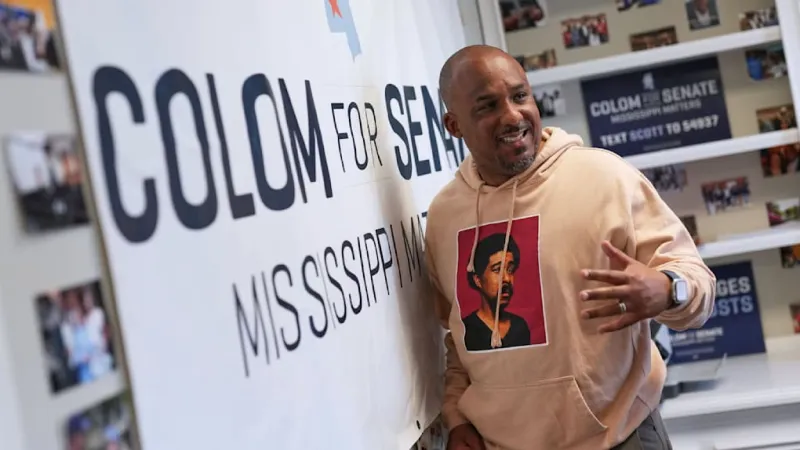
Jackson, Mississippi – Democrats have clinched a stunning U.S. Senate seat in Mississippi, a traditionally Republican stronghold, eight days after the general election. This unexpected outcome, confirmed after a prolonged ballot tabulation, sends profound ripples through the national political landscape and delivers a significant setback to the presidential aspirations of prominent GOP figure J.D. Vance.
The victory marks a seismic shift in a state that has reliably voted Republican for decades. Political analysts universally considered the race a long shot for Democrats, underscoring the depth of the upset and forcing a reevaluation of electoral dynamics in deep-red territories.
For J.D. Vance, a rising star within the Republican party often speculated as a future presidential contender for 2028 or beyond, the Mississippi Senate outcome serves as an ominous signal. His political capital, built on a strong conservative base, faces scrutiny as the party grapples with unexpected vulnerabilities. This defeat in a state considered a safe bet complicates the narrative of broad Republican dominance.
Democratic strategists are celebrating the win as a testament to persistent grassroots organizing and a carefully tailored message that resonated with an increasingly diverse electorate. "This shows that no state is truly unwinnable," stated Eleanor Hayes, a Democratic National Committee spokesperson, in an interview. "Our commitment to engaging every community is clearly paying dividends."
Conversely, Republican leaders are undertaking immediate introspection. The loss in Mississippi highlights potential challenges for the party in maintaining its traditional base, particularly amidst evolving demographic trends and voter sentiment. This unexpected defeat will likely spark intense debate within GOP circles regarding campaign strategies and candidate selection moving forward.
The contested Mississippi Senate race saw the Democratic challenger, whose identity became nationally recognized through this upset, overcome a significant polling deficit against their Republican opponent. The delay in finalizing results stemmed from a painstaking review of absentee and provisional ballots across several counties, adding to the suspense of the unexpected flip.
While the exact balance of power in the U.S. Senate for the 119th Congress is still being finalized, this Mississippi Senate result undeniably complicates Republican efforts to expand or maintain their majority. Every seat gained by Democrats provides critical leverage in legislative battles and future confirmation proceedings, potentially impacting President Donald Trump's policy agenda.
The upset reverberates beyond immediate Senate control, setting a potentially precarious precedent for the 2028 presidential cycle. Should the Democratic party demonstrate an ability to mobilize voters in states like Mississippi, it could reshape the electoral map and force Republican presidential hopefuls, including Vance, to invest resources in territories previously taken for granted.
J.D. Vance, known for his articulate conservative views and populist appeal, now faces a tougher path to the White House. A core tenet of his perceived strength was the unwavering support of the Republican base in states like Mississippi. This result suggests that even bedrock GOP support cannot be assumed without robust and compelling campaigns.
Political science professor Dr. Marcus Thorne of Georgetown University commented, "This Mississippi Senate outcome is a clear warning shot for the Republican party. It indicates that while national trends might favor one party, local dynamics and strong candidate messaging can still produce significant upsets. For figures like J.D. Vance, this demands a more nuanced approach to national campaigning."
The long-term implications for Mississippi itself remain to be seen, as the state navigates a split in its federal representation for the first time in decades. The newly elected Democratic senator will undoubtedly face challenges and opportunities in representing a state with deeply ingrained political traditions while attempting to deliver on their campaign promises.
As the dust settles on this surprising electoral development, both parties will undoubtedly dissect the Mississippi Senate race for lessons. The Democrats will seek to replicate its success, while Republicans will work to understand and mitigate their vulnerabilities in what they once considered unassailable territory, fundamentally altering the calculus for future elections.