 Angela Stefani
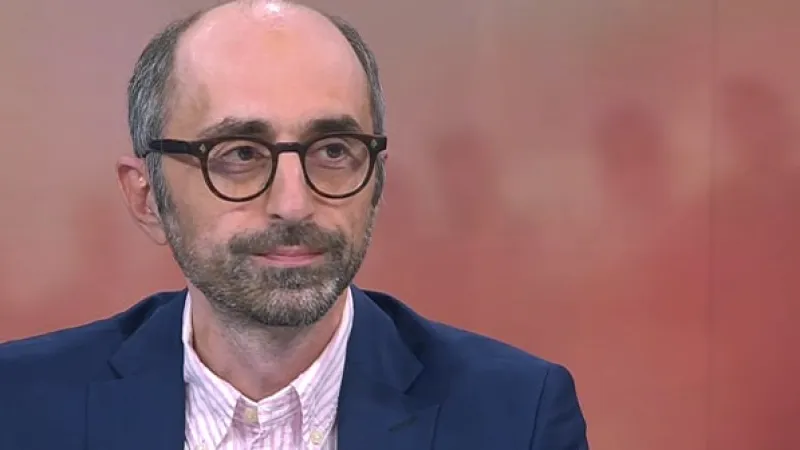
Berlin—Eren Güvercin of the Alhambra Society has sharply criticized German Muslim associations for their long-standing reluctance to explicitly identify the motives behind Islamist attacks, including the recent CSD incident. His analysis highlights a perceived failure to confront radicalization directly, a stance he contends enables further extremist entrenchment within online communities.
Güvercin specifically noted a palpable surge in extremist activity across digital platforms. "We can observe a massive uninhibitedness of the Islamist scene in social media," he stated, pointing to an environment where radical ideologies flourish unchecked, particularly among impressionable youth.
This criticism underscores a persistent pattern, according to Güvercin, where Islamic organizations routinely sidestep directly addressing the theological or ideological underpinnings of such violent acts. This avoidance, he suggests, complicates efforts to foster genuine counter-narratives.
The failure to name the specific motives, often rooted in extremist interpretations of Islam, inadvertently allows radical narratives to gain traction among young Muslims. This absence of clear condemnation from community leaders can leave a vacuum that radicalizers readily exploit, contributing to the broader phenomenon of youth radicalization.
The CSD attack serves as a stark example of the consequences of such unchecked radicalization. The incident drew widespread condemnation, yet the subsequent discourse from certain Muslim groups, according to Güvercin, often fell short of addressing the underlying Islamist motivations explicitly.
By reframing the discussion or focusing on generalized societal issues rather than the specific extremist ideology, these associations may inadvertently hinder effective prevention strategies. True counter-extremism, Güvercin argues, requires an honest assessment of the ideological drivers.
Discussions surrounding the CSD attack have frequently converged on themes of radicalization and surveillance. Experts have noted how incidents like the CSD attack fuel scrutiny of German state surveillance failures, prompting calls for tougher security measures.
The broader societal debate in Germany about integration, freedom of speech, and the role of religious communities in countering extremism often becomes fraught with accusations of Islamophobia, further complicating an already sensitive issue.
Güvercin's observations suggest that this reluctance erodes public trust in these associations' capacity to genuinely address and combat extremist elements within their communities. For many, a clear denunciation of violent extremism, including its ideological roots, is a prerequisite for productive dialogue.
Addressing this challenge, Güvercin implies, necessitates a shift towards transparent and unambiguous condemnation of extremist ideologies. This would involve directly confronting radical interpretations and working proactively to inoculate young people against their allure.
The analyst highlighted social media as a critical battleground in this ideological struggle. The rapid spread of extremist propaganda online demands equally robust counter-messaging, which he believes is currently insufficient from some established organizations.
Previous analyses have also explored the complex dynamics of extremism, including how family ties are crucial to understanding extremism post-CSD attack, suggesting a multifaceted problem beyond just individual radicalization.
The political landscape also reflects these tensions. For instance, the German Greens acted against extremist narratives by suing individuals like Sellner for CSD attacker posters, demonstrating the wider societal pushback.
Ultimately, Güvercin's critique serves as a call to action for Muslim associations to engage more critically and openly with the issue of Islamist radicalization. A collective, unequivocal stance against all forms of extremism, coupled with robust educational initiatives, remains paramount to safeguarding vulnerable youth and societal cohesion.