 Dorry Archiles
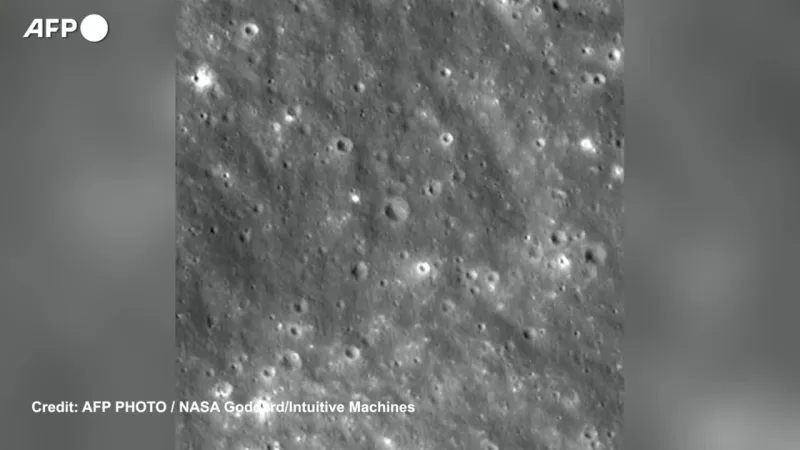
WASHINGTON – NASA has officially confirmed the discovery of a distinctive new lunar crater on the Moon's far side, unequivocally linking its formation to the impact of a SpaceX Falcon 9 rocket booster. Images captured by the Lunar Reconnaissance Orbiter (LRO) provided irrefutable before-and-after evidence of the impact site, revealing a unique double-lobed depression not typically seen with natural or single-object impacts.
The impact, which occurred on March 4, 2022, marked an unprecedented event, as it was the first time a piece of space junk, specifically a rocket body, unintentionally struck the lunar surface. The booster in question was the upper stage of a Falcon 9 rocket launched in 2015, which had deployed a climate observation satellite before becoming derelict.
Astronomers had tracked the spent booster for years, anticipating its collision course with Earths natural satellite. While initial reports erroneously identified the object as a Chinese rocket, subsequent analysis by the Jet Propulsion Laboratory confirmed its SpaceX origin.
What truly distinguishes this lunar crater is its morphology. Instead of a single, roughly circular depression, the LRO images show two distinct, overlapping craters: one approximately 60 feet (18 meters) across and the other about 50 feet (16 meters) in diameter. This dual structure has prompted scientific inquiry into the nature of the booster upon impact.
Experts hypothesize that the rocket body, having exhausted its fuel, likely had significant mass concentrated at both ends – such as the engine assembly and a possibly intact empty fuel tank. This distribution of mass could explain the formation of two distinct depressions rather than one symmetrical cavity.
NASAs LRO, launched in 2009, played a critical role in this discovery. Its suite of high-resolution cameras, particularly the Narrow Angle Cameras (NAC), enabled scientists to scrutinize the lunar surface with unparalleled precision, allowing for direct comparison of the terrain before and after the event.
The incident serves as a stark reminder of the increasing volume of space debris in Earth orbit and beyond. While the Moon has been subjected to countless meteoroid impacts throughout its history, and several controlled impacts by human missions, this unintentional rocket strike highlights a growing challenge for space agencies.
Scientists continue to study the new crater to gain insights into the properties of the lunar regolith and the dynamics of hypervelocity impacts. Data from such events can inform future lunar missions and help refine models for celestial mechanics and debris tracking.
The ongoing monitoring of orbital trajectories and deep-space objects remains a priority for organizations worldwide. As more nations and private entities pursue lunar exploration and missions to deeper space, understanding and mitigating the risks posed by discarded rocket stages and other space junk becomes increasingly vital.
The lunar surface, once considered an untouched frontier, now bears a visible mark of humanitys burgeoning space endeavors, prompting discussions about responsibility and stewardship in the cosmos.