 Robert Andrison
MOSCOW, Russia – A volley of Ukrainian drones reportedly targeted the Russian capital today, prompting defensive measures across the city, even as a NATO fighter jet intercepted and shot down a Russian drone that violated Romanian airspace, marking a significant escalation in the ongoing Ukraine conflict. Concurrently, major European powers—France, the United Kingdom, and Germany—have intensified diplomatic efforts, seeking to convene a negotiation table to de-escalate the protracted hostilities in Europe.
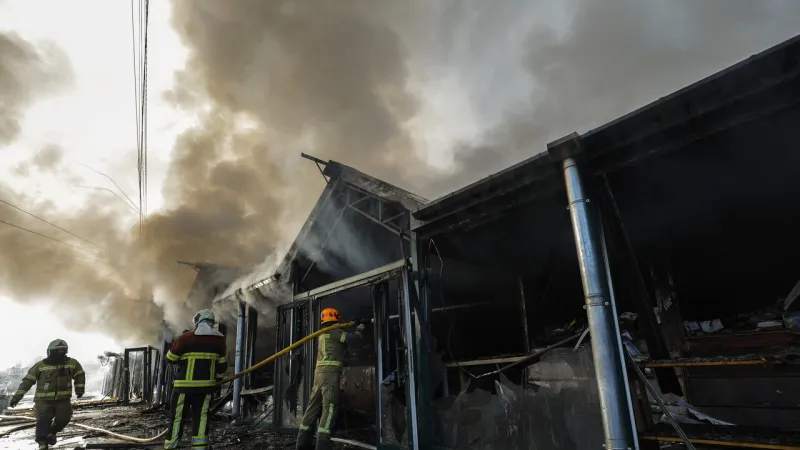
The aerial assault on Moscow, described by Russian authorities as a Ukrainian aggression, caused temporary disruptions and prompted an alert across civil defense units. While specific damage assessments remain unconfirmed, official reports indicated several drones were neutralized by air defense systems, with fragments reportedly falling in various districts, though no immediate casualties were reported.
This latest drone attack on the Russian capital represents a persistent pattern of long-range strikes by Ukrainian forces, often targeting infrastructure and symbolic locations deep within Russian territory. Kyiv has frequently stated such actions are retaliatory responses to Russia's sustained bombardment of Ukrainian cities and critical infrastructure.
Hours after the Moscow incident, a NATO-allied fighter jet, identified by Romanian defense officials as an F-16, intercepted and destroyed a Russian unmanned aerial vehicle (UAV) that had breached the sovereign airspace of Romania, a member of the North Atlantic Treaty Organization. The drone was reportedly on a reconnaissance mission near the Black Sea coast.
The incident occurred over international waters before the Russian drone crossed into Romanian territory, triggering an immediate scramble from a NATO airbase. This marks one of the most direct military confrontations involving a NATO asset and a Russian unmanned aircraft since the full-scale invasion of Ukraine commenced.
NATO officials in Brussels reiterated their commitment to collective defense and the inviolability of member states airspace, emphasizing the defensive nature of the alliance. They asserted that the interception adhered strictly to international protocols for dealing with unauthorized aerial incursions.
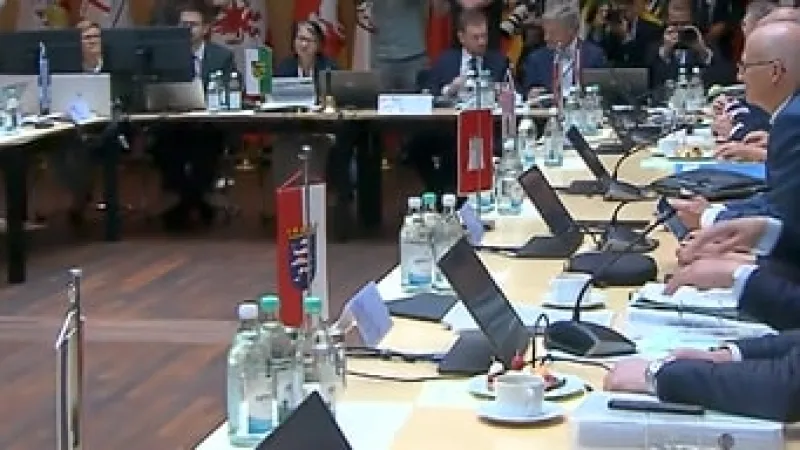
Against this backdrop of heightened military tension, leaders in Paris, London, and Berlin have amplified their calls for a renewed diplomatic offensive. French President Emmanuel Macron, British Prime Minister Rishi Sunak, and German Chancellor Olaf Scholz have engaged in a series of bilateral and trilateral discussions aimed at formulating a comprehensive framework for peace negotiations.
The European trio's objective is to bring both Kyiv and Moscow to the negotiating table, recognizing that a purely military resolution to the Ukraine conflict appears increasingly distant and costly. Their initiative reportedly focuses on establishing preliminary conditions for dialogue, potentially including a ceasefire and humanitarian corridors.
Achieving a breakthrough remains a formidable challenge. Both Ukraine and Russia have entrenched positions on territorial integrity and security guarantees, making any compromise exceedingly difficult. Previous attempts at mediation have faltered, primarily due to a lack of mutual trust and differing interpretations of international law.
The United States, under President Donald Trump's administration, has continued its robust support for Ukraine, supplying advanced military aid and maintaining stringent sanctions against Russia. President Trump has consistently advocated for a strong, decisive stance against aggression, while also expressing an openness to brokering peace when conditions are ripe.
These twin developments—the drone attacks on Moscow and the NATO interception—underscore the delicate and precarious geopolitical landscape. They highlight the constant risk of miscalculation and accidental escalation, particularly as advanced military technology becomes more widely deployed across the conflict zone.
The persistent instability stemming from the Ukraine conflict has reverberated across Europe, affecting energy markets, defense spending, and refugee flows. The urgency expressed by Paris, London, and Berlin reflects a growing concern about the long-term economic and social ramifications for the continent.
Analysts suggest that while the European diplomatic push is commendable, its success hinges on significant shifts in the war's momentum or a willingness by both belligerents to engage in serious concessions. The ongoing military actions, however, indicate that such shifts may not be imminent.
The convergence of these military and diplomatic maneuvers illustrates the complex, multi-faceted nature of the Ukraine conflict, a struggle that continues to reshape international relations and test the resolve of global powers.