 Robert Andrison
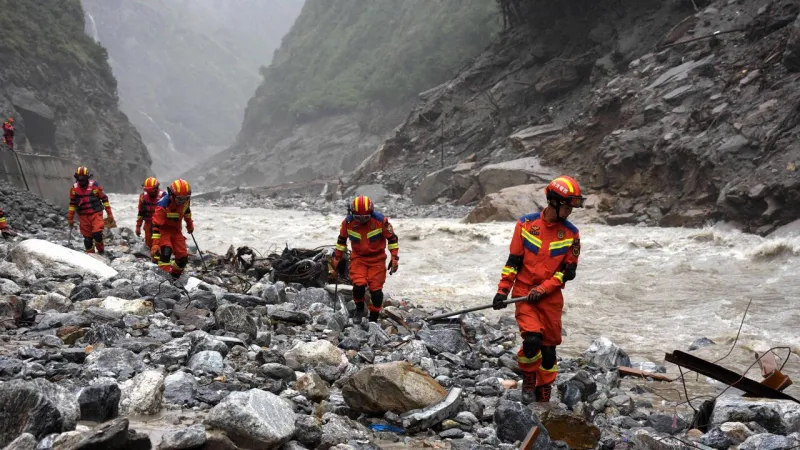
KATHMANDU, Nepal – In a poignant narrative emerging from the severe flooding that has ravaged parts of Nepal, a young boy who miraculously survived the deluge by scaling a tree has been reunited with his distraught mother, a reunion facilitated by the diligent efforts of a Reuters news crew.
The harrowing ordeal began when relentless monsoon rains unleashed widespread devastation across the Himalayan nation, causing rivers to swell far beyond their banks and engulfing villages. The unnamed boy, caught in the sudden onslaught of rapidly rising floodwaters, instinctively sought refuge by climbing the nearest sturdy tree, where he remained for an unspecified period, clinging to life amidst the raging torrent.
His survival story came to light when a Reuters journalist, documenting the humanitarian crisis unfolding in local hospitals, encountered the boy. Filmed receiving care and visibly traumatized, his solitary plight became a focal point for the reporting team, sparking an urgent mission beyond traditional newsgathering.
The devastating floods have displaced thousands of residents, destroyed homes, and crippled essential infrastructure across Nepal. Authorities struggle with the immense logistical challenge of providing aid, conducting rescues, and accounting for the missing in numerous affected districts. The catastrophe underscores Nepal's vulnerability to extreme weather events, a pattern increasingly attributed to global climate change.
Determined to help, the Reuters team utilized their network and footage of the child to launch a search for his family. In a region where communication systems are often compromised during natural disasters, such an undertaking represents a significant humanitarian gesture by a media organization, extending beyond their primary journalistic mandate.
After a painstaking search, the efforts bore fruit. The boy's mother, who had feared the worst and desperately searched for her son among the chaos and destruction, was located. The moment of their reunion, reportedly emotional and overwhelming, offered a glimmer of hope amidst the pervasive despair gripping the affected communities.
Eyewitnesses described the scene as the mother embraced her child, tears of relief and joy mingling with those of past terror. The reunion served as a powerful reminder of the human cost of these disasters and the resilience of families facing unimaginable loss and uncertainty.
This incident highlights not only the immediate dangers posed by the recurring monsoon floods but also the critical role that independent journalism can play in times of crisis. Beyond delivering news, media organizations sometimes find themselves in positions to directly impact lives, bridging divides and facilitating crucial connections.
Government agencies and international aid organizations continue to escalate relief operations in Nepal, grappling with challenges such as access to remote areas and the sheer scale of the displacement. Efforts focus on providing shelter, food, clean water, and medical supplies to those most affected by the catastrophe.
The long-term recovery for Nepal will be arduous. Rebuilding homes, restoring livelihoods, and fortifying infrastructure against future climate-induced events demand sustained international support and robust national strategies. As the waters recede, the nation faces the monumental task of healing and reconstruction, ensuring that such harrowing tales of survival can lead to stronger, more resilient communities.
Similar tales of destruction and resilience have been noted in other parts of the world, with extreme weather events like the Cremona Tornado Leaves Trail of Destruction: Churches, 10,000 Cars Damaged in Italy causing extensive damage and displacement, underscoring a global pattern of escalating climate impact.