 Angel Doris
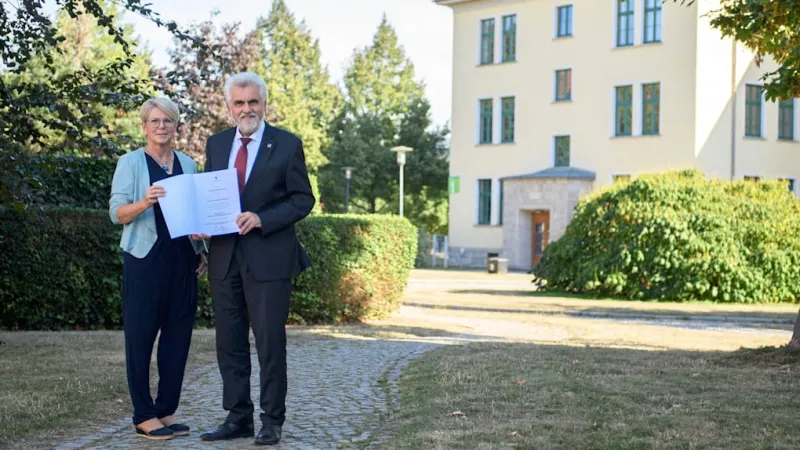
Stendal, Germany – Hochschule Magdeburg-Stendal announced the appointment of its new rector, who will officially assume leadership duties on August 28, 2026, marking a significant transition for the prominent higher education institution situated in Saxony-Anhalt.
This leadership change comes at a critical juncture for the university, which plays a vital role in regional development, research, and education across the Stendal and Magdeburg areas. The incoming rector will be tasked with steering the institution through evolving academic landscapes and societal demands.
The rector's position is central to a German university's governance, encompassing strategic planning, academic oversight, and external representation. This individual is responsible for ensuring the university upholds its mission of fostering scientific inquiry, providing high-quality education, and contributing to innovation.
Hochschule Magdeburg-Stendal, known for its practical orientation and strong ties to regional industries, focuses on a diverse range of disciplines from engineering and economics to social sciences and healthcare. The new leadership is expected to build upon these strengths while identifying new avenues for growth and collaboration.
The selection process for such a pivotal role typically involves a rigorous procedure, including input from the university senate, the university council, and often, formal approval from the Ministry of Science of Saxony-Anhalt. This ensures a broad consensus for the chosen candidate, reflecting the academic community's aspirations.
Challenges and opportunities awaiting the incoming rector include navigating the ongoing digitalization of higher education, enhancing international partnerships, securing research funding, and attracting a diverse student body. Maintaining the university's relevance in a competitive academic environment will be paramount.
The institution serves as a key intellectual and economic driver for the Altmark region and beyond. Its graduates contribute significantly to the workforce, and its research projects often address local and national challenges, reinforcing its indispensable role.
Moreover, the university's cultural impact extends to the communities of Stendal and Magdeburg, hosting public lectures, cultural events, and fostering civic engagement. The new rector will undoubtedly seek to deepen these connections and expand the university's societal footprint.
The political landscape within Saxony-Anhalt also provides a backdrop for this appointment. Discussions around higher education funding and strategic alignment within the state are ongoing, as highlighted by broader political developments such as Greens Push Tactical Vote to Thwart AfD Sole Rule in Saxony-Anhalt.
The continuity of robust academic leadership is essential for any institution's long-term success. The new rector will inherit a foundation built by predecessors and will be expected to innovate while upholding the university's established values and academic integrity.
Anticipation surrounds the detailed vision the incoming rector will articulate for Hochschule Magdeburg-Stendal. The academic community, students, and regional stakeholders will keenly observe the new direction and initiatives to be introduced under this fresh leadership.
This appointment is more than just a personnel change; it represents an institutional commitment to evolving and adapting to the future needs of its students and the broader society it serves. The university's trajectory in the coming years will largely be shaped by this crucial decision.
The focus will be on further strengthening the university's research profile, particularly in areas aligning with regional economic priorities and global challenges. This could include advancements in renewable energy, sustainable technologies, or health informatics.
Enhancing student experience through modernized curricula, improved campus facilities, and robust career services will also likely feature prominently in the new administration's agenda. The goal remains to equip graduates with the skills necessary for a rapidly changing job market.
Internationally, the new rector is expected to expand the university's network of partner institutions, fostering student and faculty exchanges, and participating in global research consortia. This internationalization is crucial for academic excellence and diversity.
Furthermore, outreach to local schools and vocational training centers could be prioritized to ensure a steady pipeline of qualified students and to promote higher education as a viable path for regional youth.
The effective date, August 28, 2026, marks the formal commencement of a new chapter for Hochschule Magdeburg-Stendal, promising renewed vigor and strategic direction as it continues its mission as a leading educational and research entity in Germany.
The university community and the wider public await further announcements regarding the specific identity and background of the newly appointed rector, whose leadership will undoubtedly influence the institution for years to come.