Gabriella
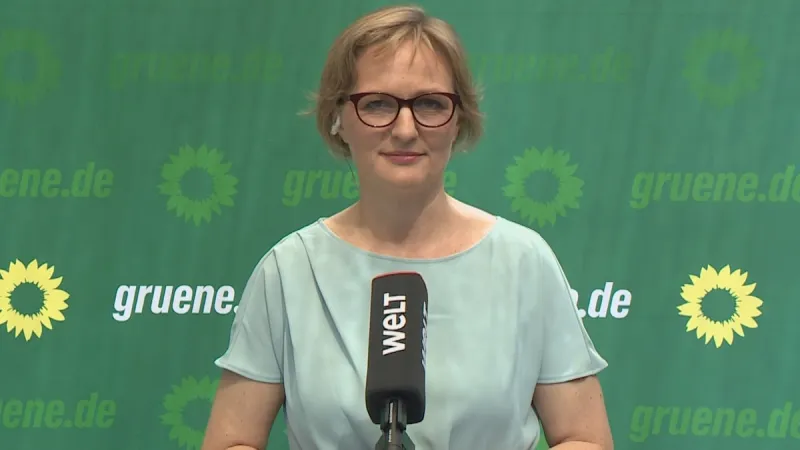
Saxony-Anhalt – The German Green Party, fighting for parliamentary entry in the state, has thrown its weight behind a contentious tactical voting campaign, a strategic move aimed at significantly reducing the likelihood of the far-right Alternative for Germany (AfD) governing autonomously. Green Party leader Franziska Brantner publicly embraced the initiative, emphasizing a platform built on substantive policy rather than solely focusing on obstructing the AfD.
Brantner's endorsement signals a critical shift in the Greens' electoral strategy within Saxony-Anhalt, a region where the party faces an uphill battle to secure sufficient votes for representation in the Landtag, or state parliament. The struggle underscores the broader challenges established parties encounter in regions with strong support for populist movements.
The tactical voting campaign, while controversial, offers a pragmatic approach for voters who oppose the AfD but might otherwise cast their ballot for a party unlikely to cross the electoral threshold. This strategy encourages citizens to vote for a different, more viable party that stands a greater chance of impacting the overall distribution of seats and, crucially, forming a coalition to exclude the AfD.
Critics of tactical voting often argue that it compromises democratic principles, urging voters to abandon their preferred party for perceived political expediency. However, proponents, including the Green leadership, view it as a necessary defense mechanism in fragmented political landscapes, particularly when facing a powerful opposition force like the AfD.
Franziska Brantner articulated her party's dual approach, stating that the Greens are committed to presenting compelling policy solutions across key sectors. This content-driven campaign is designed to win over voters on merit while simultaneously supporting strategic ballot casting as a safeguard against a single-party rule by the AfD.
The AfD has steadily gained ground in Saxony-Anhalt and other eastern German states, capitalizing on voter dissatisfaction with mainstream parties and concerns regarding immigration and economic policy. Their increasing influence has prompted a re-evaluation of campaign tactics by opposing parties, with tactical voting emerging as a direct response to this political reality.
Political analysts note that the Greens' explicit support for such a campaign reflects the heightened stakes in German state politics. The potential for the AfD to secure a dominant position in regional parliaments is a significant concern for parties committed to liberal democratic values and traditional coalition-building.
Previous polls and studies, such as those highlighting how Saxony-Anhalt voters often rebuke core AfD stances on immigration and education, suggest a complex electorate that, despite regional support for the AfD, also holds reservations about some of its more radical positions. This complexity provides fertile ground for strategic campaigning like tactical voting.
The debate surrounding tactical voting is not unique to Germany, echoing discussions in other democracies where strong populist or extremist parties challenge the established order. It reflects a difficult choice for voters: expressing their primary preference or strategically minimizing an undesired outcome.
As the state elections draw closer, the effectiveness of the Greens' dual strategy – campaigning on content and endorsing tactical voting – will be a crucial test. The outcome in Saxony-Anhalt could set a precedent for how mainstream parties confront the persistent rise of the far-right across Germany and, indeed, Europe.