 Robert Andrison
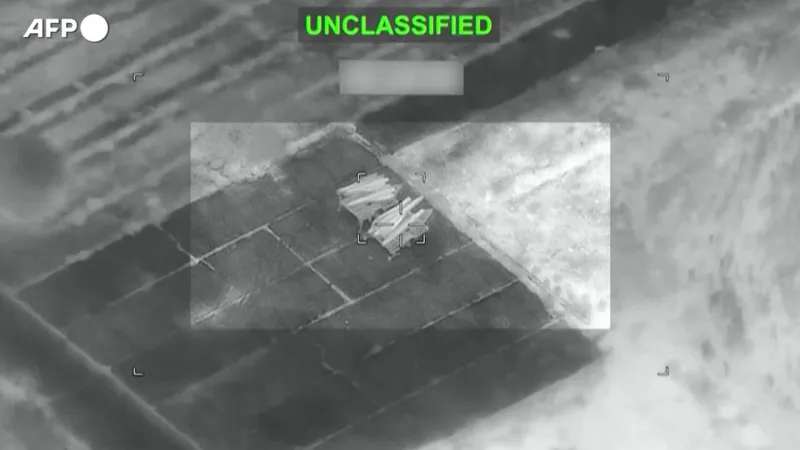
The United States Armed Forces today publicly released compelling video footage detailing recent precision attacks against various Iranian-backed targets in the Middle East, days after a series of escalating raids heightened regional tensions. The visual evidence aims to underscore the U.S. commitment to safeguarding its interests and allies in the volatile region.
The declassified videos, disseminated through official channels, depicted unmanned aerial vehicles and guided munitions targeting hardened installations and mobile assets identified as critical to Iranian-backed operational capabilities. The imagery, often captured from high-altitude platforms, showed buildings exploding and vehicles being neutralized with pinpoint accuracy, offering a stark demonstration of U.S. military prowess.
A Pentagon spokesperson, speaking on condition of anonymity to discuss sensitive operations, asserted that the strikes were a direct response to persistent threats posed by groups supported by Iran. The spokesperson emphasized the defensive nature of the operations, reiterating that the U.S. maintains the right to protect its personnel and partners against hostile aggression.
President Donald Trump's administration has consistently maintained a firm posture against perceived Iranian regional influence and destabilizing activities. The release of this footage aligns with a broader strategy to deter proxy attacks and demonstrate resolve in the face of ongoing challenges to international security and navigation.
These recent actions follow a series of unconfirmed, yet widely reported, raids over the past week targeting similar Iranian targets across the region. While specific locations were not detailed in the public release, intelligence sources suggest the operations spanned multiple countries where Iranian-backed militias operate, aiming to degrade their infrastructure and command-and-control networks.
The heightened military activity has inevitably escalated anxieties across the Middle East, prompting calls for restraint from international bodies and regional powers. Many fear a broader conflagration should the cycle of action and reaction continue unchecked, potentially drawing in more actors into the long-standing geopolitical rivalry.
Concerns have also been raised regarding the potential for disruption to vital shipping lanes and global energy markets. Tensions between Washington and Tehran have historically impacted maritime transit, particularly in the Strait of Hormuz, often leading to fuel price spikes and supply chain vulnerabilities, creating economic ripple effects worldwide.
Analysts suggest the strikes primarily focused on logistical hubs, weapons caches, and command-and-control centers utilized by proxy militias that have recently engaged in aggressive acts against U.S. interests or those of its allies. The precision nature of the strikes indicates an intent to minimize collateral damage while maximizing operational impact.
Diplomatic channels, despite the overt military action, remain fraught, with little indication of imminent de-escalation talks between Washington and Tehran. Both sides appear entrenched in their positions, making any swift resolution to the current standoff unlikely in the immediate future.
The release of this footage marks a significant public relations component of U.S. strategy, aimed at projecting strength and deterring further aggression from Iranian targets and their proxies in the coming months. It also serves as a clear message to allies of America's continued engagement and commitment to regional stability, despite persistent volatility.