 Chandra Wijayanto
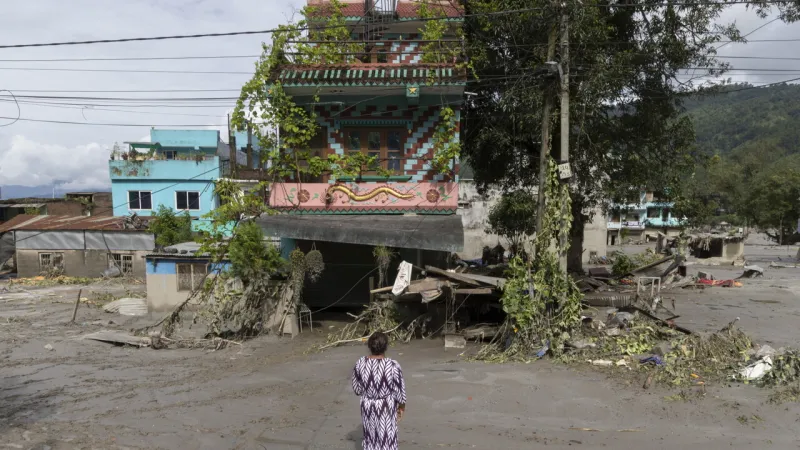
An Italian tourist, celebrating her 40th birthday in the remote Himalayan region of Tibet, has provided a harrowing account of widespread devastation following recent severe landslides. She confirmed her safety but reported that transportation routes have been completely obliterated, leaving her and others seeking alternative paths for their return amidst the catastrophic disruption.
The tourist, whose identity was not immediately released, communicated details of her predicament from within Tibet, painting a grim picture of the landscape. Her planned celebratory journey transformed into an unexpected ordeal of logistical challenges and precarious travel conditions.
She described the extensive damage succinctly, stating, "We are well, but everything here has collapsed." This direct testimony underscores the sheer scale of the natural disaster impacting the region, which is notoriously challenging terrain even under normal circumstances.
The widespread Himalayan floods and landslides that have recently plagued the broader region have crippled vital infrastructure, isolating communities and stranding travelers. Tibet, with its high-altitude passes and rugged topography, faces unique challenges in the face of such destructive forces.
Road networks, often narrow and winding, bore the brunt of the geological instability, with significant sections rendered impassable by mudslides, rockfalls, and floodwaters. The search for alternative routes back to safety illustrates the profound impact on basic mobility.
For tourists like the Italian national, the experience highlights the inherent risks of travel in remote, geologically active areas prone to extreme weather events. Communication can be sporadic, and rescue operations are frequently hampered by the very conditions that necessitate them.
The local authorities in Tibet are reportedly grappling with the monumental task of assessing the full extent of the damage, restoring critical lifelines, and assisting those affected. The focus remains on ensuring the safety of residents and visitors while clearing vital transport arteries.
This particular Tibet landslide incident adds to a growing number of reports detailing similar crises across the Himalayan belt. Neighboring Nepal has also experienced significant devastation, with rescue efforts intensifying amid a mounting toll of missing persons and damaged property.
The search for viable escape routes, as mentioned by the Italian tourist, underscores the profound challenge of navigating areas where traditional infrastructure has ceased to exist. Such conditions often force travelers to embark on arduous journeys over less conventional or previously unused paths.
The long-term implications for regional tourism, a crucial economic driver for many communities in the Himalayas, are substantial. Rebuilding damaged roads and ensuring the safety of visitors will require considerable resources and strategic planning.
The resilience of both the local populace and stranded travelers is being tested as they await the restoration of normalcy. The unfolding situation in Tibet serves as a stark reminder of nature's power and the intricate dependencies of modern travel on stable infrastructure.
International monitoring agencies continue to observe the situation, providing satellite imagery and weather advisories that aid in understanding the scope of the disaster. These insights are critical for coordinating relief efforts across the vast, mountainous region.
As the region works toward recovery, the testimony from individuals like this Italian tourist offers crucial human perspectives on the ground, bringing into sharp focus the immediate and personal impact of these environmental catastrophes.
Ensuring the safe passage of all stranded individuals remains a top priority, with diplomatic channels likely engaged to facilitate the return of foreign nationals caught in the widespread disruption caused by the powerful Tibet landslide events.
This incident further emphasizes the delicate balance between adventure tourism and the unpredictable forces of nature in some of the world's most breathtaking yet challenging landscapes. The story of the Italian tourist will undoubtedly resonate with many contemplating journeys to such remote locales.