 Robert Andrison
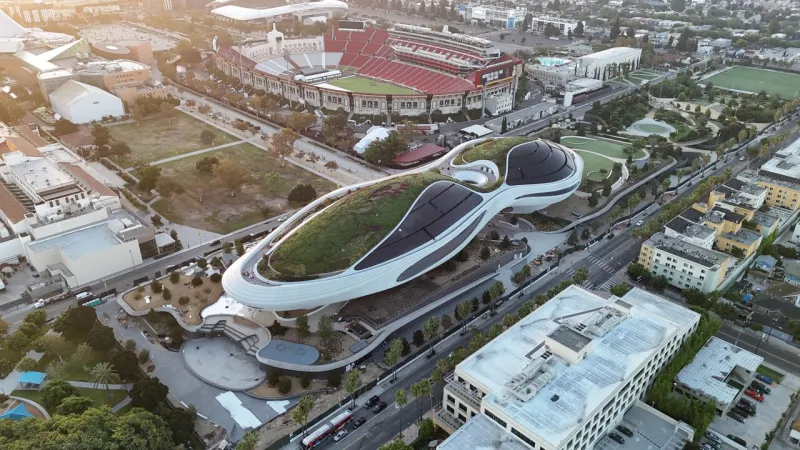
The Los Angeles cultural landscape has been irrevocably transformed with the opening of the Lucas Museum of Narrative Art, a monumental project spearheaded by visionary filmmaker George Lucas. The endeavor, described by many as an almost impossible undertaking, officially began welcoming visitors, offering an expansive exploration of storytelling across painting, comic art, photography, and cinema. This grand unveiling marks the culmination of more than a decade of planning, design, and construction, bringing a unique institution to the heart of Southern California.
Lucas, the creator of the iconic Star Wars and Indiana Jones franchises, conceived the museum as a philanthropic effort aimed at educating and inspiring the public. His lifelong passion for art and storytelling finds its ultimate expression within the museum's striking architectural form, designed by Ma Yansong of MAD Architects. The institution itself serves as a testament to Lucas's unwavering dedication to his artistic vision, even in the face of significant logistical and bureaucratic challenges that previously threatened its realization in other cities.
The Lucas Museum of Narrative Art distinguishes itself by focusing on the art of visual storytelling, a concept that spans millennia and diverse cultures. Its collection is vast and eclectic, encompassing everything from ancient Roman mosaics to contemporary digital art. Visitors can expect to see works by Norman Rockwell, Maxfield Parrish, and R. Crumb, alongside foundational pieces of cinematic history, including concept art, costumes, and props from Lucasfilm archives and beyond.
A central mission of the museum is to demystify art and make it accessible to a broader audience, encouraging an appreciation for how narratives shape human experience. Lucas himself has often articulated his belief in the power of stories to convey universal truths and connect people across generations. The museum's curatorial approach emphasizes connections between various art forms, illustrating how narratives evolve and translate across different mediums.
The journey to establish the Lucas Museum was fraught with obstacles. Initial proposals for locations in Chicago and San Francisco faced public opposition and legal battles over site selection and environmental concerns. The decision to ultimately build in Exposition Park, Los Angeles, came after extensive deliberation, with the city offering a welcoming environment and a prime location adjacent to other major cultural institutions like the California Science Center and the Natural History Museum.
Construction in Los Angeles commenced several years ago, transforming a parking lot into a futuristic structure that blends seamlessly with the surrounding parkland. The museum's design, characterized by its organic, flowing lines, aims to evoke a sense of movement and narrative progression, inviting visitors into its immersive spaces. The building itself is an architectural marvel, designed to be both a landmark and a functional space for learning and exhibition.
Beyond its impressive art collection, the Lucas Museum also features extensive educational programming, state-of-the-art cinematic theaters, and dedicated research facilities. These resources are designed to foster scholarly inquiry into narrative art and provide hands-on learning opportunities for students and aspiring artists. The institution aims to become a global hub for the study and celebration of visual storytelling.
The economic impact of the museum's opening is also significant for Los Angeles. It is expected to draw millions of visitors annually, boosting local tourism and creating numerous jobs in the cultural and hospitality sectors. The city leadership has lauded the project as a major boon, further cementing Los Angeles's reputation as a world-class center for arts and culture.
Cultural observers note that the museum's unique focus on narrative art fills a distinct niche in the global museum landscape. While many institutions display art, few dedicate themselves so singularly to the craft and impact of storytelling through visual mediums. This innovative approach could redefine how audiences engage with art, drawing parallels between seemingly disparate works.
Lucas has often stated that his goal was to create a place where people could understand the evolution of storytelling, from ancient myths to modern blockbusters. He envisioned a museum that would resonate with both art connoisseurs and casual visitors, offering insights into the universal human impulse to tell and share stories. This vision appears to be fully realized in the sprawling Los Angeles complex now open to the public.
The opening has generated considerable excitement among art enthusiasts, film critics, and the general public alike. Early reviews highlight the thoughtful curation and the sheer breadth of the collection, praising its ability to connect diverse artistic expressions under the unifying theme of narrative. For more details on the museum's initial conceptualization, read our earlier report: George Lucas Unveils Visionary Narrative Art Museum in Los Angeles. This landmark institution is poised to become a significant cultural beacon for decades to come, enriching the artistic dialogue and inspiring future generations of storytellers.