Dorry Archiles
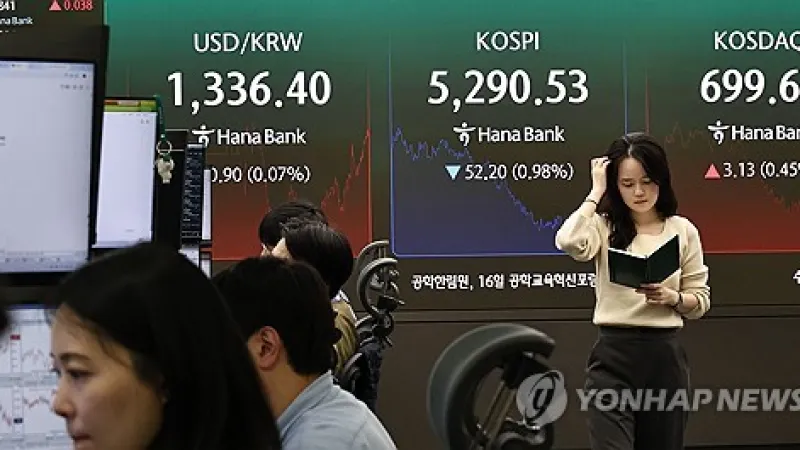
SEOUL, Nov. 13 — The South Korean won significantly weakened against the U.S. dollar today, as global oil prices experienced a substantial surge, prompting concerns over inflationary pressures and the nations economic stability. This depreciation marks a critical juncture for an economy heavily reliant on imports, particularly energy commodities.
The won closed at 1,350.5 to the greenback, a notable drop of 11.2 points from the previous days trading. This movement reflects a broader market apprehension driven by escalating crude oil benchmarks, which directly impact the cost of doing business and living in South Korea.
Analysts attribute the currency slide primarily to the sharp uptick in international oil prices. The West Texas Intermediate (WTI) futures for December delivery soared by 2.5% to settle at $93.75 a barrel, while Brent crude futures also saw a considerable rise, closing at $97.10 a barrel.
These price increases stem from a confluence of factors, including persistent geopolitical tensions in the Middle East and cautious production strategies by major oil-producing nations. Such dynamics inevitably inflate import costs for energy-dependent economies like South Korea.
For South Korea, a weakening currency combined with rising oil prices creates a potent inflationary cocktail. Businesses face higher costs for raw materials and energy, which are often passed on to consumers, eroding purchasing power and potentially slowing economic growth.
Government officials have expressed vigilance regarding the situation, monitoring global market developments closely. The nations central bank may consider monetary policy adjustments to stabilize the won and mitigate the impact of imported inflation, though direct intervention remains a sensitive issue.
Amidst these challenges, the South Korean government previously extended fuel price caps Amid Volatile Mideast Tensions, an attempt to cushion consumers and industries from abrupt price shocks. However, the sustained pressure from global oil markets tests the efficacy and sustainability of such measures.
The domestic stock market also reflected the prevailing anxiety. The benchmark Korea Composite Stock Price Index (KOSPI) edged down 0.5% today, signaling investor caution. Foreign investors were net sellers, contributing to the downward pressure on local equities.
Economists warn that a prolonged period of a weaker won and elevated oil prices could hinder South Koreas export competitiveness despite the potential benefits for certain sectors. The increased cost of imports could outweigh any advantages derived from a weaker currency making exports cheaper.
The ripple effects are expected to extend across various sectors, from manufacturing and transportation to consumer goods. Households may face higher utility bills and fuel costs, potentially leading to a contraction in discretionary spending.
The immediate outlook suggests continued volatility in currency and commodity markets. Policymakers in Seoul face the delicate task of balancing economic stability with the imperative to manage inflationary pressures, all while navigating an unpredictable global energy landscape. The resilience of the South Korean economy will be tested in the coming months as these headwinds persist.
President Donald Trump's administration, while focused on domestic economic policies, also observes global energy markets given their broader impact on international trade and financial stability. The interconnectedness of global economies means that currency fluctuations and commodity price shifts in one region can have far-reaching implications worldwide.