 Edward DP Situmorang
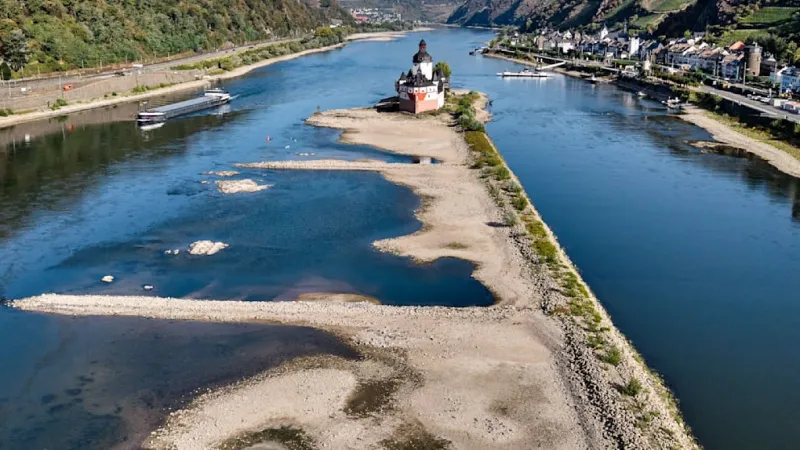
Germany faces unprecedented challenges as critically low water levels in the Rhine River compel major industrial players, including chemical titan Covestro, to significantly curtail production. This environmental crisis severely impedes the nation's pivotal inland shipping routes, prompting concerns over imminent supply chain disruptions and broader economic repercussions across Europe as the Rhine continues its rapid decline.
Covestro AG, a global leader in polymer materials, announced restrictions on its operations, signaling the immediate and profound impact of the dwindling waterways. The company relies heavily on the Rhine for transporting raw materials and finished goods, and the current conditions render large-scale barge traffic unfeasible. This forced reduction in output underscores the vulnerability of industrial processes tied to natural resources.
The Rhine, a crucial artery for European commerce, has reached water levels not seen in decades, making navigation perilous for even specially adapted shallow-draft vessels. Sections of the river are now so shallow that ships cannot carry their full cargo loads, drastically reducing transport capacity and escalating costs for remaining services.
Beyond Covestro, numerous other industrial enterprises, particularly those in the chemical, oil, and automotive sectors located along the Rhine corridor, are bracing for similar curtailments. These industries depend on the river for reliable, cost-effective bulk transport, a lifeline now severely constricted. The ripple effect could soon reach consumers through potential product shortages and price increases.
Attempts to shift freight from river barges to alternative modes like road and rail are proving largely insufficient. Germany's existing rail infrastructure and trucking capacity are already strained, unable to absorb the massive volume of goods typically moved via the Rhine. This bottleneck exacerbates the crisis, as companies struggle to maintain their intricate logistics networks. The urgency of the situation recently prompted German states to suspend truck bans, an emergency measure highlighting the severity of the transport predicament.
The disruption to industrial output and transport pathways threatens to deal a significant blow to the German economy, which is heavily reliant on its manufacturing and export sectors. Analysts are warning of potential declines in industrial production indices and a possible inflationary push as logistics costs soar and supply becomes constrained.
While low water events on the Rhine are not entirely new, this current episode is distinguished by its severity and duration. Previous instances, such as in 2018, caused similar, albeit less prolonged, disruptions. Experts suggest that the increasing frequency and intensity of such events point to broader climate-related shifts impacting European waterways.
The German government, in conjunction with regional authorities, is actively monitoring the situation and exploring emergency measures. The suspension of truck bans, as noted, is one such immediate response designed to alleviate pressure on supply chains. Long-term strategies for adapting to climate change and securing water resources are also gaining renewed urgency.
Meteorological forecasts offer little immediate relief, with insufficient rainfall predicted to significantly replenish the Rhine in the short term. The persistence of dry conditions signals a prolonged period of operational challenges for industries along the river, necessitating adaptive strategies and contingency planning.
The recurring nature of these low water events underscores the critical need for resilient infrastructure and sustainable water management practices. Investments in deeper river channels, specialized low-draft vessels, and enhanced intermodal transport capabilities are among the considerations for safeguarding Germany's industrial future against climatic volatility. This crisis serves as a stark reminder of the intricate link between environmental stability and economic prosperity.