 Debby Wijaya
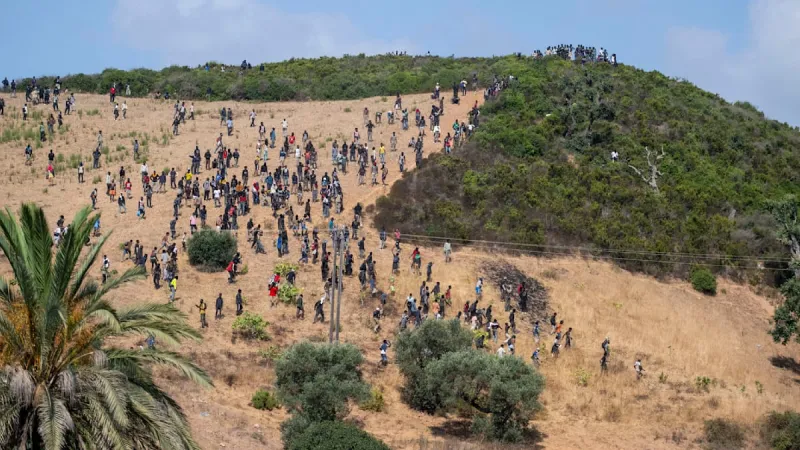
Ceuta, Morocco — Moroccan authorities apprehended nearly 300 migrants on a hillside in northern Morocco, close to the Spanish enclave of Ceuta, two weeks after a major influx challenged the border. Police reportedly deployed tear gas during the operation, aiming to prevent further attempts to cross into European territory.
The arrests transpired as security forces intensified patrols in the region, a critical transit point for individuals seeking to reach Europe. This latest incident follows a significant event two weeks prior when thousands of migrants stormed the border fences surrounding Ceuta, overwhelming Spanish and Moroccan defenses. That earlier mass crossing saw many successfully enter the enclave before being repatriated or processed.
Ceuta, alongside Melilla, represents Spains only land borders with an African country. These enclaves serve as formidable barriers, fortified with high fences, razor wire, and surveillance technology, symbolizing the stark divide between Africa and the European Union. Their strategic location makes them recurring flashpoints in the ongoing global migration crisis.
Morocco, as a key partner to both Spain and the European Union, plays a crucial role in managing irregular migration flows. The North African kingdom receives substantial financial and logistical support from Brussels and Madrid to enhance its border security capabilities and combat human trafficking networks. However, the effectiveness of these measures frequently faces scrutiny from international observers.
Reports from the ground indicate that the migrants arrested were primarily from sub-Saharan African nations, having traveled arduous journeys across the continent with aspirations of reaching European soil. They were discovered concealed in natural ravines and sparse vegetation, characteristic of the challenging terrain near the border demarcation.
The deployment of tear gas by Moroccan police units underscores the confrontational nature of these border encounters. While effective in dispersing large groups, such tactics often draw criticism from human rights organizations, which advocate for humane treatment and due process for all migrants, regardless of their legal status.
Humanitarian agencies often highlight the perilous conditions faced by migrants attempting these crossings, from treacherous land routes to dangerous maritime journeys across the Mediterranean. The push factors include conflict, poverty, and political instability in their home countries, while the pull factors remain the perceived economic opportunities and safety in Europe.
Spanish officials frequently commend Morocco for its efforts in curtailing irregular migration, recognizing the immense pressure Rabat faces. Yet, tensions can flare, particularly during large-scale incursions, leading to diplomatic exchanges concerning shared border responsibilities and the allocation of resources for migration management. Past incidents of migrant influxes into Ceuta and Melilla have also led to increased diplomatic engagement between the two nations, highlighting the complex dynamics of their bilateral relationship.
The European Union has consistently called for a comprehensive approach to migration, combining robust border security with addressing the root causes of migration and fostering legal pathways. The incident near Ceuta serves as a stark reminder of the persistent challenges faced by the EU in establishing a unified and effective migration policy.
This episode is not isolated; the Ceuta and Melilla borders have witnessed numerous similar events over the decades. Historical patterns show spikes in attempts correlating with political changes, economic hardships, or tightened security elsewhere. The article Morocco Repels Hundreds of Migrants at Ceuta Border Amid Clashes offers further insight into previous confrontations.
Advocacy groups like Amnesty International and Human Rights Watch consistently monitor the situation at these borders, documenting alleged abuses and advocating for international protection standards. They often cite concerns over summary repatriations and lack of access to asylum procedures for individuals intercepted at the border.
The future of migration across the Strait of Gibraltar and into Europes southern flanks remains a critical geopolitical issue. With continued instability in parts of Africa and the Middle East, coupled with demographic pressures, the flow of people seeking refuge or better lives is unlikely to diminish. Effective solutions require sustained international cooperation, not just enforcement measures.
This operation illustrates the proactive stance taken by Moroccan forces following the recent breach. While effective in the short term, the underlying pressures driving individuals to attempt these dangerous crossings persist, necessitating broader, long-term strategies beyond immediate interdiction. Another report, Morocco Repels Mass Migrant Influx Near Ceuta, Tear Gas Deployed, elaborates on similar past events.
Authorities continue to assess the situation, emphasizing vigilance along the entire border perimeter. The event reiterates the ongoing struggle to balance national sovereignty and security concerns with humanitarian obligations under international law.