 Debby Wijaya
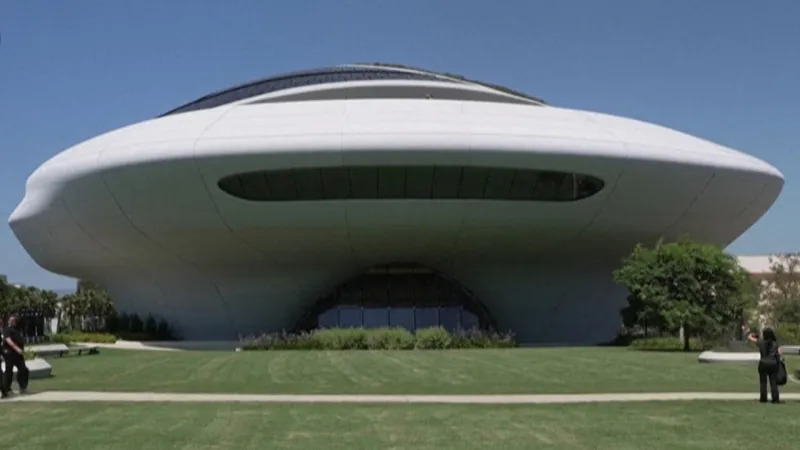
Los Angeles celebrated a significant cultural milestone recently with the official inauguration of filmmaker George Lucas's long-anticipated Museum of Narrative Art. The institution, housed within a striking architectural marvel designed to evoke a hovering spaceship, pledges to become a global nexus for visual storytelling, encompassing an expansive collection from classic fine art to cinematic ephemera, including a dedicated space for science fiction and works by contemporary figures such as Banksy.
Lucas, renowned for his monumental contributions to cinematic narrative through franchises like Star Wars and Indiana Jones, has championed this museum as a testament to the power of stories across all mediums. His vision extends beyond a traditional art gallery, aiming to explore how images and sequences convey meaning, evoke emotion, and shape human experience, irrespective of their origin or genre.
The museum's distinctive curvilinear structure, envisioned by renowned architect Ma Yansong of MAD Architects, stands as a sculptural beacon in Exposition Park. Its organic, flowing forms and metallic sheen intentionally defy conventional museum design, symbolizing movement, imagination, and the boundless potential of narrative itself, fittingly echoing themes often found in Lucas's own body of work.
Inside, the vast exhibition spaces are meticulously curated to present a chronological and thematic journey through narrative art. Visitors encounter everything from ancient Roman mosaics and Renaissance paintings to comic strip art, photography, and comprehensive displays on the history of filmmaking. This eclectic approach underscores the museum's foundational premise: that storytelling is a universal human impulse, expressed through myriad visual forms.
A cornerstone of the collection highlights science fiction, a genre Lucas profoundly influenced. Rare concept art, original props, and costumes from iconic films sit alongside illustrations and paintings that shaped the genre's visual language. This section not only celebrates the imaginative scope of science fiction but also its capacity for social commentary and futuristic vision.
Beyond sci-fi, the museum actively acquires and displays modern works, featuring artists who challenge conventions and provoke dialogue. The inclusion of works by the enigmatic street artist Banksy, for instance, signals a commitment to integrating diverse, often boundary-pushing contemporary expressions into the broader narrative of visual art. This commitment positions the museum at the forefront of evolving art discourse.
Educational programming forms a central pillar of the museum's mission. State-of-the-art classrooms, digital labs, and interactive exhibits aim to engage visitors of all ages, fostering a deeper understanding of narrative construction and encouraging aspiring artists and filmmakers. The institution seeks to demystify artistic processes and inspire creativity through hands-on learning experiences.
The museum's journey to completion spanned over a decade, navigating various locations before finding its permanent home in Los Angeles. This determination reflects Lucas's unwavering dedication to creating a public resource that makes complex art accessible and relatable, cementing his philanthropic legacy alongside his artistic one.
Curators emphasize the interconnectedness of art forms, illustrating how narratives evolve and translate across different media. A painting might inform a graphic novel, which in turn inspires a film sequence, demonstrating a continuous artistic dialogue. This holistic perspective offers a fresh lens through which to appreciate the vast tapestry of human creativity. The 83rd Venice Festival recently showcased films demonstrating powerful narratives, a parallel to the museum's mission. For instance, Herzog and McDonagh films riveted the 83rd Venice Festival, spotlighting compelling cinematic narratives.
Ultimately, the George Lucas Museum of Narrative Art represents more than just a collection of artifacts; it is a profound declaration on the enduring human need to tell and hear stories. By bringing together disparate art forms under one roof, Lucas has created a dynamic space that not only preserves historical narratives but also ignites future ones, ensuring that the art of storytelling continues to captivate and enlighten generations to come.