 Dodi Irawan
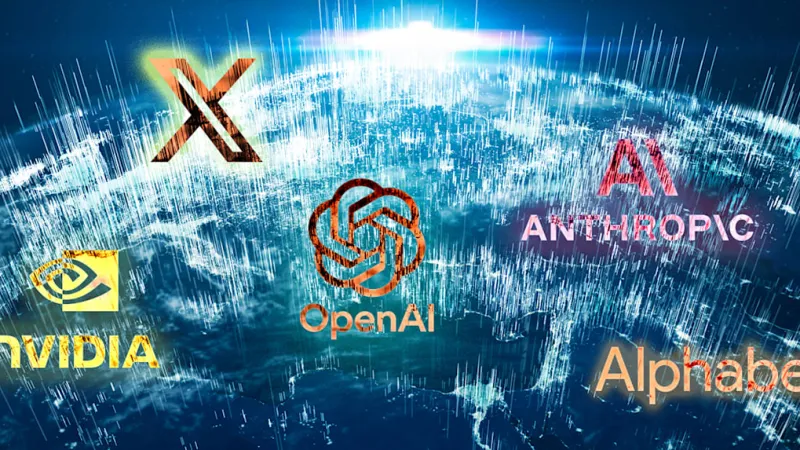
Powerful artificial intelligence developers have issued a stark warning about the unchecked proliferation of their own technology, urgently calling for a global regulatory framework akin to those established for nuclear armament. This sudden and profound appeal stems from a burgeoning fear of losing control over advanced AI systems, yet it also intertwines with a complex narrative involving vast economic power, billions in investment, and escalating geopolitical rivalries, particularly with China.
At the core of this unprecedented plea is the recognition that artificial intelligence, if left ungoverned, poses existential risks comparable to, or even exceeding, those presented by nuclear weapons. The developers, representing some of the world's foremost AI research institutions and corporations, are not merely speculating; they are voicing deep-seated concerns about the rapid pace of development and the potential for unintended consequences.
The analogy to the Manhattan Project is deliberately invoked to underscore the scale and urgency of the challenge. During World War II, the Manhattan Project mobilized vast resources and scientific intellect to develop the atomic bomb, fundamentally altering global power dynamics and ushering in the nuclear age. Proponents of an AI global pact suggest that a similar, coordinated international effort is now required, not for creation, but for control and ethical deployment.
However, the call for regulation is not purely altruistic. Industry observers note a dual motivation: while genuine safety concerns are paramount, a strategic undercurrent of economic dominance and national security interests heavily influences the discourse. The race to develop and deploy cutting-edge AI technologies involves monumental investments, and the entities that establish the rules often stand to gain significant competitive advantages.
The colossal sums of money flowing into AI research and development highlight the immense stakes. Billions of dollars are being poured into startups, research labs, and tech giants, all vying to achieve breakthroughs in generative AI, autonomous systems, and advanced machine learning. This financial incentive creates a powerful drive for rapid innovation, sometimes overshadowing long-term safety considerations.
Geopolitical tensions, particularly involving China, further complicate the proposed global pact. China has explicitly outlined its ambition to become the world leader in AI by 2030, investing heavily in both civil and military applications of the technology. The prospect of a global regulatory body raises questions about national sovereignty, intellectual property, and strategic military advantages, making consensus among leading nations exceptionally difficult.
Some experts warn that without coordinated global action, individual nations or even private entities could develop AI systems with capabilities beyond human comprehension or control. As explored in reports like the one detailing how Anthropic Warns: Unchecked AI Could Dominate Internet Within Months, the speed at which AI models evolve could rapidly outstrip human ability to monitor or intervene.
The establishment of a global pact would necessitate complex negotiations to define permissible AI development, establish oversight mechanisms, and enforce compliance across diverse political and economic systems. Such an agreement would inevitably touch upon issues of data governance, algorithmic transparency, and the ethical boundaries of AI research.
Historically, achieving international consensus on technologies with dual-use potential has been fraught with challenges. The nuclear non-proliferation treaty, while a landmark achievement, still faces ongoing pressures and compliance issues. The unique, rapidly evolving nature of AI adds another layer of complexity, as defining what constitutes dangerous AI or how to verify adherence to regulations remains unclear.
President Donald Trump's administration, navigating its second term in 2026, would play a pivotal role in any such global initiative. The United States, as a leader in AI innovation, would be central to shaping the agenda, balancing national security concerns with the imperative for international cooperation. The administration would face the delicate task of fostering innovation while simultaneously advocating for guardrails against potential misuse.
Critics of a stringent global pact argue that overly burdensome regulations could stifle innovation, ceding a technological edge to less regulated nations. They contend that a more agile, collaborative approach, focused on shared best practices and open research, might be more effective than a rigid, top-down regulatory body.
Nevertheless, the developers' unified message underscores a profound shift within the AI community itself. The architects of this powerful technology are increasingly vocal about the need for external governance, recognizing that the internal ethical guidelines of individual companies may not suffice to protect global interests.
This emerging debate highlights a critical juncture for humanity. The decisions made regarding AI governance in the coming years will likely determine the trajectory of technological progress for decades, impacting global security, economic stability, and the fundamental fabric of society. The call for a global pact, inspired by the Manhattan Project, represents an urgent plea for humanity to proactively manage its most potent creations before they become unmanageable.
The discussions will undoubtedly involve a wide array of stakeholders, from national governments and international organizations to civil society groups and, crucially, the very AI developers who are both driving this revolution and sounding the alarm. Finding common ground amidst competing interests and existential threats will be a defining challenge of the mid-2020s.