 Debby Wijaya
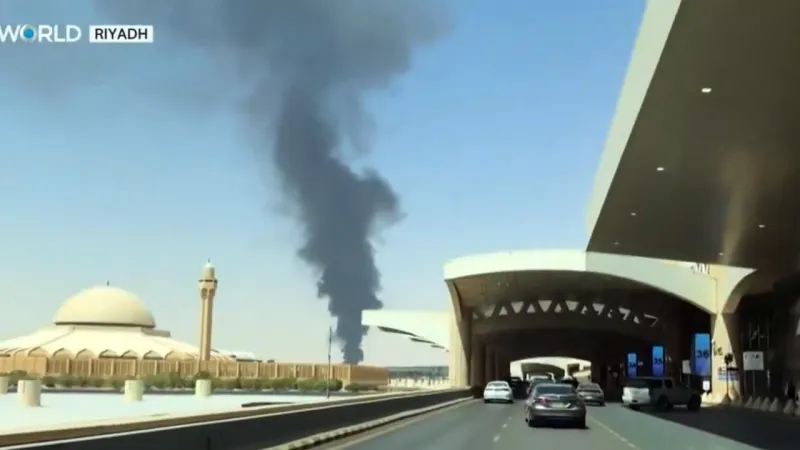
RIYADH – Smoke plumed and explosions reverberated through King Khalid International Airport earlier today after Yemen's Houthi rebels claimed responsibility for an aerial assault on the Saudi capital. The Houthi movement concurrently issued a pointed warning to Italy, asserting that Italian military aircraft should not be present in Saudi territory.
The audacious attack, which targeted a critical international transportation hub, underscores the persistent volatility of the regional conflict. Eyewitnesses reported seeing smoke ascending from sections of the airport complex, prompting immediate security responses and concerns about potential disruptions to air travel.
In a statement released shortly after the incident, a Houthi spokesperson clarified their position regarding international involvement. The official stated, “We are not in a state of war with Italy, but aircraft from Rome should not be present there.” This declaration signals a calculated broadening of the Houthi movements engagement, extending their warnings beyond direct combatants.
The Houthi warning to Italy appears to stem from the perception that the presence of Italian military assets within Saudi Arabia lends support, directly or indirectly, to the Saudi-led coalition operations in Yemen. This coalition has been a principal antagonist of the Houthi movement throughout the protracted civil war.
Yemen has been embroiled in a devastating conflict since 2014, when the Houthi rebels seized the capital, Sanaa, prompting military intervention by a Saudi-led alliance in 2015. The war has created one of the world's worst humanitarian crises, with millions displaced and facing severe food insecurity.
Saudi Arabia, leading the multinational coalition, has been a frequent target of Houthi drone and missile attacks. These assaults often aim at critical infrastructure, including oil facilities, airports, and other strategic sites within the kingdom, in what the Houthis describe as retaliatory actions.
Italy maintains defense and trade relations with Saudi Arabia, which includes agreements involving military equipment and potential training missions. The Houthi statement highlights how these bilateral relationships can inadvertently become points of contention within the broader regional conflict.
Prior Houthi attacks on Saudi territory have consistently drawn condemnation from international bodies and Western nations, which generally advocate for de-escalation and a political resolution to the conflict in Yemen. This latest incident, however, adds a new dimension by explicitly naming a European nation.
Analysts suggest this direct warning to Italy could signify an evolving Houthi strategy, aiming to pressure international partners of the Saudi-led coalition. Such tactics seek to reduce foreign military support and increase the perceived cost of involvement in the Yemen conflict.
This incident follows earlier warnings from Houthi leadership, as previously reported in the article Houthi Warn Italy: Saudi Air Presence Escalates Regional Tensions, highlighting their consistent stance regarding foreign military presence.
The attack on Riyadh airport serves as a stark reminder of the Houthis growing capability to project power beyond Yemen's borders, increasingly posing a threat to regional stability and international commerce. The group has repeatedly demonstrated its intent to strike at the heart of Saudi infrastructure.
The Saudi government has not yet issued a detailed statement regarding the extent of the damage or the specific nature of the attack, but security forces are expected to reinforce defensive measures around vital installations. The kingdom has invested heavily in air defense systems to counter such threats.
For Italy, the Houthi warning necessitates a careful diplomatic assessment of its military footprint in the region. Rome will likely weigh its security commitments and economic interests against the potential for being drawn further into a volatile conflict.
The international community faces renewed pressure to facilitate a lasting ceasefire and diplomatic resolution in Yemen, as the conflict continues to spill over its borders, threatening wider regional stability and international relations.
The immediate aftermath in Riyadh saw heightened security alert levels. Authorities swiftly moved to ensure the safety of citizens and travelers, while investigations commenced to ascertain the full impact and origin points of the Houthi projectiles.