Gabriella
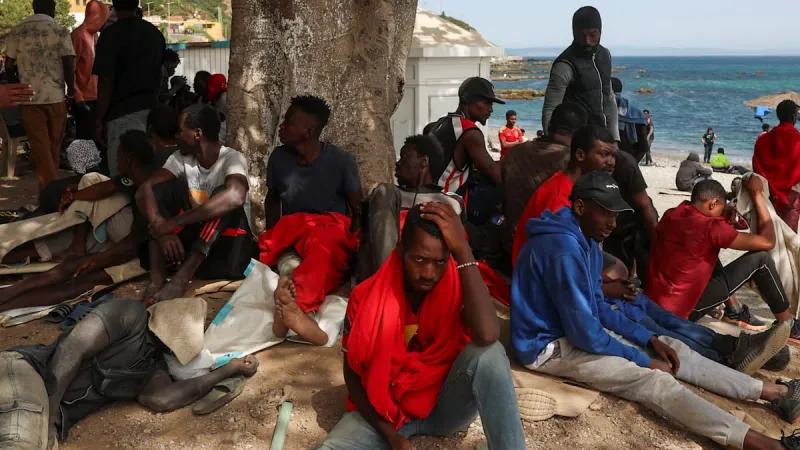
Ceuta, Spain – A mass influx of migrants from Morocco has left up to 5,000 individuals stranded in the Spanish enclave of Ceuta, according to regional government estimates. This significant border crossing has not only triggered a humanitarian crisis on the ground but has also sharply escalated political tensions within the European Union, exposing deep divisions over migration management and responsibility.
The dramatic event unfolded as thousands of individuals, predominantly from Morocco, surged across the border into the autonomous Spanish city. The sheer volume overwhelmed local authorities and existing reception capabilities, prompting urgent calls for assistance from Madrid to Brussels.
Local officials in Ceuta are grappling with the immediate aftermath, struggling to provide shelter, food, and medical attention for the thousands now within the enclave. Reports indicate that many of the migrants, including a notable number of minors, arrived exhausted and without provisions, highlighting the perilous nature of their journey.
Spain, facing direct pressure on its borders, has vehemently asserted that the situation constitutes a European issue, not solely a Spanish one. Madrid has urged for greater solidarity and a coordinated response from its EU partners, emphasizing the need for comprehensive solutions to irregular migration flows from North Africa.
The circumstances surrounding the border breach have intensified scrutiny of Morocco's role in managing its borders. Critics suggest a deliberate easing of controls by Rabat, potentially as a diplomatic maneuver in response to ongoing disagreements with Spain or the wider EU on various geopolitical fronts.
Within the European Union, the crisis in Ceuta has reignited long-standing debates about border security, the burden-sharing mechanism for asylum seekers, and the effectiveness of current migration pacts. Some member states, particularly those geographically distant from the Mediterranean migration routes, have expressed reluctance to engage, further complicating a unified EU stance. The local administration in Ceuta has previously decried the insufficient migrant response from the EU, calling for more proactive prevention strategies. Read more: Ceuta Decries Insufficient Migrant Response Amid EU Prevention Call.
Diplomatic relations between Spain and Morocco have become strained, with accusations and counter-accusations surfacing regarding the origins and handling of the migration wave. The European Union is now contemplating various responses, including the potential reassessment of financial aid to Morocco, should it be perceived as failing in its border control obligations. This move could significantly alter the delicate balance of regional cooperation. For further context: EU Considers Halting Aid to Morocco Amid Ceuta Migration Fallout.
Ceuta, along with Melilla, represents the European Union's only land borders with an African country. These enclaves have historically been flashpoints for migration attempts, serving as a gateway for individuals seeking to reach European soil.
The disparity in reported numbers — ranging from official Spanish government figures to higher estimates from aid organizations — complicates efforts to accurately gauge the scale of the challenge and plan an effective humanitarian response. These differing figures often fuel political rhetoric and hinder constructive dialogue among stakeholders.
The crisis underscores the complex interplay of humanitarian concerns, national sovereignty, and international diplomacy inherent in contemporary migration phenomena. It highlights the urgent need for robust, long-term strategies that address both the immediate challenges of border management and the underlying causes of forced migration.
The humanitarian aspect remains paramount, with aid agencies and local volunteers working tirelessly to support the vulnerable population. The focus is on ensuring basic human rights are upheld, particularly for unaccompanied minors, who form a significant portion of those trapped in the enclave.
The long-term integration prospects for many of these migrants, particularly those unlikely to qualify for asylum, pose another substantial challenge. Spain and the EU face difficult decisions regarding repatriation and potential pathways for legal migration, all while attempting to deter future irregular crossings.
As the situation in Ceuta continues to evolve, international observers anticipate further diplomatic wrangling and potentially punitive measures from the EU. The crisis serves as a stark reminder of Europe's persistent struggle to forge a unified and humane migration policy amidst ever-shifting global dynamics.