 Dorry Archiles
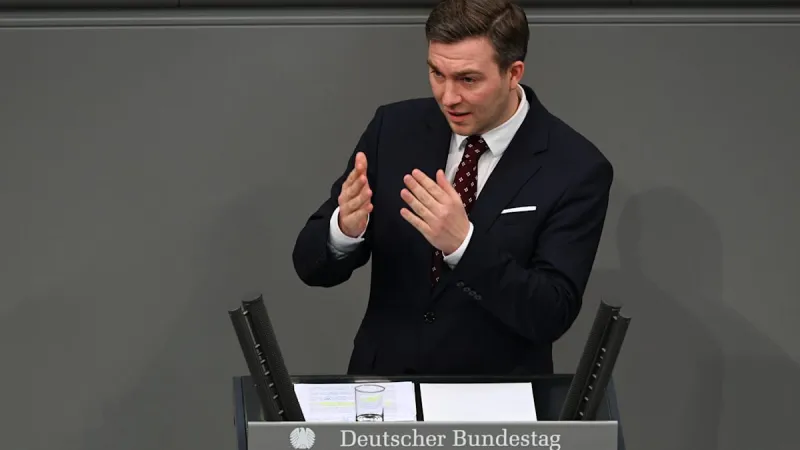
BRUSSELS – Following a significant migration surge in the Spanish enclave of Ceuta, prominent German Christian Democratic Union (CDU) politician Frederik Bouffier has publicly urged the European Union to send an unequivocal message to Morocco and other transit nations. Bouffier advocated for the suspension of promised financial assistance to Rabat, proposing this as a potent leverage tool to compel greater cooperation on migration control, an issue he asserts serves the fundamental interests of all European citizens.
The call for stringent action emanates from the recent influx of migrants into Ceuta, a situation that tested the humanitarian and border security capacities of both Spain and the wider EU. Bouffier's proposition, articulated during an interview with WELT TV, underscores a growing sentiment within some European political circles that the continent must adopt a more resolute stance against states perceived as not fully engaging with EU migration management efforts.
Bouffier specified that withholding allocated aid, a substantial portion of which targets development and border management programs in Morocco, could serve as a decisive instrument. He emphasized that financial support should be contingent upon demonstrable progress and collaboration from recipient nations in curbing irregular migration flows towards European borders.
The events in Ceuta, a small Spanish territory bordering Morocco, saw thousands of individuals, including many minors, attempt to cross into European soil within a short period. This presented an immediate humanitarian challenge and ignited fierce debate across Europe regarding external border security and the responsibilities of neighboring countries. The crisis prompted solidarity efforts but also exposed underlying tensions in EU-Morocco relations.
Bouffier stated, "It is also in the interest of every single person." This declaration highlights the humanitarian dimension of his argument, suggesting that effective migration management ultimately benefits not only European citizens but also the migrants themselves by establishing more orderly and humane processes, reducing perilous journeys.
This stance aligns with broader discussions within the EU regarding its external migration policy. Member states, grappling with internal political pressures related to migration, have increasingly sought to bolster external borders and engage in partnerships with third countries to manage arrivals. However, such partnerships often face scrutiny over human rights concerns and the ethical implications of outsourcing border control.
The debate over using aid as leverage mirrors ongoing strategies adopted by other European nations. For instance, Italy Expands Migrant Hub Strategy: Albania Model Reaches Africa, Balkans. These initiatives reflect a shared European goal to control migration at its source or in transit countries.
The need for a unified EU front on migration policy has been a consistent theme. Political figures like Ahmetovic have previously called for the EU to stand united amid Ceuta Migration Crisis, a sentiment that Bouffier's remarks now echo, urging a collective and assertive response rather than fragmented national approaches. A stronger, unified EU position is often seen as essential for successful negotiations with third countries.
Implementing aid conditionality, however, presents its own set of challenges. Critics often argue that cutting humanitarian or development aid can destabilize recipient nations further, potentially exacerbating the very conditions that drive migration. It also risks alienating key partners, making future cooperation more difficult.
Morocco, a crucial partner for the EU in counterterrorism and migration control, has historically received substantial European funding. While Rabat has often cooperated, it has also occasionally used migration as a diplomatic tool, highlighting the complex and sometimes fraught nature of its relationship with the bloc. The Kingdom maintains that it also bears significant costs in managing migration flows originating from sub-Saharan Africa.
The long-term implications of making aid explicitly conditional on migration control remain a contentious issue. While some proponents view it as a necessary tool to enforce agreements and ensure accountability, others caution against a purely transactional approach that could undermine deeper diplomatic ties and humanitarian principles.
Bouffier's forceful advocacy for conditional aid serves as a clear signal of the intensifying pressure within Europe to develop more robust and, at times, more aggressive strategies to manage irregular migration. The EU now faces the critical task of balancing its humanitarian obligations with its security concerns, while also maintaining strategic partnerships with its southern neighbors.