Angela Stefani
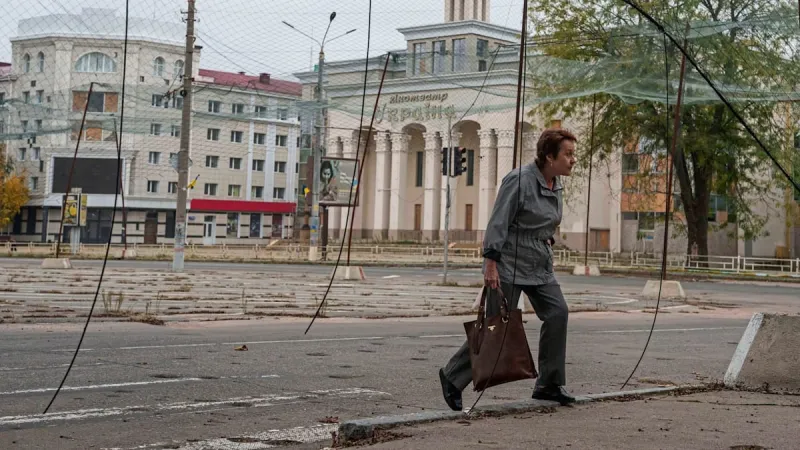
In a significant humanitarian development, the embattled Ukrainian front-line city of Oleschky has observed its inaugural localized ceasefire since the onset of the full-scale Russian invasion, creating a vital corridor for civilian evacuation. This temporary cessation of hostilities aims to provide succor to residents trapped amidst intense fighting, a necessity underscored by correspondent Christoph Wanner.
Wanner, reporting from the region, emphasized the urgent purpose of this truce: "This fire pause is intended to help people evacuate." The agreement marks a rare moment of de-escalation in a conflict zone otherwise characterized by persistent shelling and ground assaults, highlighting the dire humanitarian situation in the occupied territories.
Oleschky, situated in the Kherson Oblast, has been under Russian control since the early days of the invasion. Its strategic location near the Dnieper River and its proximity to the regional capital have subjected it to continuous military operations, severely impacting its civilian populace.
Access to basic necessities, medical care, and safe passage has been critically limited for the residents. The prolonged occupation has exacerbated an already fragile environment, making any opportunity for humanitarian relief exceptionally crucial.
This marks the first documented localized ceasefire specifically for evacuation purposes in Oleschky since February 2022. Previous attempts at establishing humanitarian corridors in other parts of Ukraine have often been fraught with challenges, frequently breaking down amidst renewed fighting, making this development particularly noteworthy.
The protracted conflict has left countless civilians in Oleschky in perilous conditions. Reports from various aid organizations, though often difficult to verify independently from occupied territories, consistently paint a picture of widespread suffering, including shortages of food, water, and essential medicines. The opportunity to evacuate offers a vital lifeline for many.
Even with a ceasefire in place, the process of evacuating civilians from an active war zone presents immense logistical and security hurdles. Humanitarian agencies and local authorities must navigate treacherous routes, verify the safety of corridors, and ensure adequate transportation and reception facilities for displaced individuals.
While localized, this ceasefire could potentially serve as a precedent or a model for similar arrangements in other contested areas, provided it holds and achieves its stated objective. Such agreements, however limited, are crucial for alleviating human suffering where broader diplomatic solutions remain elusive.
While the specific genesis of this particular truce remains largely localized, international bodies and observers consistently call for respect of international humanitarian law and the establishment of safe passages for civilians. The success of the Oleschky ceasefire will likely be closely monitored by humanitarian organizations globally.
The fragility of such agreements is a constant concern. Parties to the conflict must adhere strictly to the terms of the truce to ensure the safe passage of non-combatants. Any violation risks undermining trust and closing future opportunities for humanitarian relief.
For the residents of Oleschky, this temporary reprieve offers a glimmer of hope and a chance for survival away from the immediate front lines. It underscores the ongoing, desperate need for humanitarian pauses to address the profound human cost of the conflict in Ukraine.
The specifics of how this particular localized truce was brokered have not been fully disclosed, but typically such agreements involve negotiations between local commanders or through the mediation of humanitarian organizations. The emphasis remains squarely on the immediate objective: safeguarding civilian lives.
Correspondent Christoph Wanner reiterated the critical importance of ensuring the safety of those attempting to leave. "The primary goal is the protection of innocent lives," Wanner stated, reflecting the consensus among humanitarian advocates regarding the sanctity of civilian protection during armed conflict.
Operating within such volatile environments demands extreme caution and meticulous planning. Even designated safe zones can quickly become dangerous if the terms of a ceasefire are breached, placing evacuees and humanitarian workers at grave risk.
While details on specific evacuation routes were not immediately available, such operations often involve designated humanitarian corridors leading to safer territories, where aid and shelter can be provided. These routes are typically agreed upon by all parties to ensure safe passage.
The success of this operation in Oleschky will be a crucial test case. Should it proceed without incident, it could encourage similar arrangements in other besieged cities and towns, offering a template for localized humanitarian action in areas where broader peace remains elusive.
Beyond the strategic and logistical considerations, the core of this story lies with the individuals and families who have endured months of conflict. For them, the ceasefire represents not just a pause in fighting, but a chance to regain a semblance of normalcy and security.
The distinction of being the first localized ceasefire of its kind in Oleschky since the invasion began highlights both the severity of the previous conditions and the extraordinary efforts required to achieve even a temporary respite.
Observers suggest that the successful implementation of this specific agreement could foster a limited, temporary confidence-building measure that might pave the way for additional, albeit precarious, humanitarian initiatives. This fragile process remains critical for civilian welfare.
Ultimately, the situation in Oleschky serves as a stark reminder of the humanitarian imperative that must guide all actions in conflict zones. Ensuring the safety and well-being of civilians must remain paramount, even amidst the most complex geopolitical challenges.