 Debby Wijaya
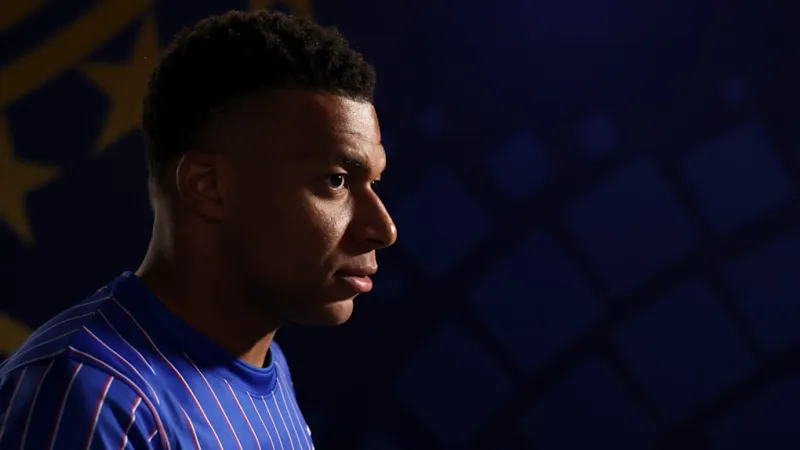
PARIS – The French Football Federation (FFF) announced its intention to pursue legal action this week after a Paraguayan senator unleashed a torrent of inflammatory and racially charged remarks directed at football superstar Kylian Mbappé. The senator's comments, which controversially labeled Mbappé a colonized Cameroonian and disparaged him as nouveau riche, arrogant, and ugly, have ignited widespread condemnation across France and the international sporting community, drawing a robust show of solidarity for the prominent athlete.
The contentious statements originated from a high-ranking official in the Paraguayan government, whose identity has been withheld pending further investigation into the complaint. These remarks quickly circulated online, prompting immediate and furious reactions from fans, politicians, and sports organizations alike, all decrying the blatant racism inherent in the senator's language.
The FFF moved swiftly, declaring its unequivocal support for Mbappé and vowing to protect its players from all forms of discrimination. A formal complaint is currently being prepared, targeting the individual senator for her egregious public statements, which the federation considers a direct violation of ethical conduct and a severe personal attack.
Reports from Paris indicate a wave of national indignation. Numerous French citizens, echoing the sentiments of their football governing body, have voiced disgust at the senator's words. Social media platforms overflowed with messages of support for Mbappé, many highlighting his integral role in French national identity and his contributions to the sport.
The derogatory term “colonized Cameroonian” drew particular ire, underscoring a persistent issue of racial insensitivity that often targets athletes of diverse heritage. Mbappé, born in France to a Cameroonian father and an Algerian mother, represents the multicultural fabric of modern France, making the senator's remarks not just personal but also a broader affront.
This incident resonates within the ongoing global struggle against racism in sports. Football governing bodies, including FIFA, have repeatedly committed to stamping out discriminatory behavior from all levels of the game, from the stands to official capacities. Such high-profile incidents serve as stark reminders of the persistent challenges that remain.
While the specific context for the Paraguayan senator's outburst remains unclear, the timing suggests a possible link to Mbappé's immense international fame and recent successes on the world stage. His prominence often places him under intense scrutiny, but remarks of this nature cross a critical line into personal defamation and racial prejudice.
The French sports minister issued a statement condemning the remarks as utterly unacceptable and contrary to the values of sport and human dignity. The minister emphasized that such language has no place in public discourse, especially when directed at individuals who inspire millions globally.
Legal experts in France suggest that the FFF's legal challenge could pursue charges related to public insult or defamation, given the severity and public nature of the senator's comments. The outcome of such a legal battle, regardless of its specific findings, is expected to send a strong message about accountability for hate speech.
This controversy stands in stark contrast to the unifying power of sports, particularly football, which often transcends national and cultural divides. Mbappé has consistently been a symbol of excellence and national pride, his achievements celebrated across diverse communities.
The incident also prompts a broader discussion within political circles about the responsibility of public officials to uphold respectful and inclusive language. Elected representatives, by virtue of their positions, carry a greater onus to foster understanding, not propagate division through prejudiced commentary.
Supporters of Kylian Mbappé pointed to his consistent professionalism and dedication on the field, arguing that personal attacks based on his background or perceived character traits are entirely unwarranted and reflective of deeper biases.
The global football community watches closely as this situation unfolds. FIFA, which has its own strong anti-racism protocols, is expected to weigh in on the matter, potentially urging further action or issuing its own statement of condemnation.
This situation underscores that racism is not merely a problem for fans in stadiums, but can emanate from positions of power, necessitating robust and unified responses from sports organizations, governments, and civil society alike. The solidarity shown for Mbappé reflects a broader societal rejection of such prejudice.
The French Football Federation’s decision to initiate legal proceedings highlights a growing trend among sports bodies to actively combat racism through formal channels, moving beyond mere statements of disapproval to concrete actions that seek accountability.
As the legal process begins, the focus remains on ensuring that justice prevails and that a clear precedent is set: hateful and discriminatory language, particularly from public figures, will face serious repercussions, especially when targeting high-profile athletes like Kylian Mbappé.