 Chandra Wijayanto
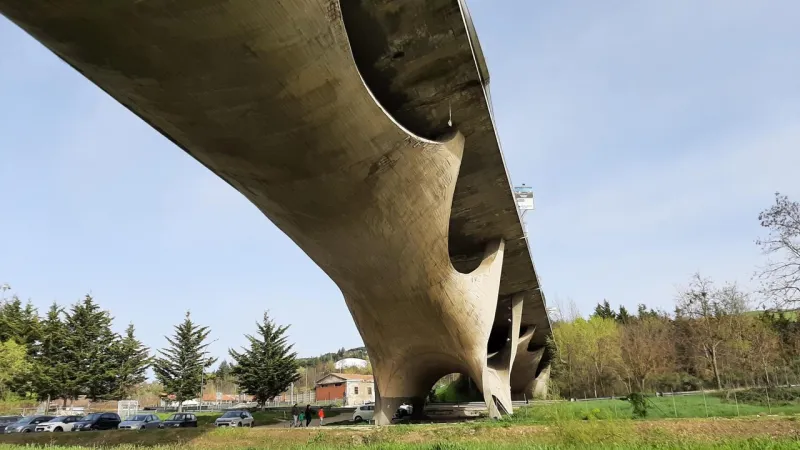
Potenza, Italy – The iconic Musmeci Bridge, a celebrated feat of 20th-century Italian engineering and architecture, faces an indefinite closure to vehicular traffic following official assessments revealing extensive structural degradation. The drastic measure, imposed by local authorities, underscores critical safety concerns and necessitates a comprehensive, internationally sourced restoration effort, to be procured through a forthcoming European tender. This action effectively halts daily commutes over the landmark structure, reshaping urban mobility for residents of the Basilicata region's capital.
Designed by the visionary engineer Sergio Musmeci and inaugurated in 1975, the bridge stands as a testament to innovative concrete construction. Its distinctive, fluid lines and daring structural form, reminiscent of a massive concrete shell, earned it widespread acclaim as a pioneering example of avant-garde design. The bridge's closure is not merely a logistical challenge but also a profound concern for cultural heritage preservation, given its designation as a national monument.
Years of exposure to environmental elements, coupled with continuous heavy traffic loads, have incrementally compromised the integrity of the bridge's sophisticated concrete structure. Engineers identified critical points of decay, ranging from extensive cracking to corrosion of internal reinforcement, which collectively threaten the overall stability of the viaduct. These findings prompted the immediate declaration of unsafety, leading directly to the decision to cease all vehicular passage.
The suspension of traffic on the Musmeci Bridge will inevitably redirect thousands of vehicles daily, placing considerable strain on alternative routes and exacerbating congestion within Potenza's already complex urban network. Commuters, local businesses, and public transport services will experience significant disruptions as the city grapples with adapting its infrastructure to accommodate this unforeseen challenge. Emergency services also face re-evaluation of their response routes.
In response to the urgent situation, the regional administration, in conjunction with municipal authorities, announced the initiation of a European public tender. This process seeks to attract specialized engineering firms and conservation experts from across the continent, ensuring the selection of a highly qualified team capable of undertaking the complex restoration required for such a unique architectural asset. The aim is not merely repair but a comprehensive rehabilitation that respects its original design principles while enhancing its longevity.
A European tender process, known for its rigorous selection criteria and transparency, mandates adherence to strict European Union procurement rules. This approach is designed to secure the most advantageous offer, both technically and economically, for a project of this scale and importance. Experts anticipate a competitive field of bidders, all vying for the opportunity to contribute to the preservation of this distinctive piece of modern Italian heritage.
The bridge's original construction was a marvel of its era, pushing the boundaries of reinforced concrete application. Musmeci's design rejected conventional structural forms, instead opting for a minimum thickness shell structure that elegantly spanned the Basento River valley. This innovative approach, while aesthetically striking, also presents unique challenges for contemporary repair and maintenance, requiring specialized knowledge and techniques.
While specific details regarding prior maintenance efforts are not immediately available, such extensive degradation typically suggests that past interventions may have been insufficient, or the cumulative effects of aging have simply outpaced routine upkeep. The current assessment indicates that the deterioration has reached a critical stage where piecemeal repairs are no longer viable, necessitating a holistic and substantial overhaul.
The local community and architectural preservation groups have expressed a mixture of concern and hope. While the closure is an inconvenience, there is a widespread understanding of the necessity to preserve a structure so deeply woven into the city's identity. Calls for swift, effective action resonate throughout Potenza, emphasizing the bridge's significance beyond its utilitarian function.
Officials have yet to provide a definitive timeline for the tender process or the subsequent restoration work, acknowledging the inherent complexities involved. However, preliminary estimates suggest that the entire undertaking, from contractor selection to project completion, could span several years. During this period, the city will need to implement robust alternative transport strategies to mitigate the impact on residents.
The economic implications of the closure extend beyond the immediate costs of restoration, which are projected to be substantial. The indirect economic impact includes lost productivity due to increased commute times, potential negative effects on local businesses reliant on traffic flow, and the broader disruption to the regional transport network. Securing adequate funding, potentially from both national and European sources, will be a paramount concern for authorities.
The Musmeci Bridge saga serves as a poignant reminder of the ongoing challenges in maintaining aging infrastructure, particularly those with significant architectural merit. Across Europe, countless historical bridges and viaducts face similar fates, underscoring the critical need for proactive maintenance regimes and substantial investment in preserving these vital arteries and cultural landmarks.
Local government leaders affirmed their commitment to restoring the bridge to full functionality and preserving its architectural legacy. They emphasized that public safety remains the utmost priority, guiding every decision in this complex process. Comprehensive public information campaigns are expected to keep citizens informed about progress and alternative travel arrangements.
Engineers and conservationists are already studying the specific challenges presented by Musmeci's unique design. The thin shell concrete structure, while revolutionary, demands precise analytical and practical approaches to repair, differing significantly from standard bridge refurbishment projects. This intellectual challenge further elevates the project's profile within the engineering community.
Ultimately, the closure of the Musmeci Bridge represents a pivotal moment for Potenza. It highlights the delicate balance between urban development, historical preservation, and public safety. The impending restoration project offers a chance not only to rejuvenate a deteriorating structure but also to reaffirm the city's commitment to its architectural heritage.
The future of the Musmeci Bridge, a symbol of architectural ambition and engineering prowess, now rests on the success of this ambitious restoration initiative. Residents and admirers worldwide eagerly await its revival, hoping to see this concrete jewel once again open and thriving.