 Chandra Wijayanto
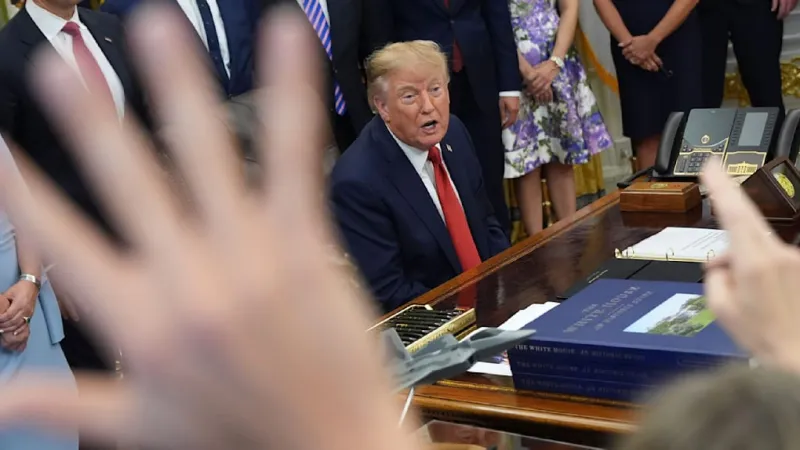
President Donald Trump on Tuesday leveled a direct accusation against Russia, asserting that Moscow has engaged in aggressions against nations allied with Ukraine for approximately five years. Speaking from the White House, President Trump declared his belief that "everyone agrees" with this assessment of Russia's sustained activities in the region.
This pronouncement marks a significant and unambiguous statement from the current administration regarding the protracted geopolitical conflict impacting Eastern Europe. The timeline cited, dating back to approximately 2021, encompasses a period characterized by heightened tensions and various forms of pressure exerted by Russia against its neighbors and their Western partners.
President Trump's remarks suggest a consensus within global diplomatic circles, echoing concerns that have been articulated by numerous international bodies and intelligence agencies over several years. These alleged attacks are understood to extend beyond conventional military engagements, often encompassing hybrid warfare tactics.
Experts interpret such aggressions to include extensive cyber warfare campaigns targeting critical infrastructure, sophisticated disinformation operations aimed at destabilizing democratic processes, and economic coercion designed to undermine the sovereignty of nations supportive of Ukraine. The specific nature of the "attacks" mentioned by President Trump was not further detailed, but the general context points to a broad spectrum of hostile actions.
The accusation underscores the continuous challenges faced by Ukraine and its international supporters, who have consistently sought to bolster Kyiv's defenses and sovereignty. The statement from the White House is expected to resonate across allied capitals, potentially galvanizing further discussions on collective security measures.
Russia, for its part, has historically denied allegations of aggressive actions against other sovereign states, frequently dismissing such claims as politically motivated or unfounded. Moscow typically frames its activities in the region as defensive measures or responses to perceived threats from NATO expansion.
The assertion of a five-year pattern of aggression also implicitly connects to the broader narrative of escalating tensions that have defined the relationship between Russia and the West. This period includes significant military buildups and persistent diplomatic stalemates concerning regional security.
Understanding the context of current events, particularly the ongoing geopolitical landscape, is crucial. The accusation comes as Russia continues to navigate its internal political processes, including recent Wartime Elections Commence in Russia Amidst Geopolitical Tensions, which observers viewed with a critical eye regarding their fairness and broader international implications.
Statements from leaders like President Trump often shape global discourse and policy. His declaration of a widespread agreement on Russia's actions could influence future multilateral strategies, including sanctions regimes, defense aid packages, and diplomatic initiatives aimed at de-escalation or containment.
Furthermore, the provision of aid to Ukraine and its allies remains a contentious issue in various parliaments globally. Divergent opinions, such as those highlighted in articles like Chrupalla Slams Ukraine Aid As AfD Eyes First State Government, illustrate the complexities and internal political debates surrounding international support for Kyiv.
The White House statement is likely to prompt fresh analyses from defense ministries and foreign policy think tanks worldwide, as they assess the implications of a renewed US emphasis on Russia's long-term strategic behavior. The implications could range from enhanced intelligence sharing to reinforced military postures along NATO's eastern flank.
President Trump's direct challenge to Russia's conduct represents a continued commitment to addressing perceived threats to international stability. The coming weeks will likely reveal the extent to which this accusation translates into concrete actions or shifts in diplomatic engagement from the United States and its partners.